TBI.
Human Behavior
Uploading the Rhythms of Life
Cardiac monitoring may be an ‘event’ unto itself

The debate over life and death often focuses on the heart and the brain. Some believe life ends when the brain ceases all activity – a term called brain death. Others believe death results when the heart ceases to beat. In a blog published in January 2014, the mind-body dialogue was discussed by Michael Sefton. He described the rudimentary force of life as the heart’s beating “which begins and ends with the inimitable squeeze of the cardiac muscle.” For patients who are being monitored the experience is highly stressful and often evokes fear and dread.
The link between what happens to our body and its effect on our mood and feeling state is well documented. Just as we must adjust to the early developmental changes of our children so must we adapt our own thinking and lifestyle to the changes brought about by the empty nest. Events such as having children leave home and head off to college and other events associated with empty nesting require flexibility and adaptation of roles for success. These important transitions signal an advancing age that sometimes accompanies physical decline in health and body. With that said it is important to note that many American’s are living healthier lifestyles and thus preserving physical health well into the eighth and ninth decades of life.
“Don’t ever get old”
Retirement was once described as a period of “golden years” and was thought to represent the final stage of one’s life during which the experience of freedom and contentment proffered a whimsical enjoyment of lazy, carefree days. It meant taking time to share one’s wisdom with those who are younger and pass on the stories of family, culture, and life itself. This is often not the case and I have had patients suggest that I should never get old. Retirement is frequently a time of unbearabe loss and despair.
One factor affecting quality of life is the sense of physical well-being. Retirement sometimes triggers an erosion of physical health and cognitive stamina choking all remaining time with recurring, monotonous doctor’s visits and tests. In truth, what may be a glorious time is now marred by fear and trepidation about one’s health, financial stability and declining physical longevity.
Poor cardiovascular health is an underlying cause of many chronic disease processes like stroke, diabetes, and auto immune disease. Heart attack remains among the leading precursors to early death and researchers are racing to uncover treatment options including early identification of those most at risk and life saving surgery to open clogged arteries. Meanwhile, people should take greater responsibility for their own health by eating better and building exercise into their changing lifestyle. Things like moderating use of alcohol, 7-9 hours of nightly sleep, and eating plenty of fruits and vegetables become the specter of truth and failure to an ever-growing problem with obesity. This is an important lesson for young adults to discover but is easier said than done.
The mind-body dialogue is one that matches wits with any great debate. What are the best methods for identifying ‘problem’ hearts before they reach a penultimate, fibrillating finale? Some doctors ask their patients to wear special monitoring devices – little boxes attached to the skin that permit the ongoing monitoring of life threatening changes in rhythm. Patients sometimes wear the monitor for a month or more. These monitors have the potential to catch irregular heart beats and allow physician’s to see a patient’s electrocardiogram on a minute to minute basis. The monitor requires that the person wearing the device to upload his data via a telephone line each day sometimes with little to no training. Each recording represents a cardiac event that the person wearing it is asked to chronicle in terms of action and feeling state when the device is active. The events are uploaded via telephone land lines in real-time that seems almost tortuous to those bearing the burden of wearing the device. The rhythms are quickly edited, analyzed and more often than not result in nothing more than a friendly vote of confidence – “you’re all set”.
Event Monitoring
Greater thought and training should be afforded to patient’s wearing event monitors. As time goes on most patients become accostomed to the vagaries of the heart and the sound it makes – lub dub, lub dub. The event recordings come in one after another and become part of the month-long survey of heart activity. Some people call two and three times daily worried that they are having a serious cardiac event. After 30 days the monitor is turned in for analysis by the cardiologist. These daily rhythms go on to become the underpinnings of a cardiac care regimen that may offer treatment alternatives that can save a life. The clinicians go on to new patients and new rhythms and new reports. But each person who wears a monitor is brought to bear the feelings of their own life force beating in his or her chest sometimes wildly out of control. For those with irregular heart beats it can be 30 days of fear, impending doom, and personal paroxysm that seems to go on forever as skipping beats and palpating rhythms. And even those with a normal EKG, the fear and worry of not feeling well can be just as agonizing as the beats are uploaded one at a time with not so much as a “job well done” and encouragement to call again tomorrow.
The fundamental appetence for living is shaped by the relationships made during life. Those relationships that nurture and sustain may extend ones years of viability. Some believe the force of life is the beating heart. For without a healthy heart the quality of life may become desultory and life itself may become nothing more than a daily upload of irregular beats on the telephone, in real time.
To read the former blog click on the link below.
https://msefton.wordpress.com/2014/01/17/the-force-of-life-and-the-fears-that-go-along/
“The underpinnings…
“The underpinnings of violence are often present in some form or another and may be represented by marginalized demeanor and extremist views and often ignored by those in the cross hairs” according to Michael Sefton, Director of Psychological Services at Whittier Rehabilitation Hospital in Westborough, MA.
This quote represents a recurring belief about the evolving coping skill of an active shooter until the very end according to M Sefton. The terminal event is often preceeded by growing fury and red flag signs of anger. It suggests that greater awareness by outside observers of sudden changes in mental status should be recognized along with the utilization of stopping and containment protocols and coordination of care in or out of the state correctional system.
The force of life and the fears that go along
Another look at the mind body dialogue. The force of life lies within our body bringing forth our human energy. Those energy traces forge the bonds that form meaningful relationships in time and space and sustain us. The force of life starts with a tiny heart’s beating and does not stop until life’s last day when the heart no longer makes its inimitable squeeze.
The meaning of what is human is derived from the social appetence inscribed into it by mentors and those who tend to its garden from early on. Human growth stems from a caref ully crafted blend of biological gifts and environmental design shaped over time. This may be lost without the core ingredients and nurturing bond that nourish it. In their absence, the vessel becomes incapable of tolerating life’s abject aloneness and may become diseased. The heart is a muscle that does not tire and yet it must be sustained or it quickly loses it lean and supple appearance slowly requiring more energy to power its life long lub-dub, lub-dub while still perfusing the body. Arguably, the interaction between one’s heart and one’s head is undeniable. What we do and how we think has much to do with the health of the body and ultimately, our life force.
Finding balance
It takes time to establish the human contacts needed to trust another person and put yourself in the hands of another with complete emotional certitude. The fundamental appetence for living is shaped by the relationships made during life. Those relationships that nurture and sustain may extend ones years of viability. Those relationships that suppress the normal, effusive, life force are detrimental to health much like a toxin.
“Domestic violence…
“Domestic violence is not random and unpredictable. There are red flags that trigger an emotional undulation that bears energy like the movement of tectonic plates beneath the sea.” Sefton
Many believe it is these red flags that are predictive of future intimate partner violence.
“Answering domestic…
“Answering domestic incidents and enforcing protection orders are a dangerous situation for police officers,” Lt. Mark Winn, (Retired), Nashville PD
Lt. Winn was quoted in the Bangor Daily News.
Juvenile Firesetting

Fire sometimes symbolic of internal chaos
NEW BRAINTREE, MA It was once believed that playing with fire was a normal, developmental curiosity and could be expected. Fire is a tantalizing and visually captivating phenomena. It was once espoused that firesetting was symprtomatic of psychopathology that included cruelty to animals and enuresis. This triad of emotional indicators was thought to symbolize unmet needs and perhaps frustrated infantile drives states. The current reality suggests that errant use of fire material represents one of the most lethal expressions of childhood emotional turmoil and unbridled conduct. Depending upon the age of onset using fire as an expression of internalized conflict suggests a serious emotional disorder in need of expert assessment and treatment. The drawings of some children reveal an chaotic emotional development that may be portrayed by the violence among characters as shown in the drawing here. Each animal is drawn shooting fire or electric rays. The two main characters shown are Godzilla and Raptor who are engaged in a confrontation. Each character brings his crew to help eliminate the opponent using fire and electricity.
Exposure to fire and role models
What happens when the child turns one? His parents plop down a birthday cake with a burning candle set alight. While singing Happy Birthday the toddler sits transfixed as the waxy, flickering bulb melts before his eyes. Some believe early exposure to fire coupled with significant role models who use and misuse fire material cast the first spark of interest in fire. Curiosity in fire may be a normal childhood attraction. But in most cases the normal enchantment with fire represents one of many normal wonders that parents may introduce to children as they grow and mature. Meanwhile, just as one would not give a loaded firearm to a toddler, one cannot permit an unsupervised child to handle matches or lighters. The interest in fire becomes a parents responsibility to nurture and polish with age. This normal interest then foments in homes where the prevailing affective conditions permit – decreased emotional warmth, access to fire starting materials, an absent parent, and frequently domestic violence. The inconsistent and unpredictable exposure to violence contributes to excessive and unpredictable behavior.
Psychologist are frequently asked to differentiate children who light fires because of normal curiosity versus those who light fire out of a more pathognomic underpinning. I was once asked to evaluate a surviving 3-year old who lit a house fire killing his 4-year old cousin. The tragedy of this case transcended 4 generations living in one household and rendered them emotionally overwrought. “Just as we will not put a loaded firearm into the hands of an untrained child, so too must we guard against the unskilled, misuse of fire”, according to Michael Sefton, Ph.D.
Juvenile arson is a serious crime and has life threatening consequences. The cost to insurance companies is measured in the hundreds of millions of dollars across the country. The loss of life even more costly in terms of the human toll enacted upon families where children light fires. The truth is that all “fire play” may be hazardous and life threatening when fire gets out of control so access to fire materials like lighters and matches should be carefully limited. Just as parents kid proof their house when the baby is born so too should they make a house or apartment fire safe from the curiosity of a precocious child.
The most ominous case of juvenile fireplay occur in homes with one or both parents absent from regular, direct nurturing of the child. Why children choose fire play over other forms of acting out is not clear. There tends to be two peak ages where the incidence of fire play is peaked: 3-5 years and 12-15 years. It is far more common in boys than girls but girls tend to light fires that include personal belongings, Any use of combustibles or incendiary devices is highly significant and requires professional assistance. Programs such as that offered by YOU, Incorporated in Central Massachusetts have clinicians who understand the dynamics of fireplay and can help families deal with the risks. See the link below for a sensitive look at one particular story from the midwest.
http://www.traumaburn.org/prevention/seanstory/misuse/index.shtml
“Just as we will…
“Just as we will not put a loaded firearm into the hands of an untrained child, so too must we guard against the unskilled, misuse of fire.”
Michael Sefton, Ph.D.
Fire safety is the responsibility of all adults. Curiosity in fire may be normal but so are many things that children cannot be allowed to use.
Aftermath Intervention: Police first to the threshold
Necessary first steps for bringing chaotic families in from the margins
NEW BRAINTREE, MA Domestic violence happens in family systems that are secretive, chaotic, and dysfunctional. This lifestyle pushes them into the margins of society – often detached from the communities in which they live. More often than not, this is the way they choose to live.
The abusive spouse makes his efforts known within the system by his barbaric authoritarian demands. He keeps his spouse isolated as a way of controlling and manipulating whatever truth exists among these disparate family members. The consequence of this isolation leaves women without a sense of “self” – alone an emotional orphan vulnerable to his threat of abandonment and ultimately, annihilation.
In previous blogs, I have published some of the obvious psychosocial consequences of this coercion, including the lack of employment, a paucity of extended family support, no source of independent financial resources, and limited social contacts. Any sign of independence, signals to the abuser that he has not done enough to demoralize his intimate partner.
Successful intervention for these families must slowly bring them back from the margins into the social milieu. Sometimes this happens when teachers attempt to engage parents in a dialogue about the child’s particular needs or when children demonstrate an interest in team sports. Arguably, the resistance to this is so intense that the violent spouse will pull up stakes and move his family at the first sign of public scrutiny. Why?
The underlying threat to the status quo raises anger and resentment in a narcissistic abuser who, like Snow White, expects one hundred percent loyalty and compliance. All signs of independence are squashed – usually punished out of fear and loathing that is always percolating.
Police officers are regarded as the front line first responders to family conflict and DV. For better or worse, the police have an opportunity to effect change whenever they enter into the domestic foray. This affords them a window into the chaos and the opportunity to bring calm to crisis. In many cases, the correct response to intimate partner violence should include aftermath intervention when the dust has settled from the crisis that brought police to this threshold. When this is done it establishes a baseline of trust, empathy, and resilience.
There are inherent problems with any notion that police officers will return to the scene of bad domestic calls where there may have been a violent arrest only days before. This stems from the adversarial model that exists in most law enforcement agencies where follow-up to criminal activity is rarely conducted by front line officers. Many departments delegate follow-up investigations to detectives or in rare case civilian personnel. This schism lacks fundamental adherence to the community policing mantra of building relationships between the police and its citizenry.
Community policing has long espoused the partnership between police and citizens. The positive benefits to this create bridges between the two that may benefit officers at times of need – including the de facto extra set of eyes when serious crimes are reported. But the model goes two ways and requires that police return to their calls and establish protocols for defusing future events meanwhile processing and understanding the current actions of recent police encounters. When done effectively the most difficult families may be kept off the police radar screens for longer periods of time that can be a good thing when it comes to manpower deployment and officer safety.
Domestic Violence Homicide: What role does exposure to trauma play in terminal rage?
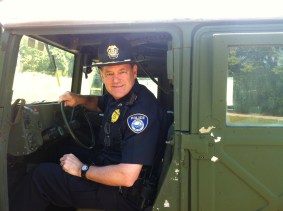
First responders experience trauma as job-related way of life
WESTBOROUGH, MA December 1, 2013 There is a new question in my mind about the exposure to trauma, e.g. war-related PTSD and the possibility that it plays a role in domestic violence and domestic violence homicide later on. While this link may be plausible, there are no scientific truth to the notion that DVH is caused by one’s exposure to war or on-the-job exposure to horrific events. Scott D. Jones of Arlington, MA was a decorated paramedic who responded to a mass homicide in 2000 in which 7 people were shot in an episode of workplace violence. He would go on to kill his second wife and family 14 years later after repeated episodes of severe depression and suicidal behavior and domestic violence toward his first wife. These behaviors were the first red flags of an impending emotional breakdown and terminal rage.
Returning veterans and those in the police and EMS service witness suffering and anguish that are outside of the normal human experience rendering them vulnerable to recurring trauma and a host of physical and emotional ills. Some believe the prevalence of PTSD among EMS first responders (including EMT paramedics) is as high as 16 percent (DeAngelis, 1995, p.36). Most services require critical incident debriefing after incidents that are particularly catastrophic – especially those resulting in death of a member of service or the death of a child. These sessions have been shown to reduce the incidence of post-incident symptoms by offering support and context for individual responders as to their individual role in the event. It is not psychotherapy although emotions are often evoked as remembered details emerge and become palpable.
What is the link between unresolved trauma and DV? It is well-known that a high incidence of substance abuse exists among first responders. “The emotional wellness of emergency service workers is at risk. Stress and grief are problems that are not easily detected or easily resolved. Severe depression, heart attacks, and the high rates of divorce, addiction, and suicide in the fire and EMS services proves this” according to Peggy Rainone who offers seminars in grief and surviving in EMS. To what extent this behavior evolves from on-the-job experience is subject to debate but chronically high levels of stress contribute markedly to marital discord, job conflict, and a host of physical anomalies like hypertension.
 The link between chronic stress and behavioral health is well-known. Does this link extend to higher risk for domestic or intimate partner homicide? The recent case of domestic violence homicide in Arlington, Massachusetts raises the specter of DVH in first responders. In this case, a decorated paramedic allegedly killed his children, his wife and then himself. The abuser had a history of physical and emotional abuse as reported by a first wife. There was a history of alcohol abuse. The abuser was involved in a whistle-blower case against his employer that was slowly making its way through the courts. But outwardly, he and his family seemed happy. What might trigger such an emotional and deadly maelstrom? What triggered the terminal rage that released this decorated man – creating a monster?
In some cases, post incident analysis of the psychological forces acting on the abuser is necessary and will provide insight into the chain of events that pulled on the trigger. There is no single answer but a host of identifiable “red flags” likely contributed to the loss of control associated with DVH. A thorough psychological autopsy may uncover factors leading to unresolved anger and the many unknown variables driving violent behavior. I have previously published blogs on the psychological autopsy and its utility. The benefit of a thorough PA has value for all of mankind.
-
- DeAngelis, (1995, February). Firefighters’ PTSD at dangerous levels. Monitor, pp. 36-37.
- Rainone, P. (2013) Emergency workers at risk. Taken 12-1-2013 (website) http://www.emsvilliage.com/articles/article.cfm?ID=176.
 MSefton's Human Behavior Blog