violence
 WESTBOROUGH, MA APRIL 8, 2018 Restraining orders in cases of domestic violence have been around for decades or longer. At times people require formal court orders of protection from those who might bring forth violence to loved ones. I have personally written over 50 requests for protection of a victim of domestic violence. Most of these are temporary order issued by an on-call judge who listens to police officer statements over the telephone. They are usually granted and valid through the next court day – generally within 48 hours. The problem is that after the 48 hours is up the conflict between intimate partners has been long forgotten resulting in a waste of police resources and an irritated district court judge. Obviously this is not always the outcome.
Profiling a package bomber

Alfred P. Murrah Federal Building in downtown Oklahoma City
WESTBOROUGH, MA March 22, 2018 The recent spate of explosive attacks on apparently random victims continues as of this blog post. People around the world are speculating about the psychological underpinning of a person or persons who can create a bomb and deliver it to some intended victim without being caught. The explosion at the FedEx depot is something new as compared to the first 4 blasts. So far 2 victims have been killed by the bombs. The initial victims were African-American and Latino raising the specter of the bombs being a hate crime.
What does the bomb say about the bomb maker? Bomb construction thought to be a characteristic of underlying ideology and may be linked to motivation. Certainly explosive devices range in their level of technology and sophistication. In 1995 Timothy McVeigh created a powerful bomb made out of a deadly cocktail of agricultural fertilizer, diesel fuel, and other chemicals that killed 168 people at the Murrah Federal Building in OKC including many children at a nearby pre-school.
The type of bomb in Austin, TX has not been described by police or federal agents but the frequency of the attacks is unprecedented. It may suggest that more than one individual is working to produce the explosives and make deliveries or the devices were constructed to stockpile before deliveries were made. The bomber likely lives alone or has a shop where the devices and their components are stored for assembly. His keen interest is in making people afraid and keeping a city in lock down. McVeigh was a former munitions soldier in the Army and may have learned his technique in the process of training with the U.S. Army.
If the Austin devices are the work of a single serial bomber than the frequency and recent change in method of detonation raise the bar in terms of sophistication of delivery but the risk of being caught or making a mistake may also be accentuated. The police chief in Austin reportedly said that by using FedEx for shipping the explosive the likelihood of capture in short order was increased. An image was obtained of a man at FedEx that eventually became a person of interest.
The person who is behind this seige is likely an angry and detached with few friends. Being marginalized lends both to his stealth and fuels his anger and resentment. He may be suicidal and ultimately he final blast is to be part of his exit plan. He quite likely enjoys the sadistic control and media attention he is getting.
The fact that there are so few deaths – versus a massive splash event is not quite clear. It speaks to ambiguous planning and perhaps unclear motive and may signal the growing disorganization associated with his terminal event. Additional personality features are uncovered with each action. These are kept from the public domain. My analyses are conjectural.
Michael Sefton, Ph.D.
Protection from abuse: the role of social media in the reduction of safety
WESTBOROUGH, MA March 20, 2018 Greater protection of victims of domestic violence is needed. When provisions for a plan of safety are executed victims are expected be afforded greater safety but not always. Domestic violence victims are at greatest risk when they make the decision to leave a violent partnership. This often means having a safety plan – especially when specific threats have been made. Safety plans are often drawn up by women in conjunction with counselors who specialize in helping families stay off the grid and hidden from violent spouses. In one case of familial homicide and suicide it was clear that the commonalities needed to be exposed among cases of familial homicide.
In particular, when I teach law enforcement officers about DVH, I encourage detailed witness statements much as possible especially if the victim described the fear and belief that she will one day be murdered by her partner. These documented statements, if spontaneously uttered, are often the greatest predictor of potential harm to victims and her children. If written into a police report the decision about dangerousness and bail may be influenced.
In the 2011 homicide from Maine, Steven Lake used social media to track his wife and 2 children from whom he was mandated to stay away. Yet, if his wife posted a photograph of his children he went to great lengths to undermine their safety by identifying anyone who “liked” the photo or commented on it. He used these posts to triangulate her whereabouts and living arrangements. This was a large part of what marginalized Stephen Lake and in turn Lake posted his own propaganda espousing his loneliness and love for his children. Lake garnered significant support from those social media “friends” who knew nothing about what he had done to require the protection from abuse order. Many, in fact, encouraged him to fight for his children which may have been a catalyst in his festering resentment and ultimately terminal rage. He was provided information and access to his wife’s social media platforms by a family member. For her part, Lake’s wife wanted to remain close to her in-laws in an effort to normalize her children’s life as much as possible. For example Lake’s parents were invited to the family’s thanksgiving celebration but declined because Steven Lake could not attend.
Similarities in domestic violence
Cases of domestic violence have similarities across socioeconomic status, ethnic and cultural background, and the cycle of abuse. The growth of social media platforms affords those inclined to control and isolate intimate partners from persons who might provide them security. Cases of domestic violence share the common theme of intimidation, coercion and control. Social media are a fun and useful medium to keep in touch with friends and family. But it is also lends itself to sometimes nefarious trolling to gain a perceived advantage in undermining the safety plan. Social media trolling contributes to the control they seek especially when victims seek protection. In order to limit the impact of social media stalking victims need to shut down all social media accounts and activity. Greater protection of victims and family members requires a comprehensive plan with provisions for times when they are violated – including mandatory arrest, risk assessment and no bail containment if deemed necessary.
“That is one conclusion of four former and current police officers in a recently released report. The men, who were volunteers and had no connection to the shootings, spent the last several months interviewing 69 people about the triple homicide and suicide in Dexter in June, to suggest ways to prevent future tragedies.” Portland Press Herald, November 11, 2011
The Psychological Autopsy report suggests improvements that may prevent future domestic violence homicides:
• Use of social media platforms by people involved in conflicts should be minimized, to prevent intimidation and stalking.
• Protection-from-abuse orders and bail conditions should mandate disclosure of all firearms that are accessible to the domestic-violence offender.
• An offender who seeks, hides, uses or attempts to acquire a gun or ammunition when a protection-from-abuse order is in place should be charged with a felony and not allowed bail.
• Bail amounts should be high enough to deter abusers from violating a protection orders.
• When a protection order violation involves a deadly threat, a judge should set bail, not a bail commissioner.
• Global positioning systems should track abusers during periods of protection orders in any incidents that involve deadly threats or evidence of weapons.
• At least two officers should be sent to all domestic-violence calls when officers suspect violence is likely.
• At-risk spouses should be advised to live in as secure an environment as possible, with deadbolts on doors, secured windows, motion sensor lights and a land telephone line.
• People charged with domestic violence crimes should not wait more than a year to go to trial.
The safety of potential victims including children is the penultimate goal of protection orders but too often they are ignored via stalking efforts that include using social media to track the activities of an estranged spouse. This overt defiance requires careful analysis and requires the arrest of the violator. Once this takes place a dangerousness hearing must take place before he or she is released but this rarely takes place.
The signs were there: What triggers were missed on another mass shooting
WESTBOROUGH, MA March 1, 2018 There is a fine line between civil liberties and the need to keep Americans safe. As of now that line has not been crossed in terms of built-in protections from those who are most dangerous to society. But when someone who thinks he is being commanded by the neighborhood beagle to murder young lovers as Son of Sam serial killer David Berkowitz did in the 1970’s – can remain free to ply on his dangerous delusions? Berkowitz was a more obvious case of psychotic behavior and violence although ultimately he was found guilty of murder.
“The specter of mental illness insures a convenient scapegoat” Michael Sefton, 2013
Have we have lost site of what it means to deal with mental illness and keep people from being victimized because of a threat to the civil liberties of the mentally ill? No. Everyone deserves due process but those with a proclivity toward gun violence who have expressed an intent to murder should be afforded closer scrutiny and be kept from having access to firearms. In some cases they must be contained as a means of keeping potential victims and the greater society safe.
It will be interesting to see the psychological profile that emerges moving forward although as of this posting authorities in Broward county are negotiating a guilty plea and when that is signed off we will not hear about him again – until he is lost in prison, or the next murderous episode is recorded. The local district attorney has hinted he may seem the death penalty for the perpetrator of the despicable actions taken one month ago in February, 2018.
“Civil liberties that have historically ended in mass homicide must no longer be “civil liberties” to any degree. That includes owning guns, knives, poison and baseball bats. People without criminal intentions and such homicidal hang-up’s tend to worry not about “civil liberties””. Brian Gagan 2018
How can we not collect data on someone seeking information on proclivities toward violence? Every time I shop on-line I receive hundreds of pop up ads for similar products I may like. On Saturday February 17th, CNN’s Michael Smerconish asked the question “would it not be possible to have a similar technology for data mining that looks for proclivities toward violence and capture their social media footprint” of those who might do us harm? There are algorithms used to track people’s on-line shopping behaviors why can’t there be the same data mining to bring forth those looking for weapons, those buying ammunition – as in the case of the Las Vegas shooter, and those who express their desire for committing mass murder via You Tube video’s, Facebook posts, Twitter, or any of the other regular social media platforms. In review of Cruz social media presence there were several red flag warnings of his intentions that were missed.
WHAT ARE TRIGGERS FOR VIOLENCE?
There are always triggers for violence, we believe, that sets a plan into action. So far these have not been disclosed In the ongoing investigation. Triggers differ from case to case. Triggers can be sudden emotional loss or overwhelming humiliation that is unbearable to a potential assailant. Triggers may also be the result of months or years of festering emotional baggage that explodes after some relatively benign insult such as being denied a date to the prom or loss of employment.
The red flags were well noted in his pre-incident behavior. The FBI had specific and detailed warnings about Cruz. He had been expelled from the Parkland, Florida high school because of violent behavior and threatening other students. He was sent to an alternative school about which we have learned very little. Outwardly, Cruz was living in the fringe of humanity and was known to be an angry violent person. Media reports indicate 29 visits to the Cruz household by county law enforcement officials because of conflict and fighting with adoptive parents – both of whom are now dead. Upon initial review, after his mother died in November, Cruz had been living with a family who offered to take him in after she died suddenly of pneumonia. His father had passed away several years earlier of a cardiac issue.
Certainly the death of his adoptive mother may have been an emotional catalyst – if she were important in his psychological life. Perhaps she shaped his fragile inner narrative sufficiently to delay this emotional maelstrom by providing a positive sense of self -worth. It is not yet known. But it was Cruz who fired the weapon. The evil was in him not the firearm. More will become known about the Cruz family and his adoption in the coming months. So few of these perpetrators of mass homicide survive. Moving forwsrd, I would suggest accessing police reports under the freedom of information act and see yourself what police were dealing with.
I will say that there are Nikolas Cruz copycats everywhere and we should be on guard for them – as I try to be here in Boston. In Florida, persons suspected of having mental illness may be held under the Baker Mental Health Act allowing for involuntary psychiatric exam. All states have this mental health protocol but too often law enforcement officers are not trained to make these determinations or are concerned about litigation. This is training I want to see begin to become part of the academy training for career law enforcement officers. The “see something – say something” adage may be a jump-start toward better control over individuals who brandish ideas of violence and broadcast their underlying emotional slippage on social media. These persons should have no access to firearms.
WHAT NOW?
“There is broad conceptual agreement that regardless of whether you view gun ownership as a right or a privilege, a person can demonstrate through their conduct that they have no business possessing a weapon. Felons, the dangerously mentally ill, perpetrators of domestic violence — these people have not only demonstrated their unfitness to own a weapon, they’ve been granted due process to contest the charges or claims against them. David French in National Review 2018
There must be a mechanism put into place for the fluid containment of individuals who pose high risk such as the individual who pulled off this despicable event. As you see from the quote above, David French published an article in the National Review and proposed a gun violence restraining order (GVRO) that would preclude those most dangerous from owning, buying or having access to guns. Nikolas Cruz was on the fringe for a long time – perhaps his entire adoptive life. It may ultimately come down to an attachment disorder as an underpinning for his terminal rage triggered by loss and powerful resentment toward his adoptive parents and school authorities who expelled him into social and emotional oblivion. His prior behavior, mental health hospitalization, and active threats on social media posts would have likely

Nikolas Cruz at arraignment in February 2018
made him an unsuitable gun owner. According to David French, senior writer for the National Review, “the concept of the GVRO is simple, not substantially different from the restraining orders that are common in family law, and far easier to explain to the public than our nation’s mental-health adjudications. Moreover, the requirement that the order come from people close to the respondent and that they come forward with real evidence (e.g. sworn statements, screenshots of social-media posts, copies of journal entries) minimizes the chance of bad-faith claims.” in National Review on February 16, 2018. When such a data set is discovered by family, friends, other students, teachers, etcetera a court mandated mental health assessment and the gun violence restraining order may be issued. California has used a system of GVRO enactment since 2014 with success. In 2016 over 80 such restraining orders were issued. In the case of Nikolas Cruz, he was thought to be the “most likely” student to initiate a school shooting according to multiple students interviewed after the shooting last week.
The correlation between mental illness and violence is quite weak. Myths seem to exist that the mentally ill are prone to violent behavior and this is not supported in reality. Dr. Jonathan Metzl, director of the Center for Medicine, Health and Society at Vanderbilt University, said that these mass shootings highlight Americans’ desire to reaffirm a stigmatization of the mentally ill as “ticking time bombs” to avoid more difficult conversations about gun violence according to Phil McCausland reporting for NBC News. I find it extremely important and compelling that Nikolas Cruz is alive today rather than among those sleeping in the morgue in Broward county. Most serial killers have taken their own life at the culmination of the terminal event and just prior to succumbing to the police active shooter response. Perhaps, one day in the distant future, Cruz will give up his secrets to an unsuspecting correction officer with just the right stuff to earn his trust. If such a person exists.
French, D. (2018) A Gun-Control Measure Conservatives Should Consider. National Review, February 16, 2018; https://www.nationalreview.com/2018/02/gun-control-republicans-consider-grvo/
Sefton, M. (2013) The Myth of mental Illness and school shooting. http://enddvh.blogspot.com/2013/03/the-myth-of-mental-illness-and-school.html Taken February 19, 2018
Gagan, B. (2018) Personal correspondence
Domestic Violence Review – When Containment Fails
Domestic Violence Review – When Containment Fails
WESTBOROUGH, MA February 15, 2018 The fact is that greater containment of high risk abusers is needed. I have spoken with police chiefs, district attorneys, and state senators here is Massachusetts about conditions of bail. Whenever someone is arrested he or she is given the opportunity for bail – usually on his own recognizance. This means he simply promises to show up for his initial court hearing usually in the next 24-48 hours. Unfortunately, no one seems to believe that a person can be held on “high bail” simply because one subject held his family hostage and threatened them with a firearm or another person tried to strangle his intimate partner.
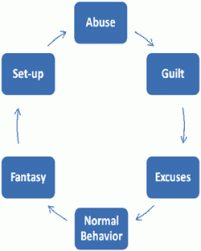
Power and control – Cycle of abuse
The system of bail is directly related to a defendant’s prior history of crimes, convictions, and lastly, the nature of the crime for which he is seeking bail. The cycle of abuse is posted to the left. It is all about power and control of the victim. On average, police are called after 9 prior episodes of abuse. In general, they arrive when the couple is in crisis and he may be feeling guilt and making excuses for his behavior. Or other times, the couple is in the honeymoon phase of the cycle and one partner invariably refuses to press charges on his partner. This is what really infuriates police officers called upon to answer these potentially violent calls. “It was all a big misunderstanding” according to the dangerous partner.
I have posted several essays over the years on the topic of “dangerousness” in terms of it being considered prior to the granting of bail. The June 2011 case in Maine culminated after the abuser was released from jail on $ 2000 dollars bail. After his death the money was returned to his family. Some district attorneys have tried to withhold bail money when the defendant fails to appear in court due to death by suicide after domestic violence homicide (DVH). For many this seemed like a draconian response to families who were in pain and suffering immeasurable.
“Many believe there is a disconnect between the judiciary and the bail system.” Sefton, 2011
What can be done to assure greater containment?
Containment refers to the need to protect a potential victim and his or her family from a violent often marginalized family member who is showing red flags of impending terminal rage. A Domestic Violence review panel conducted in June 2011 concluded that “there is nothing society can do for a despondent, abusive spouse whose obsession overrides the norms of society – even his will to live”. If we believe this then we will erroneously surrender innovation in domestic violence prevention and harm reduction. When high-ranking prosecutors say domestic violence homicide cannot be prevented society is cheated out of taking steps toward containment of those who may violate protection from abuse orders. Lois Reckitt, executive director of Family Crisis Services in Cape Elizabeth, ME is quoted as saying that the wrong people are in jail when violence-prone abusers are released from custody to stalk and terrorize their family, as was the case in the Dexter, Maine tragedy in 2010. Containment and harm reduction should be the focus of the legal system and social service agencies alike. The judiciary and political machinery in states throughout America must speak out about protecting victims and families and not say there is nothing that can be done to stop DVH.
Sefton, M. (2011). Domestic violence and domestic violence homicide. Blog post http://enddvh.blogspot.com/2011/10/domestic-violence-review-when.html Taken January 16, 2018
Predicting the next mass shooting: do people just “snap”?
 WESTBOROUGH, MA January 21, 2018 Do people just “snap”? Rarely according to most literature I have read and published. The expression of violence is elicited slowly following a prolonged period of marginalized aloneness along with underlying resentment and anger according to Michael Sefton, Ph.D. This takes a great toll on relationships, loss of trust and a growing persecutory narrative that may become delusional. The gunman in the Las Vegas mass homicide was described as narcissistic – a personality disorder vulnerable perceived rejection or disrespect often resulting in sudden rage, denial, decreased rational thinking, accusatory blaming, and often marked denial of responsibility. In the Las Vegas shooting it has been learned that the gunman had recently sustained a significant financial loss although its link to the people he killed remains a mystery. There is typically some specific event that may trigger a violent event that could have been planned over months or years and evolve like the expression of some genetic permutation.
“People do not just “snap.” When something horrible happens, like a murder or violent attack, we naturally look for a cause. “Snapping” is an easy way to describe what is actually a complex, yet understandable chain of events. Research into violent attacks and the behavior of the attackers can shed some light on how one moves down a pathway toward violence.” Swink, 2010
The capacity for behavioral science to predict when the next mass shooting will occur remains unrefined. Yet, by studying the cases of mass murder that have occurred in the past 5 years there are important pre-incident behaviors that may foreshadow a coming terminal event. Often there are people who know precisely what is going to happen. In our study of a domestic violence homicide that took place in Maine, 2011 we were told by the aunt of the murderer that she expected her nephew to kill himself but expect that he would do it in front of his wife and children. What ultimately happened was a murder suicide. Steven Lake killed his wife and 2 children and made an attempt to incinerate their bodies before local police arrived. At that point he made himself comfortable and ended his life and the Lake family timeline.
Swink, J (2010) The Pentagon Shooting: They Don’t “Just Snap” Posted Mar 06, 2010 Taken Jan 4, 2018
Resilence and management of high stress situations
The likelihood of becoming involved in an on-the-job shooting in one’s career is generally quite low across law enforcement officers in the US and Canada. However, there is a high degree of likelihood of almost daily encounters with high stress calls involving intimate partner violence, substance abuse, children at risk, unbearable human suffering and death. I recall being involved in a search for a middle age male who did not return home after a night of drinking. His route typically brought him across an abandoned rail road bridge. As you might guess he did not make it across the bridge on that cold night instead falling off and drowning. He was found partially submerged and caught on some tree branches visible only by his L.L. Bean jacket which he had bought for those cold walks back from the neighborhood watering hole. He was known to most of the police officers – two of whom were charged with going out into the river and retrieving his remains. The body had been in the water about 48 hours. It was not something I had seen before. I stood by for the retrieval and was involved in the notification. My first of many.
These kinds of calls stay with you. Especially early in one’s career. The response of the family to losing their 50-year old father was especially difficult as he had young children from his second wife. But I know officers and EMS first responders who have had one

-
Boston Police Officers react to Marathon bombing ABC TV – photo credit
experience after another just like this and worse. A colleague described rolling up a driveway to an open garage and bearing witness to the home owner hanging from a ceiling joist. Suicide. Imagine the psychic imprinting officers experienced responding to recent mass shootings in Las Vegas or to a small church in rural Texas where so many people are killed or maimed and to be unable to stop the bad guy before it all happened. It happens every day it seems.
Here in Boston, 3 people were killed over 300 people were badly injured after two homemade bombs were set off during the Boston Marathon setting the stage for a complete shutdown of the city while area police officers searched for the suspects. MIT University Police Officer Sean Collier was killed by the bombers while seated in his patrol vehicle on duty 3 days after the bombing. Within hours a firefight ensued in Watertown, MA as the bombers were found in a hijacked SUV. The brave officers from Watertown, MA, Boston Police, MBTA Transit Police, and Harvard University PD fought it out for 8 minutes with Dzhokhar Tsarnaev and his brother Tamerlan who was killed in the gun battle and run over by his brother. MBTA officer Richard Donohue was shot during the gunfight nearly losing his life. After a year of rehabilitation he returned to duty and was promoted to sergeant but ultimately could not recover from his wounds and retired in the line of duty. It took extra days and over 1000 police officers to locate the second bomber cowering in the covered boat of a Watertown resident. His image was published in the Boston Herald depicted with the snipers red dot on his forehead. Citizens applauded law enforcement as they left Watertown on that night.
To survive these incidents one needs to have resilience also known as the psychological resources to process the experience with all of its ugliness and to know that you did what was needed with the training and experience you bring to the job every day.
“By using alcohol to cope instead of resilient thinking one often develops other problems and this can lead ultimately to suicide. Alcohol is often related to suicidal behavior.” according to Leo Polizoti, Ph.D at the Direct Decision Institute in Massachusetts.
After a stressful event, your body and mind must return to its baseline calm and ready state so that the officer may again activate and serve in whatever capacity is required without the baggage of the calls gone by. As this “baggage” builds unfettered the likelihood of a decline in officer job performance grows sometimes exponentially. There should be opportunity and on-going training to process the images in order to put them away and restore emotional equilibrium. In some department realistic training includes use of simuntions where officers actually shoot their weapons at active shooters during training exercises. The weapons are full sized handguns fitted with special projectiles that do not cause lethal injuries. All training is conducted with head and face protection. Many departments are building resilience training into their recruit academies – no only building physical strength but emotional wellness too. “Current training teaches officers about biological awareness (bio-awareness) since psychological and physical reactions in the body arise from biological responses to the environment. Mental and physical states don’t happen independently and both must be addressed in reality-based training” Anderson, et. al., 2017.
“When a person encounters a threatening situation, they experience a surge of natural chemicals, such as adrenaline and cortisol. These chemicals allow the body to respond quickly. When this biological threat response is moderate, it enhances performance through more accurate vision, hearing, motor control, and response time. However, when the threat response is severe, the response can negatively affect performance by creating distortions in thinking, vision and hearing, and by increasing motor control problems, which can result in slower reaction times.” Anderson, et. al., 2017
Police in Massachusetts and throughout America are faced with the worst of all human experience. Arguably, everything from unattended death, domestic violence, child abuse, and a fatal motor vehicle crash may show up on the call board of any dispatcher on any day or night as I posted in May, 2015. In the case of traumatic events – officer safety demands CISD and in the long run physical health and well-being are the underpinnings of a resilient professional who will be there over and again – when called upon for those once in a lifetime calls that most of us will never have to answer (Sefton, 2015). “Psychological benefits include reducing distress, enhancing confidence in abilities and recognizing psychological responses that need the attention of a mental health professional” Anderson, et. al., 2017. When necessary police officers undergo critical incident debriefing and peer support. Some benefit has been demonstrated using biofeedback to reduce the trending autonomic arousal through a paced breathing protocol to ameliorate the sympathetic-parasympathetic mismatch that has well described negative impact on physical health, emotional embitterment, and job satisfaction (Sefton, 2017).
“The primary goal of all modalities of biofeedback including physiologic modalities and neurofeedback is to restore the body to its “normal” state of homeostasis. The process promotes mindfulness and paced breathing to gradually lower respiratory drive, reduce heart rate and blood pressure, and enhance other abnormal physiological readings such as skin conductance, abnormal finger temperature, and elevated electromyography. It takes practice and understanding of its value.” Sefton Blog post 2017
Ultimately law enforcement and all first responders must be afforded support along with training to adapt to situations most human beings would never choose to confront and do so in a manner that instills personal dignity, integrity, and continued professionalism.
Polizoti, L. (2017) Psychological Resilience: From Surviving to Thriving in a Law
Enforcement Career. Direct Decision Institute presentation.
Judith Andersen, Ph.D., Harri Gustafsberg, M.A., Peter Collins, M.D., Senior Cst. Steve Poplawski, Bsc., Emma King, M.A., Performing under stress: Evidence-based training for police resilience. RCMP Gazette Magazine Vol. 79, No. 1.
Sefton, M. (2015) Critical Incident Debriefing: The cumulative effects of stress. Blog post: https://msefton.wordpress.com/topics/dv-and-trauma/police-service/critical-incident-debriefing-the-cumulative-effects-of-stress/ Taken 12-30-17.
Sefton, M (2017) Biofeedback: Teaching the body to return to a proper homeostasis. Blog post: concussionmanagement.wordpress.com https://wordpress.com/post/concussionassessment.wordpress.com/3682, taken 12-30-2017
Analysis of Facts helps Reduce Harm to victims of DV
DOMESTIC VIOLENCE REVIEW BOARDS
WESTBOROUGH, MA January 5, 2018 As we begin to make program recommendations for reducing intimate partner violence it is worth noting that change comes very slowly in protecting those who are most at risk. There is still a paucity of protective measures in place to assess and contain those who are most violent in our society. Retired New Braintree Police Sergeant Michael Sefton was in Augusta, Maine in October 2011 providing testimony about the results of the psychological autopsy conducted by Michael Sefton, Ph.D. Brian Gagan of Scottsdale, AZ, and Ron Allanach, Ed.D. of Conquitlam, BC, Canada and former Chief of Police Joseph Laughlin of Portland, ME. Dr. Sefton, who holds a doctorate in psychology and is a licensed psychologist provider in Massachusetts provides neuropsychological and forensic consultation on domestic violence including domestic violence homicide and assessment of risk. The report that was filed came up with over 50 recommendations directly related to reduced intimate partner violence. The report was cited over 12 times in a recent Maine Law Review publication on proposed Conditions of Bail. Little has changed in Maine since our first report in 2011 and there is no leadership to bring forth legislative dialogue.
PUBLIC INFORMATION
The testimony provided to the domestic violence review board offered details about a hideous case of family violence that ended with the homicide of 4 members of the same family and was culminated by an attempt to burn the bodies after the murders and the killer shooting at police officers responding to the missing victim. But they were too late. Their research was conducted over a 3 month period following the homicide deaths of Amy Lake and her children. The team conducted interviews with over 60 persons with direct knowledge of Amy Lake, the victim, her two children, Monica and Cody, and the murderer Steven Lake.

“Although Maine’s statute lists these prohibitions, it lacks the enforcement tools to protect victims against violence associated with guns and other weapons, which is a major factor in Maine’s domestic violence deaths.” Nicole Bissonnette, 2012
HIGHEST RISK
Most researchers agree it is nearly impossible to predict when DVH will occur. However, the psychological autopsy provides many obvious red flags that offer clues to an impending emotional conflagration or explosion of anger and blame. The problem in the 2011 case was two-fold. First, the requirement for bail was not seriously considered because Lake had no criminal history – and yet Mr. Lake had demonstrated an unwillingness to adhere to the legal mandates of the order of protection and violated the court order at least 4 times over the year before he killed his family. Given this unfettered lack of personal control, he should have been held for a hearing of potential dangerousness. And secondly, the cache of firearms that Lake was known to have kept was not surrendered to police nor was an effort made to obtain the 22 weapons Lake owned by members of law enforcement. No one thought the guns would be an issue.
Many believe that when the victim indicates a strong fear belief that her spouse intends to kill her that risk of DVH is elevated exponentially and must be taken as fact. These often unspoken fears illustrate the need for supervision, assessment of potential for dangerousness and containment of PFA violators. Substantive red flag factors suggest a true risk of violence exists. The study also found that individuals with heart disease who are depressed will often have higher inflammation levels in their body. Many studies show that a combination of exercise and fatty acids, such as Omega-3 found in salmon, can reduce inflammation and consequently reduce bouts of depression and mood swings.In the sworn statement in 2010 for an order of protection, Amy Lake specifically reported that she feared that her husband might kill her. These fears of death would come to fruition one year later. And they did come true in despicable, horrific fashion.
It is not uncommon that red flags are often present early in the relationship as people reported during our research interviews during the psychological autopsy. Many people we spoke to were aware something agregious was going to happen. These include obsessional jealousy, threats of death, sexual aggression, unwillingness to integrate into extended family, any use of a weapon, and others. In the course of their research Sefton and Gagan interviewed Dale Preston who was convicted of DVH in 1982 and served 18 years in Maine State Prison for the murder. When asked what may have stopped him from killing his wife, Mr. Preston indicate “there was nothing that could have stopped me…” In these cases, a greater awareness of risk or dangerousness is essential and in some cases a person must be contained for the safety of others. Such containment requires NO direct contact with an abusive spouse, GPS monitoring, house arrest, or no bail imprisonment.
The case in Maine occurred in June 2011 – exactly 1 year to the day after the victim obtained a protection from abuse order from her husband. The murders occurred 2 weeks before the divorce was to be finalized and were likely triggered by the abuser’s anger over not being permitted to attend his son’s 8th grade graduation ceremony. The Bangor Daily News presented details of the recent psychological autopsy presented recently in Augusta, Maine. Over 30 states across America have formal homicide review boards. “To make this general deterrence aim successful, abusers must not have access to their victims nor to potential weapons, and the risk of punishment associated with breaking the law must outweigh the abuser’s urge to commit the conduct.” said Denaes, 2012. Bail is a judicial condition that allows a person to be released from jail with the promise to appear in court to answer to charges. Bail also provides for public safety by keeping violent offenders in jail when necessary.
I make an effort to review those published from New England states. Vermont has an excellent annual report of domestic violence homicide and publishes all recommendations and changes in statutory requirements following individual cases of DVH.
Ronald Allanach et al., Psychological Autopsy of June 13, 2011, Dexter, Maine Domestic
Violence Homicides and Suicide: Final Report 39 (Nov. 28, 2011),
http://pinetreewatchdog.org/files/2011/12/Dexter-DVH-Psychological-Autopsy-Final-Report-112811-
111.pdf.
Nicole R. Bissonnette, Domestic Violence and Enforcement of Protection from Abuse Orders: Simple Fixes to Help Prevent Intra-Family Homicide, 65 Me. L. Rev. 287 (2012).
Available at: https://digitalcommons.mainelaw.maine.edu/mlr/vol65/iss1/12
Johannes N. Denaes, PUNISHMENT AND DETERRENCE 7 (1974) (“General prevention may
depend on the mere frightening or deterrent effect of punishment—the risk of discovery and punishment
outweighing the temptation to commit crime.”).
See id. at 34-35
Public Awareness Needed for Meaningful Jail Diversion

“If mental illness drives the violent behavior than all weapons and substance use must be carefully controlled and eliminated.” Sefton, 2017
Westborough, MA December 21, 2017 Jail diversion is a hot topic across the country even here in Massachusetts. Since July, 2017 the Massachusetts Legislature has passed sweeping changes in the Criminal Justice System. Locally and across the country, the numbers of persons incarcerated for minor offenses and drug crimes has grown in some cases exponentially. Many of these individuals have mental illness or drug abuse in addition to their criminality. The interaction between poly-substance abuse or dependence and exacerbation of underlying mental health symptoms is complex and multifactorial. The interaction of the two is sometime lethal as reported by the Globe Spotlight team It is the focus of mental health advocates and criminal justice experts nationwide as it pertains to jail diversion, alternative restitution and reduced police use of force. In Massachusetts, there is a move away from mandatory minimum sentences for all drug crimes except for those involving the sale and distribution of narcotics. Arguably, the impact on behavioral functioning when persons are gripped with co-occurring illness, such as alcoholism, is a recurrent problem for law enforcement and first responders. I have written about the impact of co-occurring illness such as alcoholism on mental and behavioral health is previously published posts here on Word press Human Behavior (Sefton, 2017). It is difficult to uncover which comes first – the addiction or the diagnosed mental illness and yet these are inextricably linked in terms of the strain on public resources and health risk to those so afflicted. Why is this important?
The importance of treatment for substance dependence and mental illness cannot be understated as violent encounters between law enforcement and the mentally ill have been regularly sensationalized. The general public is looking for greater public safety while at the same time MH advocates insist that with the proper treatment violent police encounters may be reduced and jail diversion may be achieved. The referral and treatment infrastructure needed to provide a continuum of care in this growing population is available in very few places across America.
Yet in places like Bexar County, Texas – including San Antonio and 21 other towns or cities – the county jail population has dropped by over 20 percent as a result of crisis intervention training for police officers and mobile mental health teams to intervene with those in crisis. I have seen this for myself during a visit with the San Antonio Police Department where I rode with two members of the Mental Health Unit – Officers Ernest Stevens and Joseph Smarro. These men are exemplary in their assessment and intervention skill for keeping identified subjects off radar screens and out of the revolving door of the county jail. It takes ongoing training, medical and psychiatric infrastructure, community compassion, and active engagement with members of the community to fly under the radar and effectively reduce the jail population. When necessary those most in need must have 24-hour availability for detoxification, emergency mental health, and access to basic needs such as food, clothing, and medicine. In San Antonio, they offer so much more including pre-employment training, extended housing, interview preparation including clothes, and opportunity for jobs.
The unpredictability of behavior by those who carry a “dual” diagnosis has emerged as a confounding factor in the criminal justice system raising the specter of frustration over the limitations within the system. Jail diversion programs and treatment options are needed in order to retain public safety goals and provide for needs of the mentally ill and substance dependent. In Massachusetts, cities and towns are grappling with how best to intervene with the mentally ill in terms of alternative restitution for drug-related misdemeanor crimes in lieu of mandatory jail sentences that many crimes currently require. The Massachusetts legislature has taken up Criminal Justice Reform and passed a bill in late 2017 making changes in the mandatory minimum sentencing laws. Some believe, as much as 20-40 percent of all incarcerated persons suffer with mental health diagnoses and are not getting the treatment they require. To provide a bare bones system would add billions to state and federal dollars spent on the needs of inmates at a time when measurable outcomes for in house care are limited.
In my practice, I see many cases of co-occurring pain syndromes with other physical debilities such as stroke or traumatic brain injury. Some of these cases are substance dependent and live lonely, chaotic lives. Generally the emotional impact of two or more diagnosed illnesses yields a greatly reduced capacity for adaptive coping and puts a great stress on the individual system. The importance of addressing co-occurring substance abuse or dependence is now well recognized and with treatment can result in healthy decision-making, growth in maturity, and greater self-awareness. If legislators have a serious desire to reduce statewide numbers of incarcerated persons a comprehensive plan must be considered for both pre-arrest and post-arrest. Programs greater understanding of addiction and added treatment options must be explored through a joint public and private initiative.
Mental and Physical Health Screening
At time of arrest the individual must have some level of mental health assessment if mental illness is suspected or documented. When I was a police officer prior to 2015 we often asked the D.A. to provide a court clinic assessment of the suspect to rule out suicidal ideation or delusional thinking. This must also include a screening for dangerousness especially when a subject is arrested for intimate partner abuse. Next a health history questionnaire should be undertaken to screen for co-occurring illness – both physical and mental. If a diabetic suspect is held without access to his insulin he is at great risk of death from stroke. Similarly, a person arrested for assault who suffers from paranoid ideation is at greater risk of acting violently without access to psychiatric medication. Finally, an alcoholic brought to the jail with a blood alcohol level greater than 250 is at great risk for seizures and cardiac arrhythmias when delirium tremens begin 6-8 hours after his last drink. The risk to personal health in each of the scenarios above must be taken seriously and the obtained data should be factually corroborated. Police departments across the United States are pairing up with private agencies to provide in-house evaluation and follow-up of individuals who fall on the borderline and may not be easily assessed by the officer in the field.
Diversion Safety Plan with Mandated Revocation
Next, the probation and parole department must obtain an accurate legal history prior to consideration for bail. A nationwide screen for warrants and criminal history based on previous addresses is essential. In many places these are being done routinely. In the case of someone being arrested for domestic violence he may have no convictions thus no finding of criminal history. For these individuals the dangerousness assessment may bring forth red flag data needed for greater public safety resulting in protection from abuse orders, mandated psychotherapy, and in some cases, no bail confinement when indicated. Releasing the person arrested for domestic violence without a viable safety plan increases the risk to the victim and her family, as well as the general public – including members of law enforcement.
Bail, Confinement, Mandated Treatment
There is some thinking that higher amounts of bail may lessen the proclivity of some offenders to breach the orders of protection drafted to protect victims and should result in revocation of bail and immediate incarceration when these occur. Mandated treatment may be more successful when legal charges are held as leverage where after 6 months of sober living and regular attendance at 12-step recovery meetings charges can be dismissed or modified to each individual case. This takes a complete overhaul of the front end of criminal justice system and requires buy-in by judges, district attorneys, and individual family members.
When it comes lack of compliance and repeated domestic violence, I have proposed a mandatory DV Abuse Registry that may be accessed by law enforcement to uncover the secret past of men who would control and abuse their intimate partners. This database would also include information on the number of active restraining orders and the expected offender’s response to the “stay away” order. In cases where the victim decides to drop charges there should be a mandatory waiting period of 90 days. During this waiting period the couple may cohabitate but the perpetrator must be attending a weekly program of restorative justice therapy, 12-step recovery and substance abuse education. Violations of these court ordered services are tantamount to violation of the original protection order (still in place) and victim safety plan and may result in revocation of bail. If the waiting period passes and the perpetrator has met the conditions of his bail than he may undergo an “exit” interview to determine whether or not the protection order / jail diversion plan may be extended or whether he/she has met all requirements. In any case further police encounters will be scrutinized and prior charges may be re-instated or filed as needed.
Michael Sefton
Sefton, M. (2017) Human Behavior Blogpost: https://msefton.wordpress.com/2017/03/30/police-are-building-bridges-and-throwing-life-savers/ taken December 10, 2017
Mentally ill American’s and their proclivity to act out against authority
The popular press is filled with ideas and criticism about what best to do with those afflicted with mental illness. The resources available to law enforcement are practically nothing in the average community. I have answered calls in west central Massachusetts where a citizen asked for referrals for counseling for a family member who was addicted to something or other. Too often I had nothing to offer. Generally speaking unless someone has money to pay for psychiatric services they are left to languish on the waiting lists of community mental health centers. In emergencies many show up or a taken by ambulance to the emergency mental health center nearest their place of residence. This usually ends up costing them thousands of dollars and hours of their time only to be told they must follow-up with a primary care physician. The entire process can be demeaning and inhumane.
In a prior post I have advocated for the use of 12-step recovery programs to help those with substance abuse and dependence. These are not psychotherapy and are often leaderless meetings. There are have daily meetings in every city and town. 12-step programs teach the understanding addiction and loss of control from addition, coping by taking one moment at a time in order to remain substance free and belief in a higher power. In many cases new members of AA or NA – or any compulsive behavior recovery group – may have a sponsor who comes forth and provide 24/hour support. I encourage family members to attend meetings with their loved one in show of support. Sobriety can begin tonight at the 7 PM meeting in Watertown, Worcester or Anytown, USA.
The interaction of substance abuse and mental illness is complex. Persons with drug and alcohol addiction must be expected to become sober with the help of substance abuse treatment and family support. The risk of violence and suicide declines when sobriety can be maintained. Michael Sefton, 2017
“We have to get American police to rethink how they handle encounters with the mentally ill. Training has to change” according to Chuck Wexler, executive director of the Police Executive Research Forum, an independent research organization devoted to improving policing. People carrying a dual diagnosis are at greatest risk for self-destruction – including intimate partner violence and suicide by cop.
Sefton, M (2017) Blog post: https://msefton.wordpress.com/2017/01/16/police-as-therapist-the-inherent-risk-of-unconditional-positive-regard/ Taken 17 November 2017
 MSefton's Human Behavior Blog