The suspect in the Minneapolis church shooting followed by a manifesto against children, transgender people, Jews, and others. The mass shooting at Annunciation Catholic Church was described as an act of domestic terrorism. In this case the violence culminated in two fatalities and 18 wounded. Terrorism requires an intent to bring chaos and death to a mass society – in this case children praying at mass during a catholic school’s opening day of school. The FBI says the events was targeted against the Catholic school. The gunman fired their rifle at children and worshipers sitting in the Annunciation Catholic church during mass. Chief O’Hara at Minneapolis Police called it senseless and a deliberate act of cowardice beyond comprehension.
WESTBOROUGH, MA October 22, 2024 – The daily round up of active shooter incidents seems so repetitive and grim. People are learning the concept of run, hide, or fight in defense of their right to live or work, or attend concerts. Here in the United States, there are active shooter events every day or every week. These events start and end quickly averaging only 7-10 minutes before the shooter is dead. But in that time shooters fire hundreds of high power .223 rounds from assault rifles purchased for only this reason the police arrive and usually are met by the recently deceased body of the angry and misguided shooter.
The “active shooter” refers to just that – ongoing, systematic slaughter of innocent civilians with the specific purpose of violence and murder. These events start and end quickly averaging only 7-10 minutes before the shooter is dead.
Michael Sefton 2013
Some argue it is the availability of firearms that creates the opportunity for mass killing. Countries that have strict gun laws rarely see recurring gun violence. Japan, Norway, Iceland, and many other countries have rates of gun violence that are flat in terms of recurring active shooter events. That means that police rarely are called upon the face an active shooter like police officers here in the United States. And the noncombatants are left to wait for reunification with parents and counseling. Prayers for all. Teddy bears and candles abound. And the ultimate answers as to why this happened will be revealed in the psychotic, rambling, manifesto of the mentally injured shooter. That will tell us all we need to know about school shooting and those who might bring us harm.
I am working with a retired corrections supervisor who has known PTSD that is quite poorly controlled. He was diagnosed only 2 years ago even though he has not been in the inside for 9 years. He has dozens of traumatic experiences most of which have gone untreated. In most cases, law enforcement and corrections officers alike would undergo debriefing when officers are required to retrieve human remains or to cut down an inmate hanging from his bed rail or someplace else.
CO is cooperative and likable. I had heard about walking corpse syndrome once or twice. I have even had one or two cases of this specific delusional disorder and may have missed its significance. I was trained to think that walking corpse was usually associated with borderline personality disorder, hypochondriasis, or somatization disorder. It goes beyond the cookie cutter explanation and does not incorporate an organic cause. In a case I worked with in the summer of 2022, the 57-year-old male has a history of unstable PTSD because of his 21 years of service at a maximum-security prison here in Massachusetts. During this time, he experienced physical attacks over five times – one of which kept him out of work for 10 months. He witnessed over 100 prisoner hangings – deaths by suicide that required a special team response. He was a supervisor and was called upon to organize “teams” of men to deal with offenders who were violent and admitted with pride that he was always the first man at the scene. By doing so, he witnessed men who had cut their own throats and died before the entry team could assemble and make the save. He witnessed vicious fights among competing prison factions. And was himself attacked and lost time at work.
These experiences followed him into retirement and invade his sleep regularly even now. He sleeps only 2 hours at a time, awakened by images of his death own and embalming. He walks the house checking doors – just as he did on the block during his time on the job. For his part, he feels conflicted because he is a Christian and believes in his heart that he could help many inmates – some of whom may have taken their own lives. Instead, he could not turn the other cheek at times when inmate brutality broke the normal clamor behind bars. Correction’s officers are often seen as the last first-responders and are rarely debriefed following inmate deaths, personal attacks, or violence toward officers.
I had heard about walking corpse syndrome once or twice. I have even had one or two cases of this extremely specific delusional disorder and may have missed its significance. I was trained to think that walking corpse was usually associated with borderline personality disorder, hypochondriasis, or somatization disorder. It goes beyond the cookie cutter explanation of diagnoses and fails to include an organic neuropsychological underpinning that we now understand is important.
MIchael Sefton, Ph.D.
Cotard’s syndrome is characterized by nihilistic delusions focused on the individual’s body including loss of body parts, being dead, or not existing at all. Cotard’s is neither mentioned in DSM-V nor in ICD-10 – both diagnostic tools made for identifying nervous and mental disorders. There is growing unanimity that Cotard’s syndrome with its typical nihilistic delusions externalizes an underlying disorder. Even though Cotard’s syndrome is not a diagnostic entity in our current classification systems, recognition of the syndrome and a specific clinical understanding is essential for definitive treatment options and classification. Organic causes should be ruled out as an etiology before attribution of Cotard’s syndrome as a fully functional problem. Some papers are cited in the literature that indicate that separate typologies should be considered. The most common is a syndrome more strongly associated with major depression and its symptomatology including melancholia, nihilism, and psychotic features. A slightly different nosology abnegates depression and aligns it more closely with delusional thinking and not primarily associated with affective disorder.
Cotard delusion is a rare condition marked by the false belief that you or your body parts are dead, dying, or don’t exist. It usually occurs with severe depression and some psychotic disorders. It can accompany other mental illnesses and neurological conditions. You might also hear it referred to as walking corpse syndrome, Cotard’s syndrome, or nihilistic delusion.
Debruyen, H, et al. (2011) Cotard Syndrome.
Debruyne, Hans & Portzky, Michael & Peremans, Kathelijne & Audenaert, Kurt. (2011). Cotard’s syndrome. Mind & Brain, The Journal of Psychiatry. 2. 67-72.
Among the most dramatic and menacing forms of mental illness are the psychotic disorders. These include people who have uncontrolled paranoid schizophrenia, bipolar disorder, depression with psychotic features, substance intoxication, and perhaps intermittent explosive disorder. Violence is not associated with mental illness per se. There are factors that increase violent behavior among those who are mentally ill including persecutory ideation like suspiciousness and fear, and co-occurring alcohol dependence. The most important way in which to reduce violence among citizens who are mentally ill is to provide some form of treatment to them. Those who go without substantive treatment including psychotherapy are at greatest risk for becoming aggressive or violent according to Coid et al. (2016). These are the citizens who fly above the radar and are seen pacing the street corners in cities everywhere reciting from some unwritten preamble. People walking avoid eye contact further pushing them to the margins of civility. Eventually, the bottom falls out and the preamble comes to an incoherent end. Either they move on or they are picked up for evaluation.
There are even greater numbers of psychotic people living under the radar. Making their way in society, flying by the seat of their pants. These people are often cared for by family members including elderly parents. When they relapse or “go off the rails”, caregivers often need the help of police to gain compliance with their loved ones. Sometimes the police are called to restore the peace and compel the emotionally disturbed person into treatment. For those individuals who relapse and are substance dependent i.e. alcoholic, the risk for violence is elevated. These people require special understanding and sensitivity in order to establish a trust and to help them see their behavior patterns and risk taking behavior for themselves. No easy task.
More recently, meta-analyses and case register studies concluded that psychiatric disorders are associated with violence, but that the relationship is largely or entirely explained by comorbid substance misuse. Fazel et al. (2009)
Fazel S, Gulati G, Linsell, L, Geddes, JR, Grann, M. (2009) Schizophrenia and violence: systematic review and meta-analysis. PLoS Med. 6: e1000120.
Scope of the Problem: Police Suicide and the goal to eliminate it – modified December 28, 2022
Police job-related stress is well-identified and reported in the media daily and the rates of suicide nationwide are being debated by Aamodt and Stalnaker. They are actually less than one is led to believe but even one law enforcement officer suicide is too much. During the week of Christmas 2022, 3 police officers took their own lives at Chicago PD. Some law enforcement officer deaths may be reduced by using a stress intervention continuum. This ties the continuum of calls into a stress reduction protocol that empowers resilience and recognizes the importance of stress mentoring and the soft hand-off for defusing the growing impact of high stress and high lethality exposure. The stress intervention continuum does not single out one officer but identifies all officers – including call takers, dispatchers, and supervisors for defusing particularly abhorrent events like mass shootings. This way, personnel who played a roll in a “bad call” will not be overlooked nor stigmatized for stress reduction defusing and/or debriefing.
Stress is defined as any situation that negatively impacts an officer’s well-being. The rate of suicide and divorce among law enforcement is approximately the same or lower than the general public according to a meta-analysis conducted by Professor Michael Aamodt. But there are areas in the country and agencies that have higher rates of self-inflicted death.
When the suicide rate of police officers (18.1) is compared with the 21.89 rate for a comparable demographic population, it appears that police officers have a lower rate of suicide than the population according to Aamodt, 2008.
Incidence of suicide tend to be elevated in cities like Chicago, where chronic gun violence and a murder rate in the hundreds per year means cops see a staggering amount of traumatic events. As a result, they may gradually become numb to the exposure of pain and suffering (Joyner, 2009). A Department of Justice report found that the suicide rate in the Chicago Police Department is 60 percent higher than the national average. According to the 2018 Chicago Sun Times, in a note to department members, former CPD Supt. Eddie Johnson said in 2018, “Death by suicide is clearly a problem in Law Enforcement and in the Chicago Police Department. We all have our breaking points, a time of weakness where we feel as if there is no way out, no alternative. But it does not have to end that way. You are NOT alone. Death by suicide is a problem that we can eliminate together” CST September 12, 2018. Chicago PD is not alone with the problem of suicide among its men and women in blue. In fact, smaller departments with fewer than 50 officers often have high rates of suicide and lack the peer support and clinical resources that enable officers to find help during times of crisis.
Law enforcement officers (LEO’s) encounter the worst of all experience on a routine basis. The people who call the police may be society’s best upstanding citizens but on this occasion it could be the worst day of their lives and they seek help from police. Many times it is not the pillars of society seeking help but those people in the fringes or margins of society now victims of violent crime or abuse.
According to Hartley, et.al., 2007, “repeated exposures to acute work stressors (e.g., violent criminal acts, sad and disturbing situations, and physically demanding responses), in addition to contending with negative life events (e.g., divorce, serious family or personal illness, and financial difficulties), can affect both the psychological and physiological well-being of the LEO population.” When these officers are identified there needs to be a planned response using a peer support infrastructure that provides for a continuum of service depending upon the individual needs of the LEO and the supports available. In many agencies, especially smaller departments lacking resources, officers’ languish and sometimes spiral downward without support and without somewhere to turn. Police officers must have support available to them long before they are expressing suicidal urges.
As programs are identified and service continuum grows the risk of peer conflict over perceived betrayal of trust must be addressed. This must be addressed in the peer support training with emphasis on preservation of life over maintenance of confidentiality or the status quo of abject silence. “In itself, it’s a product of centuries of police culture in which perceived weakness is stigmatized. Cops know their brothers have their back, no matter what, but they still don’t want to be seen as the one who’s vulnerable.” according to a recent Men’s Health article written by Jack Crosbie in a report about suicide in the NYPD published during Mental Health Awareness month in May 2018.
The argument is made that the recurring uncertainty of police calls for service often leave LEO’s with low-level exposure to trauma of varying degrees. It is common that LEO’s move from one violent call to the next without time to decompress and process what they have seen. The repeated exposure to trauma can slowly whittle away LEO resilience – defined as the capacity to bounce back from adversity. In a national media study published by Aamodt and Stalnaker, legal problems were a major reason for the law enforcement suicides yet no other study separately cited legal problems. In another study, relationship problems accounted for the highest percentage of suicides at 26.6% (relationship problems plus murder/suicide), followed by legal problems at 14.8%. In nearly a third of the suicides, no reason was known for LEO suicide.
Police suicide has been on the radar of advocates of LEO peer support for months or years. The incidence of suicide has remained stable across the country but some agencies have higher rates of suicide. Smaller departments – those with less than 50 officers in general have the highest rates of suicide. This may be linked to the lack of availability of peer support programs and a paucity of local practitioners to provide professional service with knowledge in police psychology. “While police officers may adapt to the negative effects of chronic stress, acute traumatic incidents necessitate specialized mental health treatment for police officers (Patterson, 2001)”. A referral to the department EAP often falls flat and makes it more difficult to make the hand-off when peer support is not enough.
Points of entry to Peer Support – Stress Intervention Continuum
Exposure to highly stressful events in close sequence
Change in work assignment, district/station, deployment undercover or return from deployment
Increased absenteeism – over use of sick leave – missing court dates
Increased use/abuse of substances – impacting job functioning, on-the-job injury
Community – citizen complaint(s) for verbal abuse, dereliction of duty, vehicle crash
Citizen complaints of excessive force during arrest, supervisory or peer conflict, or direct insubordination
Abuse of power using baton, taser or firearm, recurrent officer involved use of force. Officers are sometimes strongly embittered and angry at this point in their career due to perceived lack of support and powerful feelings career disappointment and alienation – copyright Michael Sefton, Ph.D.
Real-time model of change The use of force continuum is well described in the LEO literature and ongoing criminal justice narrative. What does that have to do with stress intervention in police officers? It sets the tone for officer behavior whenever they meet potential resistance and or increased aggression during citizen encounters. It may also be used for initiating peer support needs whenever an incident use of force has occurred. LEO’s change the force response based on the situation they encounter in real-time in a flexible and fluid manner. In this same way, peer support programs can flexibly shift to the needs of a presenting LEO and intervene early on – rather than when an officer is at a breaking point. “This continuum (use of force) has many levels, and officers are instructed to respond with a level of force appropriate to the situation at hand, acknowledging that the officer may move from one point on the continuum to another in a matter of seconds.” NIJ publication. Peer support too, must accommodate a law enforcement officer in real-time to begin the process of building a healthy, resilient response to sometimes horrific exposures and provide a continuum of unbiased employee assistance and when necessary professional consultation.
Protective Factors begin in Academy training
What topics should addressed while LEO recruits are in training? Ostensibly, the resilience of LEO’s depends upon the opportunity for in-service training in topics of mindfulness, stress management, physical health maintenance, nutrition, and trust.
“Emotional resilience is defined as the capacity to integrate the breadth of police training and experience with healthy, adaptive coping, optimism, mental flexibility and healthy resolution of the traumatic events. In general, resilient people are self-reliant and have positive role models from whom they have learned to handle the stressful events all police officers encounter” according to Leo Polizoti, Ph.D. a police consulting psychologist (Sefton 2018).
Police programs for health maintenance
The Police Stress Intervention Continuum or P-SIC, involves a system of police support that varies in its intensity depending upon the continuum of individual needs of the LEO including physical debility or other significant components impacting career success and satisfaction. The intervention protocol is flexible and fluid as well. The entry point into the peer support continuum initiates from supervisory observations of LEO history and behavior, peer recommendations, and exposure to a range of traumatic events.
The cumulative stress associated with a career in law enforcement cannot be understated. In the setting of police stress and stress support there is an intervention protocol that relates to the peer-support program continuum. Depending on where officers enter the peer support network will impact the level of intervention they may require in the P-SIC program. Peer support is not psychotherapy but officers occasionally must hand off the officer in trouble to a higher level of care. These hand-offs are key to linking at-risk LEO’s with range of professional support needed to keep them on the job. Yet fear of reprisal for acknowledging the cumulative impact of stress and its impact often derails the hand-off to the professional. The highest risk for suicide to a LEO is when he is denuded of badge and gun because he may be a threat to himself.
The career success they have may be directly related to the application of resiliency training to build and maintain physical and emotional hardiness that lasts a lifetime according to Leo Polizoti, 2018. Before this can happen the stigma associated with reaching out must be reduced.
Aamodt, M. G., & Stalnaker, N. A. (2001). Police officer suicide: Frequency and officer profiles. In Shehan, D. C, & Warren, J. I. (Eds.) Suicide and Law Enforcement. Washington, D.C.: Federal Bureau of Investigation.
Aamodt, M. (2008). Reducing Misconceptions and False Beliefs in Police and Criminal Psychology. Criminal Justice and Behavior 2008; 35; 1231 DOI: 10.1177/0093854808321527.
Patterson, G T. (200l). Reconceptualizing traumatic incidents experienced by law enforcement personnel. The Australian Journal of Disaster and Trauma Studies, 2.
Joyner, T. (2009) The Interpersonal-Psychological Theory of Suicidal Behavior: Current Empirical Status. Science Briefs, American Psychological Association, June.
Hartley, T., et.al.(2007). Associations Between Major Life Events, Traumatic Incidents, and Depression Among Buffalo Police Officers. International Journal of Emergency Mental Health, Vol. 9, No. 1, pp.
John M. Violanti, Anna Mnatsakanova, Tara A. Hartley, Michael E. Andrew, Cecil M. Burchfiel. (2012). Police Suicide in Small Departments: A comparative analysis. Int J Emerg Ment Health. Author manuscript available in PMC 2015 Aug 14. Published in final edited form as: Int J Emerg Ment Health. 2012; 14(3): 157–162.
After a spate of bomb threats and mass shootings there are still many myths about the attribution of these events and the underpinnings of violence. The knee jerk reaction is to attribute the recent Thousand Oaks, CA nightclub shooting to a “crazed gunman” but that would unfairly place the blame on the mentally ill. 12 people were left dead in a despicable sequence of events during which the shooter Ian David Long posted that he had no reason for doing it except boredom. In truth, most people with mental illness are not dangerous, and most dangerous people are not mentally ill.” Liza Gold, 2013. But Long had a history of violence and aggressive behavior that may have been linked to his service as a decorated US Marine. Published information suggests Long’s mother was terrified of making him angry out of fear that he would harm or kill her. Was Long’s terminal behavior attributable to mental illness or the result of traumatic events he experienced in the service of his country?
“Fact is I had no reason to do it, and I just thought….(expletive), life is boring so why not?” Ian David Long via social media post (now removed)
Psychological experts believe mentally ill persons lack the higher order planning to execute the complex steps necessary for anything more than petty crime – more often associated with co-morbid substance abuse. It is the co-occuring illness of drug or alcohol addiction that is a confounding variable in all police-mental health encounters. “Doctors and scientists know that the perpetrators of such violent behavior including incidence mass shooting events are frequently angry young men, who feel they have been mistreated by society and therefore seek to exact revenge” described in a BBC the report Criminal Myths published in November.
“Confounding variables such as a history of childhood abuse or use of alcohol or drugs can increase the odds of violence.” according to a BBC report debunking the belief that people who commit mass murder are mentally ill by Rachel Newer in November, 2018. The vast majority of cases are committed by a person or persons without mental illness. In fact, people with mental illness are more likely to be victims of crime and are not prone to violent behavior. The Thousand Oaks killer refused any mental health support and was not driven by demons
The interaction of substance abuse and mental illness is complex. Persons with drug and alcohol addiction must be expected to become sober with the help of substance abuse treatment and family support. The risk of violence and suicide declines when sobriety can be maintained. This is essential and will help to reduce officer involved use of force against the mentally ill substantially. What to do?
Red flag indicators are often demonstrated in behaviors that are observable and measurable sometimes for weeks and months before the terminal event according to Michael Sefton, 2015.
The incidence of mental illness leading to mass shooting may be illustrated in the 2007 Virginia Tech shootings. The Virginia Tech shooter Seung-Hui Cho had been treated for depression and was hospitalized on an involuntary basis prior to the rampage in 2007. Cho exhibited a life-long pattern of withdrawal from interpersonal relationships. He was often nonverbal and did not respond to people who reached out to him including direct family members. His mother prayed for God to transform her son.
I strongly believe that mental illness does not mitigate citizens from responsibility for crimes they commit. I agree that alternative sentencing may be a powerful tool to bring these individuals into treatment. The substantive goal of streamlining encounters between police officers and citizens who suffer with untreated emotional problems belies the mission of these gifted officers and can teach others the role of discretion in mental health encounters.
Ostensibly, building relationships with network psychotherapists, physicians, addiction specialists, court judges, and other support service like Child and Family Services is essential. This is the area of most vulnerability. When LEO’s fully buy-in to the mental health – police intervention model including the use of de-escalation techniques there must be receiving facilities available to initiate treatment and keep patients and citizens safe. The development of a fully integrated infrastructure for jail diversion, intake, and providing for the needs of the mentally ill is certainly a work in progress.
Washington POST photo
“And when it comes to mass shootings, those with mental illness account for “less than 1 % of all yearly gun-related homicides” a 2016 study found. Other studies indicate that people with mental disorders account for just 3-5 % of overall violence in the US” – Paul Appelbaum, M.D. taken from BBC by Rachel Newer 11-1-2018
Many cases of domestic violence (DV) result in an order of protection being issued. The protection order is based upon the personal report of the victim which is substantiated by police report and perceived risk and may be implemented 24 hours a day. The approval of a court judge or magistrate is generally required for its issuance. This order requires that the abuser “stay away” from the victim and is based on the totality of circumstances presented to a district or family court judge at the time of arrest. Police officers use report narratives to construct the details of the protection from abuse (PFA) or restraining order (RO). Different states utilize differing nomenclature to define what is the substantive court directive that provides the underpinning of a victim safety plan. They are granted on an emergency basis for 24-48 hours and are sustained for up to 6-12 months following a review by the court.
What happens between the time the initial PFA is granted and when the victim is expected in court to chronicle his or her intimate partner violence is often a mystery. Victims often fail to show for the initial hearing that allows the initial PFO to go away. Why? In some cases they become intimidated by their violent spouse who has made promises to straighten up and fly right. This is the core dynamic of intimate partner violence and it is well-described in these pages and elsewhere.
“Domestic violence is not random and unpredictable. There are red flags that trigger an emotional undulation that bears energy like the movement of tectonic plates beneath the sea.” according to Michael Sefton (2016).
In all states a protection order requires that no contact be made via telephone, through acquaintances, text messaging, or in person. By violating a PFO requires that law enforcement make an arrest of the person in violation. This information becomes the grist of the underlying risk to the victim. The marginalized abuser sometimes becomes obsessed with his loss of control and may take to cyber stalking in order to keep tabs on his partner. As just mentioned any violation of the protection order renders the abuser subject to arrest and should require a high amount of bail before he is released from jail. This is rarely the circumstance as violators easily make bail ironically blaming the victim as the root cause of the marital strain. These are the hubristic remarks of building tension and frustration described in the cycle of violence.
It is important to note that social media has given abusers extra means to “creep” into the privacy of estranged spouses without detection. It played a significant role in the domestic violence homicide according to the psychological autopsy report of the Dexter, Maine homicide/suicide in 2011 (Allanach, R. et al., 2011). Social media may also be used to intimidate and unfairly influence friends and family.
Bail amounts differ from state to state and sometimes even from county to county within a single state. The amount of bail should be high enough to inconvenience and deter the abuser from being tempted to coerce and manipulate his victim and family. Most often the bail amount is low and inconsequential to the abuser who often has no criminal record. However, changes in bail conditions and risk assessment must be integrated into orders of protection – especially when a single abuser has had more than one PFO filed against him. This sets the stage for measuring the degree of violence one might expect as the abuser becomes further marginalized and feels his control over the victim begin to collapse. “Someone with a history, particularly a continuing history of violence, can be presumed to be dangerous.” according to Frederick Neuman, MD.
The order of protection belies the fundamental safety plan that is crafted by police and domestic violence experts and is designed to prevent further victim injury or death.
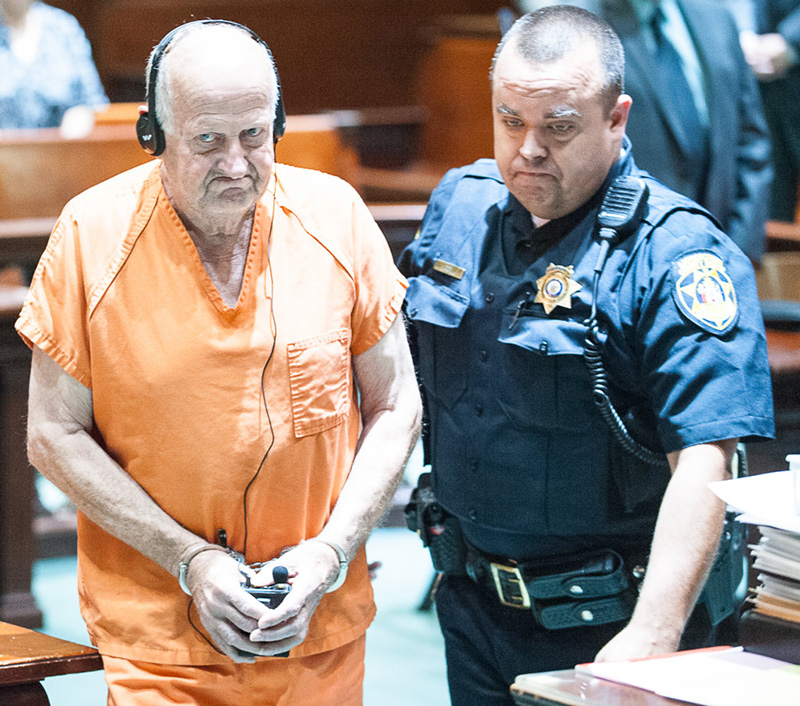
Albert Flick is led out of the courtroom following his initial appearance in the Androscoggin County Court house in Auburn Wednesday morning. (Russ Dillingham/Sun Journal)
There is no pleasure when a parole board must decide on whether to release or not a man who violently murdered his wife. Especially the case of Albert Flick – arrested in Westbrook, Maine in 1979 and convicted of the brutal murder of his wife. Mr. Flick asked not to be released perhaps out of some inner sense of foreboding and primal instinct of things to come – if such a thing exists among killers. He is a wolf in sheep’s clothing -underneath he is ravenous.
Fast forward to Sunday July 15, 2018 Albert Flick who had been released from jail for committing the violent murder of his wife again killed a woman with whom he had an infatuation. He had been stalking her for weeks prior to her murder. He followed she and her two little boys from place to place in Lewiston, Maine. She had an inner sense that he was dangerous but was fearful of going to the police at the time of her death. Yet she had spoken to friends about her worries. What may have prevented the victim from calling police when she first noticed Mr. Flick was stalking her? Why was she fearful of the very people charged with preventing violence? What may have happened if she had notified the officer on her beat? Or a police officer walking in her neighborhood?
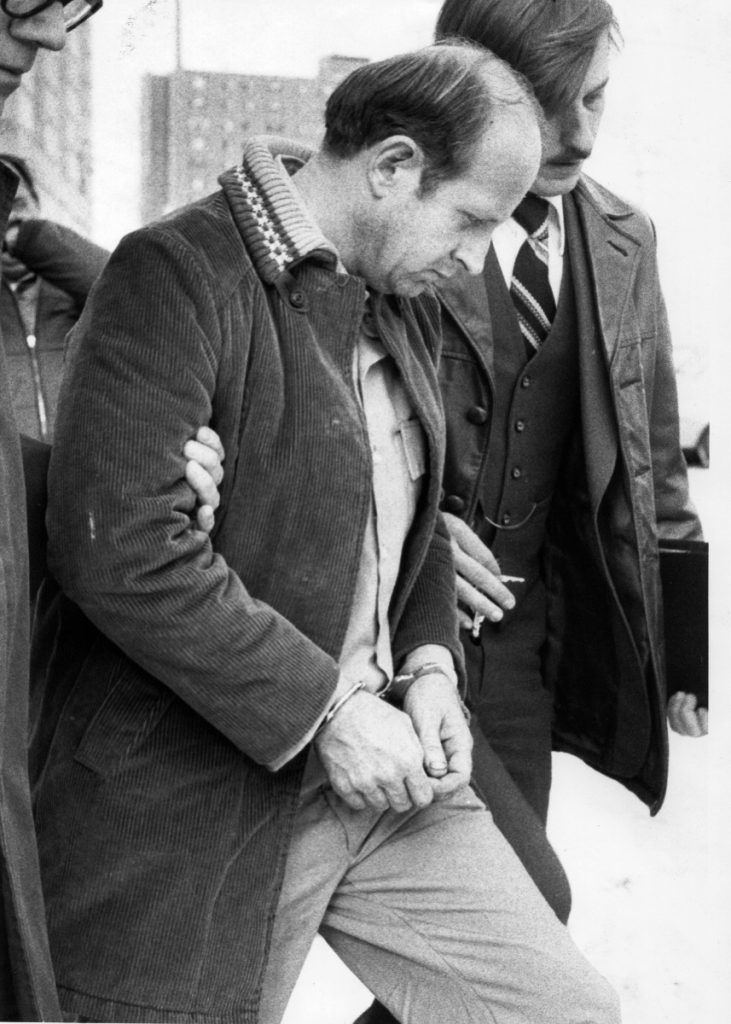
The answer is that Mr. Flick would have had a visitor that in all likelihood would derail his infatuating behavior. If not, he would have had is parole revoked as it should have rightfully been done. I was a police officer in Westbrook, Maine when Flick murdered his wife in 1979. I was on duty when the call came in to the station but as a junior officer was not dispatched to the scene. The scene was horrific even by todays standards of violence. Nevertheless, the case is well know to me as I later worked closely with the arresting investigator Ron Allanach and his partner Wayne Syphers – both exemplary career law enforcement officers. Ron went on to earn his doctorate in counseling and was Chief of Police for 8 years at the end of his career in Westbrook. Both men were instrumental at convicting Albert Flick. Flick is shown in the 1979 photograph below being taken to court in Portland by Detective Syphers who made a heroic effort to save the life of the victim. The female victim ultimately died in his arms in 1979. Albert Flick should have remained in jail for life and many in law enforcement who remember the case are agonizing over his release after serving 20 years.
“Clearly, probation is not working. … At this point, I just don’t know what else to do. I think there’s a huge safety risk to women and society when it comes to Mr. Flick.” Prosecutor Katherine Tierney, 2010
Albert Flick with Det. Wayne Syphers (right) at Cumberland County, Maine trial in 1979
Flick was known for a proclivity for violence against women. After being released from his murder conviction Flick was arrested for chasing an intimate partner with a screw driver with intent to due harm. There would be other charges and other arrests that were red flags for the underlying anger he felt toward woman. A group of us will reach out to Mr. Flick in the coming months for a sit down.
The female victim, Kimberly Dobbie, in this 2018 Lewiston, Maine case had felt threatened by Flick. Her instincts were keen as it related to his potential for violence against her. But she told only her friend and no one else. She was 30 years his junior and had spurned his love interest. She had twin children who were present during the despicable killing and are traumatized having witnessed their mother’s death. In his book “The Gift of Fear“, Gavin deBecker espoused the value of trusting our primal instincts as they pertain to our personal safety.
Flick had been in and out of prison for crimes involving intimate partner violence and intimidating female witness who were courageous in coming forward against Flick. At some point he himself reported asked to be kept in custody.
“You can’t say that nothing can be done, because nothing will be done,” said Michael Sefton, a former Westbrook police officer who now works in Massachusetts for the New Braintree Police Department.
The judge who authorized Flick’s release is retired from the bench but his stated opinion for releasing Flick was that “he had aged-out and was no longer criminally inclined” yet he himself asked to remain behind bars. Why?
Technically this was true, Flick no longer fit the stereotypic picture of a repeat murderer. He was older and physically growing infirm. Most men who commit domestic violence homicide do not recidivate once released from prison especially those over the age of 70. While researching a case of family murder-suicide, I have spoken to a man who served 18 years for strangling his wife who was released and became a model citizen and amateur photographer. He published a book of his photographs that were quite good – even sensitive. This man was not a risk and was somewhat younger than Flick. So by all reasonable judicial standards Flick was considered a low-risk release. Probation would keep him in line. Not so fast, information was available from his first release that included repeated violence against women raising a red flag of potential violence in the future. Plus the horrific nature of the stabbing murder in 1979 was not a factor in the release conditions once he had served his time. Finally, there is also information that suggested that Mr. Flick did not seek his own release as reported above. He may have been institutionalized with the simmering anger he himself expected would again leach from his despicable soul.
WESTBOROUGH, MA June 2, 2018 Violence in the workplace is commonplace but has taken a back seat in the setting of recent school shootings. Research on the “lethal employee” is becoming more reliable in the aftermath of of workplace violence. Nevertheless people commit murder in their workplace more than ever. What should people do if they are worried about a co-worker becoming violent. There are signs that someone is loosing control and may be thinking of violence. A list of potential factors is taken below from the U.S. Department of Homeland Security publication from 2008. The term “going postal” refers to a workplace shooter or act of violence. It evolved from workplace violence in the U.S. Postal service in the 1980’s according to a report published in 2008.
“One theory was that the post office was such a high-pressure work environment that it drove people insane. In the years to come, other cases of murderous rages by mailmen cemented the idea in the public mind. “Going postal” became a synonym for flipping out under pressure.”
RECOGNIZING POTENTIAL WORKPLACE VIOLENCE
“An active shooter in your workplace may be a current or former employee, or an acquaintance of a current or former employee. Intuitive managers and coworkers may notice characteristics of potentially violent behavior in an employee. Alert your Human Resources Department if you believe an employee or coworker exhibits potentially violent behavior” (2008)
Indicators of Potential Violence by an Employee Employees typically do not just “snap,” but display indicators of potentially violent behavior over time. If these behaviors are recognized, they can often be managed and treated. Potentially violent behaviors by an employee may include one or more of the following (this list of behaviors is not comprehensive, nor is it intended as a mechanism for diagnosing violent tendencies):
• Increased use of alcohol and/or illegal drugs
• Unexplained increase in absenteeism; vague physical complaints
• Noticeable decrease in attention to appearance and hygiene
• Depression / withdrawal
• Resistance and overreaction to changes in policy and procedures
• Repeated violations of company policies
• Increased severe mood swings
• Noticeably unstable, emotional responses
• Explosive outbursts of anger or rage without provocation
• Suicidal; comments about “putting things in order”
• Behavior which is suspect of paranoia, (“everybody is against me”)
• Increasingly talks of problems at home
• Escalation of domestic problems into the workplace; talk of severe financial problems
• Talk of previous incidents of violence
• Empathy with individuals committing violence
• Increase in unsolicited comments about firearms, other dangerous weapons and violent crimes
U.S. Department of Homeland Security. (2008). Active Shooter – How to Respond
Bovsum, M. (2010) NY Daily News. Mailman massacre: 14 die after Patrick Sherrill ‘goes postal’ in 1986 shootings. http://www.nydailynews.com/news/crime/mailman-massacre-14-die-patrick-sherrill-postal-1986-shootings-article-1.204101 Taken May 19, 2018
WESTBOROUGH, MA April 8, 2018 The myths attributed to persons afflicted with mental illness need to be directly addressed and corrective programs must evolve provide enhanced understanding and awareness of mental health. Police officers encounter citizens with mental illness daily and often are called upon to calm a volatile situation often with very little formal training. This fact is changing as more police officers are trained in Psychological First Aid and Crisis Intervention Training – 2 programs that afford front line officers with the behavioral observation skill and communication necessary to reduce risk to police and the public from highly charged persons exhibiting signs of mental health crisis.
Psychological experts believe mentally ill persons lack the higher order planning to execute the complex steps necessary for anything more than petty crime – more often associated with co-morbid substance abuse. This is where the problem lies. “The myth is you have to be “crazy” to do something like this (active shooter). So retrospectively, you look at people and you say, wow, this obviously – that guy should have been branded – but alcohol accounts for a great deal more violence than mental illness does.” according to Joel Dvoskin in an APA interview dispelling myths about the mentally ill.
Remember it is a fact that those with mental illness are rarely violent and those who commit violence are rarely mentally ill.
Until recently, here in Massachusetts many smaller police agencies are forced to pay overtime for police officers to sit in hospitals or outside of jail cells watching a mentally ill person who has been arrested. This policy grew from the fear of litigation if someone dies in police custody who is known to be a mentally ill person. Specifically, if a police officer arrests a person with a known history of suicidal ideation it has been policy among many agencies to provide an officer to monitor the prisoner to assure for a safe transfer to court. If this occurs on a week end night that often means that someone must have eyes on the person in custody until the next available court date.
But is this truth or is this part of the myth associated with those taken into custody for crimes committed while suffering from a substantive mental illness? Or is the problem really associated with substance abuse?
“Pre-arrest diversion also has been shown to be successful when law enforcement and mental health professionals respond together to behavioral health emergencies. Individuals are more often referred to the services and treatment that they need, rather than enter the criminal justice system as an offender. This co-responder model has delivered great results in Massachusetts to date. Programs run by Advocates, a human services agency, in partnership with several police departments in Middlesex County and funded in part by the Department of Mental Health have generated over 4,000 diversions and $11 million in savings since 2003.” Diane Gould Worcester Telegram February 2018
Dvoskin, J. (2018) Speaking of Psychology: Dispelling the myth of violence and mental illness Episode 27 American Psychological Association




 MSefton's Human Behavior Blog