WESTBOROUGH, MA October 22, 2024 – The daily round up of active shooter incidents seems so repetitive and grim. People are learning the concept of run, hide, or fight in defense of their right to live or work, or attend concerts. Here in the United States, there are active shooter events every day or every week. These events start and end quickly averaging only 7-10 minutes before the shooter is dead. But in that time shooters fire hundreds of high power .223 rounds from assault rifles purchased for only this reason the police arrive and usually are met by the recently deceased body of the angry and misguided shooter.
The “active shooter” refers to just that – ongoing, systematic slaughter of innocent civilians with the specific purpose of violence and murder. These events start and end quickly averaging only 7-10 minutes before the shooter is dead.
Michael Sefton 2013
Some argue it is the availability of firearms that creates the opportunity for mass killing. Countries that have strict gun laws rarely see recurring gun violence. Japan, Norway, Iceland, and many other countries have rates of gun violence that are flat in terms of recurring active shooter events. That means that police rarely are called upon the face an active shooter like police officers here in the United States. And the noncombatants are left to wait for reunification with parents and counseling. Prayers for all. Teddy bears and candles abound. And the ultimate answers as to why this happened will be revealed in the psychotic, rambling, manifesto of the mentally injured shooter. That will tell us all we need to know about school shooting and those who might bring us harm.
I recently read an article in the Washington Post first published in 2018 written by Michael Miller. I sent him a note suggesting he pick up the ball on this. I am interested in the topic of police behavioral health and understand the dynamic of law enforcement suicide and how the notion remains stuck in modern police service due to stigma with suicide and mental health wellness in police officers. I am a former police officer and know there is nothing more horrific than a police officer suicide or death to a member. In Chicago officers have taken their own lives while in the driveway of their duty station. In Los Angeles, four active duty or retired officers committed suicide in one weekend in November 2023. In Washington DC, an officer who was ordered back to work following the attack on the Capitol killed himself while driving to his work. People are starting to connect years of service with risk for suicide and many departments are taking police officer wellness as the key to both career hardiness and job performance. One officer granted LODD status remains in conflict. Erin Smith wants her husband’s name added to the D.C. police department’s list of fallen officers and engraved on the National Law Enforcement Officers Memorial, and the official burial honors traditionally afforded to officers killed in the line of duty according to a Washington Post opinion piece from .
I was part of a panel about police suicide in Chicago in 2019. The dark problem is especially taboo when cops are involved in a line of duty shooting and later kill themselves. The Chicago program was held following a rash of suicide deaths in the Chicago PD. Most officers do not return to the job following the investigation of their actions. Some do. Those who do return are off the job within five years. I am a police consulting psychologist in the Boston area. I am charged with pre-employment screening and fitness for duty exams after law enforcement exposure to trauma. More needs to be done to link on-the-job exposure to horrific and despicable human behavior to suicide and afford them line of duty death status including the honors and pension compensation just like other officers who die in the line of duty. In Washington DC officers who took their own lives following the Capitol insurrection were afforded line of duty status. Why not others?
“Police work took officers to “some of the darkest places in America,” he said, and few were darker than the scenes of officer-involved shootings, often called “critical incidents.” Line of duty death and police well-being are strongly impacted. Some police officers kill themselves after critical incidents they cannot unsee.”
“Chicago is kind of like ground zero with the number of suicides that are happening on a monthly basis now at this point,” said Daniel Hollar, who chairs the department of behavior and social science studies at Bethune-Cookman University in Florida. Dr Holler hosted Dr Doug Joiner to Chicago for a symposium in 2019. Dr Joiner taught us much of why officers kill themselves. He says they become embittered, they feel a deep sense of thwarted belongingness and grow increasingly detached with higher risk of suicide. “These are police officers answering calls of duty to protect lives. We (need to) do our job to make their jobs safer.” said Dr. Joiner. After an officer suicide, personnel try to reconstruct what was going on in the person’s mind by systematically asking a set of questions, in a consistent format, to the people with the greatest insights into the person’s life and mind—family, co-workers, and friends.” This is known as a psychological autopsy, and I have proposed it for any officer who dies by suicide. If this is done effectively, I can assure you there will be no escalation of suicide among police officers. Something police chiefs and city counselors unfairly fear.
I am working with one department where two officers have not returned to active duty nearly two years after being involved in a violent shooting while trying to help someone who had led them on a chase ending in a roll over motor vehicle crash. As officers approach the overturned vehicle the driver began shooting at them with a semiautomatic rifle. These brave men were traumatized by the fatal shooting of a subject who first fled from a legal police car stop and then opened fire on them. They have been out of work on administrative leave receiving behavioral health support but are unlikely to return to service.
I have conducted a psychological autopsy on a police constable who was involved in a line of duty shooting resulting in death in November 1971. He was a full-time police officer in Mifflin Township, OH that had no formal police department. No chief and no field training support. He shot and killed a man and was cleared of wrongdoing. Sadly, he killed himself in front of his wife one year later at Christmas. He grew restless and embittered after being villified by people inhis community. He believed nothing was being done to support and protect him. He is buried in a cemetery near the man he shot and killed. I want this death changed to line of duty (LODD). Why? When someone kills themselves most departments, including all smaller agencies, fail to discover the set of facts and red flags left behind leading to suicide. The investigation is often cursory, purportedly out of respect to the family. But there are factors in the careers of police officers that make them at higher risk for suicide then the public. This is not sustainable.
I have been writing about this for 9 years in the pages of my human behavior blog. In Chicago, if an officer comes forward looking for help, they are stripped of their firearm, police powers, and their star (badge). This is demoralizing according to officers I have spoken to. Why would anyone come forward if this is the protocol. This may be changing, whereas CPD has added therapists in each of their 23 police stations. Unfortunately, one cannot unsee some of the darkest scenes in human behavior like the death of a law enforcement officer or domestic violence resulting in death. The psychological autopsy must include a 3-month list of calls the decedent answered including those for which he or she was given debriefing, defusing, or time off for respite from the job. I would want to understand how the call volume may have triggered underlying acute stress of new calls that triggered new trauma? In any case, the story was interesting and careful analysis is important in all incidents resulting in police suicide.
Front page of Uvalde Leader following mass shooting on May 24, 2022 now two years on
This post reflects on the tragic events in Uvalde, Texas that occurred 2 years ago this week. Nobody wants to remember this day in Texas that happened two years ago. But the totality of events suggests not one but two tragic occurrences, the active shooter and the police response. As frightened parents were threatened with arrest for wanting to enter the Robb elementary school, a man named Salvatore Ramos hunted for kids and had an hour alone in the building while shooting. The parents waited outside with police during that hour when no one initiated the call to order and the call to stop the shooting.
The day started normally enough with a ceremony for children who had made the honor roll. The parents of these children had no idea that the ceremony would be the last bright moments of their young child’s life. Shortly after the end of the honor roll ceremony the proud fourth graders went back to their classrooms. When a few minutes later, the school was breached by a former student – a wolf in sheep’s clothing. At 11:28 AM, Salvadore Ramos entered the Robb elementary school through an open door. The 911 system had been activated. His plan had been foretold on a chat group saying, “wait and see.” Law enforcement was in the building and then took fire. Retreat and wait.
Only months earlier, they had trained for this. The tactical training instructs officers to move to contact and bring the fight to the sound of the guns even when you must step around or over victims. In the Pulse Nightclub massacre in Orlando, FL officers had to ignore victims pleading for their lives as a small group of sheriff’s deputies chased the shooter in pitch darkness into a men’s room and neutralized the threat. We were taught that as few as three officers could bring an end to an active shooter incident by quickly entering a building and moving to the sound of the shooting to neutralize the threat. The FBI says as few as two officers to teams of five should enter the scene without hesitation and move to contact. Moving forward not back.
Our chief in Massachusetts vowed that he would drive his cruiser through the front door of the school if needed, to gain immediate access to save lives. The New Braintree elementary school was much like the school in Uvalde with many doors and easy access to classrooms. The important message we recieved in all active shooter trainings was not to hesitate for extra back-up if it meant waiting. Early entry with two or three officers, find the shooter, and end the assault. Waiting meant more children would perish.
We learned from Columbine, that the longer we waited the more children, teachers, and staff would be lost. These events are over in 5-7 minutes. There was no way a SWAT team could deploy in the time needed to move into the school, find the bad guy, and put an end to the killing. We trained in neighboring schools too so we might be familiar with the maze of corridors common in most school buildings.
In this case Ramos was in the building for 60 minutes when a team from the U.S. Border Patrol made its move. Uvalde turned into a large crime scene and a heart-breaking stain on dozens of onlooker police officers. At least nineteen ten-year old children and two teachers were killed by a member of their own community. Former Uvalde High School student Salvadore Ramos was just 18 years old. He killed nineteen 3rd and 4th grade students and their teachers in tiny Robb elementary school in west Texas over the course of an hour. That hour will be scrutinized by the FBI, Texas Rangers, and other active shooter experts to discern law enforcement strengths and weaknesses in the handling of this event. Had law enforcement followed the protocol as practiced? Two years on the collective say no.
Much of the aftermath scrutiny will catalog social media red flags that may have informed law enforcement of his disaffected beliefs. The psychological autopsy will chronicle the facts of Ramos’ final weeks especially his social media presence. Information about his state of mind will slowly emerge and the roadmap of his disaffected early beginning. No one knows how long Ramos may have been percolating when he purchased 2 high powered rifles after turning 18 in March. On Facebook, Ramos leaked his plan to Cece, a teenager in Germany. It became visible to other members of a chat group including “Cece” who could do nothing to stop Ramos’ intentions.
His mother, Adriana Reyes said he was angry for failing to graduate high school with his fellow classmates, adding that “he was not a monster.” In an NBC News interview, Adriana Ramos’ boyfriend, Juan Alvarez, said that Ramos went to live with his grandmother after a fight with his mom over Wi-Fi. He said the relationship between Ramos and his mother was tumultuous and that the two often fought.” Since the pandemic quarantine Ramos’ mother described him as mean. His closest friend said that Ramos was bullied in middle school because of a stutter and years later after posting a photo of himself wearing black eye liner. He grew distant from friends and sometimes used a BB gun to shoot people while driving around with friends. He had an online presence and played violent video games with friends like Tour of Duty. His social media chat foretold his intent to murder starting with his grandmother. The psychological underpinnings for these murders will be studied for years to come. The police response will also be critiqued for its dearth of leadership and tactical failure.
But Valdez (Ramos’ friend) said he was horrified when Ramos once showed up at the park with numerous slashes across his face, initially claiming the cuts had been caused by a cat scratching him. “Then he told me the truth,” Valdez said. “That he’d cut up his face with knives over and over and over. I was like, ‘You’re crazy, bro, why would you do that?'” Ramos reportedly told him he did it “for fun,” the newspaper stated.
Chloe Mayer, Newsweek Newsletter
The 18-year old high school student shot his grandmother in the face before heading for his primary target in much the same way mass murderer Adam Lanza, then age 20, killed his mother in December 2012 before heading to the elementary school in Newtown, CT at 9:39 in the morning. The two killers are seen as similar in mental health domains. Ramos withdrew from his family and from school. He was angry, Lanza too was detached and played video games hours each day. He was homeschooled at age 16 and was fixated on guns. He too was also angry. His mother purchased him his first firearm, a pistol. He took some college classes. Bought some more guns like a Savage Mark II bolt action .22 caliber. Then back to school – Sandy Hook elementary with his Bushmaster XM-15 E2S semiautomatic rifle, Glock 20 .22 & the shiny Sig Sauer .226. Unlike Sandy Hook, there are many questions about the time line of events at Robb elementary on May 24th that have become the focus of community outrage.
Just like Sandy Hook, the outcome in Uvalde was as hideous as anything one could imagine. But unlike Sandy Hook the tactical response took too long. Like Sandy Hook and Marjorie Stoneman Douglas before them, parents at Uvalde experienced the horrendous reality of the disaffected person having access to guns.
For his part, Salvadore Ramos would receive no awards on that day. His mother was wrong. He was no longer a student; he became a monster no one will forget. By all rights, his rampage may have been cut short by an hour or so, had law enforcement brought the tip of the spear to him as shots first rang out. We know this from Columbine. Ramos’ day would end in blackness, just like the front page of the Uvalde Leader-News.
Front page of Uvalde Leader following mass shooting on May 24, 2022 now two years on
This post reflects on the tragic events in Uvalde, Texas that occurred 2 years ago this week. Nobody wants to remember this day in Texas that happened two years ago. But the totality of events suggests not one but two tragic occurences, the active shooter and the police response. As frightened parents where threatened with arrest for wanting to enter the Robb elementary school, a man named Salvatore Ramos hunted for kids and had an hour alone in the building while shooting. The parents waited outside with police during that hour when no one initated the call to order and the call to stop the shooting.
The day started normally enough with a ceremony for children who had made the honor roll. The parents of these children had no idea that the ceremony would be the last bright moments of their young child’s life. Shortly after the end of the honor roll ceremony the proud fourth graders went back to their classrooms. When a few minutes later, the school was breached by a former student – a wolf in sheep’s clothing. At 11:28 AM, Salvadore Ramos entered the Robb elementary school through an open door. The 911 system had been activated. His plan had been foretold on a chat group saying “wait and see.” Law enforcement was in the building and then took fire. Retreat and wait.
Only months earlier, they had trained for this. The tactical training instructs officers to move to contact and bring the fight to the sound of the guns even when you must step around or over victims. In the Pulse Nightclub massacre in Orlando, FL officers had to ignore victims pleading for their lives as a small group of sheriff’s deputies chased the shooter in pitch darkness into a men’s room and neutralized the threat. We were taught that as few as three officers could bring an end to an active shooter incident by quickly entering a building and moving to the sound of the shooting to neutralize the threat. The FBI says as few as two officers to teams of five should enter the scene without hesitation and move to contact. Moving forward not back.
Our chief in New Braintree, MA vowed that he would drive his cruiser through the front door of the school if needed, to gain immediate access to save lives. The New Braintree elementary school was much like the school in Uvalde with many doors and easy access to classrooms. The important message we recieved in all active shooter trainings was not to hesitate for extra back-up if it meant waiting. Early entry with two or three officers, find the shooter, and end the assault. Waiting meant more children would perish.
We learned from Columbine, that the longer we waited the more children, teachers, and staff would be lost. These events are over in 5-7 minutes. There was no way a SWAT team could deploy in the time needed to move into the school, find the bad guy, and put an end to the killing. We trained in neighboring schools too so we might be familiar with the maze of corridors common in most school buildings.
In this case Ramos was in the building for 60 minutes when a team from the U.S. Border Patrol made its move. Uvalde turned into a large crime scene and a heart-breaking stain on dozens of onlooker police officers. At least 19 ten-year old children and 2 teachers were killed by a member of their own community. Former Uvalde High School student Salvadore Ramos was just 18 years old. He killed nineteen 3rd and 4th grade students and their teachers in tiny Robb elementary school in west Texas over the course of an hour. That hour will be scrutinized by the FBI, Texas Rangers, and other active shooter experts to discern law enforcement strengths and weaknesses in the handling of this event. Had law enforcement followed the protocol as practiced? Two years on the collective minds say “no.”
Much of the aftermath scrutiny will catalog social media red flags that may have informed law enforcement of his disaffected beliefs. This is obvious but no one can see the musing of someones anger without the help of those privy to his intentions. The psychological autopsy will chronicle the facts of Ramos’ final weeks especially his social media presence. Information about his state of mind will slowly emerge and the roadmap to his disaffected life. No one knows how long Ramos may have been percolating when he purchased 2 high powered rifles after turning 18 in March. On Facebook, Ramos leaked his plan to Cece, a teenager in Germany. It became visible to other members of a chat group including “Cece” who could do nothing to stop Ramos’ intentions.
His mother, Adriana Reyes said he was angry for failing to graduate high school with his fellow classmates, adding that “he was not a monster.” In an NBC News interview, Adriana Ramos’ boyfriend, Juan Alvarez, said that Ramos went to live with his grandmother after a fight with his mom over Wi-Fi. He said the relationship between Ramos and his mother was tumultuous and that the two often fought.” Since the pandemic quarantine Ramos’ mother described him as mean. His closest friend said that Ramos was bullied in middle school because of a stutter and years later after posting a photo of himself wearing black eye liner. He grew distant from friends and sometimes used a BB gun to shoot people while driving around with friends. He had an online presence and played violent video games with friends like Tour of Duty. His social media chat foretold his intent to murder starting with his grandmother. The psychological underpinnings for these murders will be studied for years to come. The police response will also be critiqued for its dearth of leadership and tactical failure.
But Valdez (Ramos’ friend) said he was horrified when Ramos once showed up at the park with numerous slashes across his face, initially claiming the cuts had been caused by a cat scratching him. “Then he told me the truth,” Valdez said. “That he’d cut up his face with knives over and over and over. I was like, ‘You’re crazy, bro, why would you do that?'” Ramos reportedly told him he did it “for fun,” the newspaper stated.
Chloe Mayer, Newsweek Newsletter
The 18-year old high school student shot his grandmother in the face before heading for his primary target in much the same way mass murderer Adam Lanza, then age 20, killed his mother in December 2012 before heading to the elementary school in Newtown, CT at 9:39 in the morning. The two killers are seen as similar in mental health domains. Ramos withdrew from his family and from school. He was angry, Lanza too was detached and played video games hours each day. He was homeschooled at age 16 and was fixated on guns. He too was also angry. His mother purchased him his first firearm, a pistol. He took some college classes. Bought some more guns like a Savage Mark II bolt action .22 caliber. Then back to school – Sandy Hook elementary with his Bushmaster XM-15 E2S semiautomatic rifle, Glock 20 .22 & the shiny Sig Sauer .226. Unlike Sandy Hook, there are many questions about the time line of events at Robb elementary on May 24th that have become the focus of community outrage.
Just like Sandy Hook, the outcome in Uvalde was as hideous as anything one could imagine. But unlike Sandy Hook the tactical response took too long. Like Sandy Hook and Marjorie Taylor Douglas before them, parents’ at Uvalde experienced the horrendous reality of the disaffected having access to guns.
For his part, Salvadore Ramos would receive no awards on that day. His mother was wrong. He was no longer a student; he became a monster no one will forget. By all rights his rampage may have been cut short by an hour or so, had law enforcement brought the tip of the spear to him as shots first rang out. We know this from Columbine. Ramos’ day would end in blackness, just like the front page of the Uvalde Leader-News.
Domestic violence homicide shares common red flag warnings that are discernible when prosecutors take time to connect the dots.
In Maine, Texas, and across America, the criminal justice system – including prosecutors, too often fail to protect victims of domestic and family violence from their abusers — even when the “red flag” warning signs are obvious as they were in both these cases. In this post, and the March 15 post, I talk about the importance of report writing and truly understanding DV on a visceral or gut level. To truly understand what is going to happen requires a realization that just below the surface may lie a wolf in sheep’s clothing.
In early 2021, the police in Austin,Texas were beset by a horrific case of domestic violence homicide. On April 18, 2021, a former police officer killed the family while picking up his son for a monthly supervised visit. The child’s mother encouraged these visits as important to the boy’s development and relationship with his violent and sadistic father. While exchanging pleasantries, the child’s father shot and killed his former wife and step-daughter. And he killed his daughter’s young boy friend and immediately fled. Detective Broderick was captured 20 hours later and is being held. Yes, the abused was a former law enforcement officer.
Common sense look at facts
Police need broad discretionary authority in dealing with any violation of orders of protection including no bail holds and danger risk assessment
Following the 2020 arrest for sexual assault of a child, Broderick resigned from the Travis County Sheriff’s Department. He was initially held on $100,000 bond. A family friend remarked, “I kind of had a feeling that this is where he was going, because he was lost,” she explained. “He lost everything. He lost his family. There was a protective order for a reason.” He was lost? That gives him the right to violently kill his former wife, adopted daughter, and her male friend? Many in our society are lost and do not go on to commit violent homicide.
The 16-year old child, who was among the victims, begged for a more restrictive supervision of her step-father who had been released from jail and was not required to wear an ankle bracelet after only a period of 3 months. An order of protection was brought against former police detective. There was a protection order in place but even the teen knew that orders of protection were “not worth the paper they were written on.”
“Because Mr. Broderick committed this heinous crime after he paid a money bond to be released on charges related to sexual assault against a child, Texas law permits his detention without bail.”
Wes Wilson, KXAN television Austin, TX
There is a case to be made for careful analysis of behavioral health functioning of abusers. That seems to be common sense right? But this sometimes does not occur. As a law enforcement officer in Massachusetts, I made an effort to introduce risk assessment tools to quantify a subject’s dangerousness. This is important but is not yet universally adopted here in Massachusetts. Nearly 10 years on, the psychological autopsy conducted in 2011, looked at the red flag warnings that are common to DVH everywhere – including the case in Austin. What brought my attention to the case in Maine was the purported prosecutorial impotence argued by Christopher Almy, the county district attorney, that there was “nothing that could be done to protect the victim, Amy Lake and her two children, from her estranged husband Stephen Lake. That statement was inspiring. Imagine if you and your family were depending upon the police to protect you as Amy Lake was? Everything that could be done was in place. But the protection order had no teeth. So Steven Lake snuck into the Amy’s home at 5 AM and staged a despicable murder scene, ultimately killing the children he claimed to love while Amy was forced to watch. Ending with her shotgun murder and is own death by suicide.
“Domestic violence is not random and unpredictable. There are red flags that trigger the emotional undulation that bears energy like the movement of tectonic plates beneath the sea.”Michael Sefton (2016)
In an article on the 8th Amendment regarding bail in cases of domestic violence, the Maine Law Review, first in 2012 and an updated second publication in 2017, cited the importance of carefully crafted conditions of bail especially among men who are found to have violated the conditions often by stalking and using social media to intimidate and contact potential victims also by trolling family members in an effort to locate estranged spouse and her children who may be in hiding. Both Amy Lake and Austin, TX mother of 3 expressed an interest in having children remain in contact with extended family in spite of pending serious criminal charges. This opened up access to the perpetrator to information about current living arrangements, employment, after school activities, and other potential clues that raised the risk of further domestic violence and ultimately DVH. In Austin, the victim expressed a wish to allow her estranged husband to have contact with the little boy – his son in spite of pending felony charges brought forth by the 16-year old step-daughter who rightfully feared for her life. Why was her fear ignored or minimized given her history of having been sexually assaulted by her adoptive father and his animosity toward her for reporting the abuse to law enforcement. He blamed her for his loss of career and status as a local detective with the Travis County Sheriff’s Department.
Firearms are a major cause of DVH and in every state are required to be taken from men with active protection orders in place. This was the default expectation in the two cases described here but in the case of Stephen Lake his arsenal of 22 firearms were not removed from his possession in spite of court orders. Similarly, the Austin killer was left with at least one firearm used to kill his family. Lake left 9 suicide notes many of which were rambling, angry tirades toward his wife and in laws. The Austin killer did not take his own life and was captured. This is atypical especially among law enforcement officers raising the specter of possible psychological analysis of his motives. This make the two cases in this post very different at this level. To what extent Texas authorities will endeavor to understand the events that preceded the murders remains unclear although, like the Aurora theater shooting, having a bad guy to study is rare. This means nothing, aside from an opportunity for personality and psyhopathology to be brought up at trial perhaps allowing Mr Broderick to avoid death row. There is not much in the public media since the crime and his capture. However, gaining a comprehensive understanding of the red flag warnings in this case is recommended and will add to the body of literature on domestic violence. Why he chose not to kill himself is itself a mystery.
Domestic violence homicide risk factors
Threatens to kill spouse if she leaves him – pathological jealousy
Actual use of firearm or other weapon anytime during domestic violence incident
Access to firearms even if he never used them – veiled threats
Attempt at strangulation ever during fight
Forced sex anytime during relationship
Unemployment of perpetrator
Stalking via social media – one or both spouse use social media to intimidate or garner support
Presence of unrelated “step” child in home
Spouse finds new relationship soon after separating
Low bail release from custody – high bail holds are essential in DVH mitigation
In Iceland, the first 24 hours after a report of domestic violence, the window of opportunity is open. During this window there is multidisciplinary response from police, social work, legal experts, and from the child protective service that establishes a safety plan and targets supporting the victim from her household, and sometimes away from the dangerous intimate partner.The first 24 hours after the report comes in is critical. Victims are more likely to accept help if definitive, comprehensive assistance can be offered right away. Within the window of emotional opportunity.
The Iceland Project puts together the package needed to bring charges by having a team of social service and law enforcement investigators who work together during the “call out”. One reason cases of domestic abuse seldom make it to court is because days and days go by before investigators can interview the victims. Some go to work, and some do not make themselves available to officers. “In Iceland, twice as many women are reporting incidents of domestic violence to the police than they were two years ago. This is due to an ongoing police initiative to provide women with better-timed and better-located assistance, which is bringing the problem out of the shadows” as reported in apolitical in 2017. I have called for regular aftermath follow-up in cases of domestic violence as a form of community policing. Officers work in pairs and stop during the next day to complete a check-in. Victims are contacted by their abusers or the family of the abuser or may be harassed via social media and made to feel like it is their fault this occurred. I had one victim tell me she was beaten up by her husband because the dinner she had prepared was late and unsatisfactory. I stayed in contact with her until the family quickly sold their home and moved from the area. That is pretty typical whereas the abusive partner wants to keep his wife under control. As soon as she makes friends he moves her somewhere else. Even if he takes a different job. Cases of domestic violence here in the United States skyrocketed during the pandemic quarantine that also gave birth to new higher rates of substance abuse and changes in behavioral health and well-being.
Police in Reykjavik, Iceland believe that detectives or senior police officers must intervene within the window – 24 hours from start of a call out, to put together a strong case and collect evidence. They work in teams of 4 or 5. The former protocol was often several days after the call and coincided with the honeymoon period. Bail conditions frequently fail DV victims as the abuser is often bailed out within 1-2 hours. Egregious cases of DV should be held without bail until a dangerousness hearing may be initiated. The result of this usually resulted in cases being dropped and victims staying in dangerous relationships. In theory, victims are more likely to accept support and provide meaningful evidence in the first 24 hours after their abuse. The window program is designed to link victims with programs such as housing, psychotherapy, job assistance, and financial means for a new start.
The Iceland Window Project also offers perpetrators the same assistance and supports that victims receive. Charges against perpetrators of abuse have gone from approximately 24 percent of cases to approximately 30 percent of cases. This is a modest improvement at best, according to the BBC podcast People Fixing the World who report that caseloads have increased dramatically since 2014. In spite of modest changes in prosecution numbers the Window Project’s fundamental aim is to reduce intimate partner abuse. It is a well designed project to support victims and keep them focused on the problem. Many practitioners believe that when a family is in crisis, such as when police are called to the residence, that great change is possible. There has been some movement toward prosecuting abusers even when the victim changes her mind. This is a primary reason for the Window Project’s success. By getting statements, photos, and other evidence there is greater likelihood that cases can go to court even when the victim chooses not to prosecute police are now doing this on behalf of bullied partner/victims. Children who are exposed to severe domestic violence are more likely to go on and become victims going forward. Or worse, they grow up and do exactly what their abuser did.
Here in the United States victims of domestic abuse are at great risk. Especially as they prepare to leave their abusive partners. Law enforcement is required to arrest perpetrators of DV whenever signs of physical trauma. That is generally understood by the police and the abusive spouses. But what happens just as frequently, law enforcement officers send the abuser away for the night or weekend. This makes things worse for victims and children.
Officers often walk alone when exposure to trauma whittles away their resilience
Two Capitol police officers have taken their own lives since the insurrection at the U.S. Capitol on January 6, 2021. This information came after the two officers spent 5 hours fighting the insurrectionists sometimes in hand-to-hand combat often being humiliated and threatened. Jeffrey Smith, a Metropolitan D.C. Police officer, and Capitol Police Officer Howard Liebengood both “took their own lives in the aftermath of that battle” of January 6, according to an article in Politico on January 27, 2021. A third officer, Brian Sicknick, age 42 collapsed while on duty the day of the attack. He died in the aftermath of the insurrection a day or two later.
The manner of his death has been determined to be natural causes. Officer Sicknick died from multiple strokes according to the medical autopsy. Some reported seeing Officer Sicknick being struck in the head with a fire extinguisher during the riot. The official cause of death was stroke – or cerebral vascular attack and it is well-known that high stress situations can lead to stroke such as an insurrection or even shoveling one’s drive following a snow. Sicknick was only 42 years old and in good health prior to the Capitol attack. Officer Sicknick was afforded the honor of laying in honor in the Capitol Rotunda after death. Antoon Leenaars, past president of the American Association of Suicidology, described the patterns of thinking among depressed or suicidal persons, and explained how the use of “psychological autopsies” can uncover the key elements that are present in many suicides. This is an important first step in the battle to change officer suicide to become more attributed to line of duty death. This determination is owed to many of these brave men and women who died because of the recurring emotional trauma to which they were exposed.
“Jeffrey Smith was still fighting to defend the building when a metal pole thrown by rioters struck his helmet and face shield. After working into the night, he visited the police medical clinic, was put on sick leave and, according to his wife, was sent home with pain medication. Smith returned to the police clinic for a follow-up appointment Jan. 14 and was ordered back to work, a decision his wife now questions. After a sleepless night, he set off the next afternoon for an overnight shift, taking the ham-and-turkey sandwiches, trail mix and cookies Erin had packed. On his way to the District, Smith shot himself in the head.
Smith’s wife Erin reported after her husband took his own life
“On April 2, 2019, PERF and the New York City Police Department took an important step to elevate the national conversation on police suicide and to identify concrete actions that agencies can take to address this public health and public safety crisis. Our two organizations hosted a one-day conference at NYPD headquarters that brought together more than 300 law enforcement professionals, police labor leaders, researchers, mental health care and other service providers, policymakers, and others—including three brave officers who themselves have dealt with depression, PTSD, and suicidal thoughts in the past and who were willing to tell us their stories” according to published executory summary 2019. “The NYPD is making use of psychological autopsies, a research-based approach that attempts to better understand why someone took his or her life. Following an officer suicide, personnel try to reconstruct what was going on in the person’s mind by systematically asking a set of questions, in a consistent format, to the people with the greatest insights into the person’s life and mind—family, co-workers, and friends.” The psychological autopsies contribute to the existing database of information about law enforcement suicide in general, and they help guide individual prevention programs and establish in the line of duty rewards for those whose death’s may be directly associated with their recent tours of duty as in the example of the Capitol officers who died immediately following the trauma of the insurrection where each of them was prepared to die.
The multiple deaths by suicide have renewed attention on another troubling and often hidden issue: Police officers die by their own hands at rates greater than people in other occupations, according to a report compiled by the Police Executive Research Forum (PERF) in 2019, after at least nine New York City police officers died by suicide that year. I was involved in the April 2019 presentation at 1 Police Plaza on the impact of LEO suicide as it related to the high incidence of police officer death by suicide. Police Commissioner James O’Neill gave an impassioned presentation imploring officers to get help and promising to “listen and eliminate stigma” of having trauma-related illness.
Regrettably, first responder suicide is not considered a line of duty death and as such, fails to yield the honor given to officers who die in car crashes, shoot outs, or other direct line of duty incidents. “Now, the surviving families of the courageous defenders of democracy, Jeffrey Smith, and Howard Liebengood — who were buried in private ceremonies, want the deaths of their loved ones recognized as “line of duty” deaths”. These deaths lack the honor and pageantry that accompanied Sicknick’s memorial service in the Capitol Rotunda — Why is the distinction made between the many ways LEO’s die?
The denial of this recognition diminishes the honor of one man’s service and by doing so, fails every man or woman who puts on a uniform by saying “your experience is yours alone”. And even worse, it amplifies the stigma attached to law enforcement deaths at a time when all else has failed them.
Michael Sefton, Ph.D. 2022
The careful analysis of antemortem exposure and actionable behavior that follows and event like January 6 or September 11 draw the clear, indisputable facts that link officer suicide to line of duty traumatic exposure. The denial of this recognition diminishes the honor of one man’s service and by doing so, fails every man or woman who puts on a uniform by saying “your experience is yours alone”. And even worse, it amplifies the stigma attached to law enforcement deaths at a time when all else has failed them. I cannot stand by this exception to what may be obvious line of duty exposure and police officer death especially after 9-11 and after the Capitol insurrection. But it should in no way minimize the loss of life attributed to suicide when years of exposure have gone unnoticed and even unreported by a law enforcement officer.
After the September 11, 2001, attack on the World Trade Towers there was an increase in LEO suicide. Men and women who witnessed the enormity of the attack coupled with the deaths of hundreds of police officers and fire fighters lost the will to grudge onward by no fault of failure character of their own. They swam in the muck and got wet and could not recover from darkness that engulfed them. The psychological autopsy would quantify these wounds just as the pathologist counts entry and exit wounds from an ambush.
The juxtaposition of these facts cannot be ignored. Every one of the hundreds of police officers put their lives on the line because of the former president’s truculent narcissism. It would be a dishonor to the men who gave their lives by denying the causal underpinning of their deaths. Suicide by law enforcement officers exceeds the number of officers who die in in gun fights, car accidents, on-duty heart attacks, attacks by citizens, calls for domestic violence, and other police calls for service. “This fact thrust these most private of acts into the national spotlight and made clear that the pain of the insurrection of January 6 continued long after the day’s events had concluded, its impact reverberating through the lives removed from the Capitol grounds” as written in a recent Washington Post report. “It is time the district recognized that some of the greatest risks police officers face led to silent injuries,” Weber said. “Why do we say that one person is honored, and another person is forgotten? They all faced the exact same circumstances.” according to a report in the Washington Post by Peter Hermann in February 2021.
There are things that must be done when law enforcement officers die as a direct result of the the calls they take and the trauma they experience that directly results in their death. Neither of these officers would have died if they had not jumped into the crisis taking place at the U.S. Capitol. Both men were solid members of the Capitol and Metropolitan Police Departments and had no history of behavioral health claims. Neither officer was in trouble with finances, gambling or substance abuse, internal affair investigation, or marital trouble. In the days that followed, Erin said, her husband, Capitol officer Jeffery Smith seemed in constant pain, unable to turn his head. He did not leave the house, even to walk their dog. He refused to talk to other people or watch television. She sometimes woke during the night to find him sitting up in bed or pacing. Her husband was found in his crashed Ford Mustang with a self-inflicted gunshot wound that occurred on his way to the job.
Peter Hermann Washington Post 2-12-2021
Rioters swarmed, battering the officers with metal pipes peeled from scaffolding and a pole with an American flag attached, police said. Officers were struck with stun guns. Many officers were heard screaming into their radios “code-33” the signal for “officer needs help”. This usually is a signal bringing an “all hands” response to the scene of the emergency – in Metro DC, which would mean hundreds of officers would roll. Situations like this send chills down the spine of officers responding to calls for help – some are injured in car crashes racing to back-up officers in danger. It is always hoped that when the call for help goes out as it did that day that enough manpower will respond with enough force to push back on the crowd, however large. In this case, the crowd far exceeded the number of LEO’s available for duty and many officers expected to be killed by the mob.
The psychological autopsy is a solitary case study of a death event that serves to uncover the psychological causes of death. This study would answer these questions and establish an understanding of worst-case scenario of frontline exposure to trauma and offer insight into underlying history that may have been anticipated and stopped. Without its use men and women die alone and often flooded with shame and loss of dignity. When law enforcement officers take their own lives this careful analysis of the hours and days preceding their time of death is essential to understand. “From this information an assessment is made of the suicide victim’s mental and physical health, personality, experience of social adversity and social integration. The aim is to produce as full and accurate a picture of the deceased as possible with a view to understanding why they killed themselves. This would answer the question as to whether the deaths may be line of duty, as they must. Psychological autopsy is the most direct technique currently available for determining the relationship between particular risk factors and suicide” Hawton et al. 1998
The evidence on Crisis Intervention Team (CIT) programs is thin, in part because these programs vary widely, with some representing basic officer awareness training and others composed of full-fledged and well-funded co-responder programs. However, the evidence on the impact of de-escalation training, which includes instructing police in how to identify and respond to people in crisis, is strong.
I have proposed a Behavioral Health initiative in conjunction with changes in police policy and transparency that has been the central posit of social clamor since the death of George Floyd this summer. The International Association of Chief’s of Police (IACP) has a broad-based Mental Wellness program it is reporting on its website that highlights the importance of this kind of support. “The IACP, in partnership with the University of Pennsylvania (Penn) and the Bureau of Justice Assistance (BJA)’s VALOR Initiative, is customizing a program specifically designed to help officers and agencies by enhancing resilience skills. The cost of such a program will reap rewards in the form of career longevity, officer well-being, officer morale, quality of community policing, and greater faith and trust in law enforcement in general. Without psychological autopsy systemic failures in training and support often go unnoticed leaving men and women without a life saver to hold on to.
This investigation is an individually designed case study that elicits a broad range of factual data regarding the antemortem behavior of a decedent in the immediate day or days leading up to the suicide. In this case, what are the events that transpired in the days before the two Capitol police officers took their own lives? The fact is that both men were exposed to incidents and participated in protecting the Capitol on January 6, 2021. Both men were engaged in hand-to-hand combat. It is known that the insurrection resulted in the death of a fellow officer and the deaths of four other people engaged in violent mayhem in which these men and hundreds of others may have been killed. Both men believed the insurgency was potentially deadly to them or their fellow officers. The psychological autopsy is especially important when first responders and essential workers are involved and die soon after. When LEO’s and first responders are put in fear of death or see other officers being placed in the direct line of fire, are vastly outmanned, and have no way in which to stop an attack, they are at high risk for the “hook” that comes from an acute stress reaction and over time and soon becomes a monkey on the backs of so many fine men and women.
Some agencies, such as the Fairfax County, VA Police Department, are beginning to implement periodic mental health check-ups for their officers and other employees. The goal is twofold: 1) to “normalize” the act of visiting a mental health professional, thus reducing the stigma against seeking mental health care, and 2) to identify and address potential issues early on. (PERF 2019)
“This heroic sequence of behaviors is besmirched by the bias against mental health responses to events that would bring any one of us to our knees. Men and women of law enforcement walk in the darkness, always in death’s shadow. It is time to recognize these officers and help them and their families to know they do not walk alone.”
Michael Sefton, Ph.D. 2018 Direct Decision Institute, Inc.
Departments should consider flexible job assignments or adding exercise to work schedules to release stress. Mental health should be regularly addressed at roll calls, and departments must reduce the stigma — in part by acknowledging the deaths. According to Dr. Leo Polizoti at the Direct Decision Institute, Inc. in Worcester, MA, an annual stress inventory should be conducted as part of the official officer evaluation program. This may be easily done by tracking high lethality calls that may be followed by mandatory defusing/debriefing as close to high stress incidents as feasible. Officers in Worcester, MA are given paid time for these aftermath behavioral health sessions.
Hawton, K., Appleby, L., Platt, S., Foster, T., Cooper, J., Malmberg, A. & Simkin, S. (1998). The psychological autopsy approach to studying suicide: a review of methodological issues. Journal of Affective Disorders 50, 269–276.
Hospital video of BPD officer initial encounter with Juston Root on February 7, 2020
On February 6, 2020 Juston Root posted a few minutes of video in which he espoused a disjointed series of thoughts espousing the importance of being aware of the common man and using friends for support. Was Root speaking about himself, in need of someone? He died one day later in a frightening series of events that lasted seven chaotic minutes leaving this common man dead and shot over thirty times by law enforcement.
Juston Root had a long history of mental illness. On the day of his death, he was seen at a local hospital in Boston displaying what appeared to be a firearm. Interestingly, his parents reported he liked to carry replica handguns sometimes using a should holster. This bespeaks an attraction to firearms and yet he did not own a real weapon. It is not clear why he chose the hospital district on Longwood to make his initial foray. He was said to have made threatening statements to law enforcement officers who he first encountered. What was said? Did Mr. Root make threatening statements to the first BPD officer seen in the video. Did the officer get a look at the weapon shown and could he have been expected to recognize it as a replica? Our training and experience set the stage for this level of acumen when at close range blue steel looks nothing like black plastic.
Video of the scene showed Root parked in the middle of traffic wandering in and out of the frame. 4-way hazard lights activated. Was Root so rule bound that even on his last hurrah he had the provision of thought to set his hazard lights? This seems unlikely for someone in a terminal state of homicidal or suicidal rage. What was his state of mind once shot?
At some point shortly after this initial encounter a parking lot valet was shot in the head and critically injured. Mr Root did not shoot the parking attendant, but this was not clear amid the next moments of radio traffic. The fact that the attendant was injured by friendly fire simply was not reported and was not clear at this point in the investigation. This set the stage for manhunt that quickly came together looking for someone who had shot a parking lot attendant and pointed a weapon at the police officer. It is at this point that Root made a run for it setting into action an all hands-on deck police gauntlet that he had little chance of evading.
What happened next triggered a chaotic police response that led to his death just minutes after he displayed a replica handgun aiming it toward a Boston Police Officer. It may have ended right there had the first responding officer rightfully met force with force. The physical reaction of the first officer almost looked as though he was expecting Root’s replica to go “boom”. But he held fire. An officer 20-30 feet further away saw this and fired upon Mr. Root wounding him and hitting someone down range of the incident. Officers are responsible for where the rounds go once, they leave their weapon, so it is always best they hit an intended target on the range or in the street.
It is likely that area police agencies were put on tactical alert. When this happens, adjacent cities and towns clear their call screens and have available units staged at intersections watching for the suspect vehicle. In the end, the weapon he carried was determined to be a replica or toy.
In his preamble on February 6, he suggested that people should not call police because they often are not aware of what was happening, and 911 calls often result in police “storming in” to eliminate a threat to the public. Root seemed aware that “a lot of bad things can happen in the name of justice” when people call police in what he says are “fabricated phone calls”. This presentiment may be his experience living with mental illness for decades of his life. Juston Root was known to stop taking prescribed medication aimed at keeping hallucinations and delusions at bay and regulating his mood.
The body worn video is chaotic and has been edited. Multiple officers can be heard shouting instructions at Root, a 41-year-old with a long history of mental illness who had brandished a fake gun at an officer earlier in the day. When situations like this occur the adrenaline often drives officers into elevated state of arousal that requires keen environmental awareness to assure actions taken are lawful. The county D.A. in the case has determined that, given the totality of the circumstances, the degree of lethal force directed at Juston Root was lawful.
In the moments before he was killed by police gunfire an off-duty paramedic tried to care for root but was ordered to back away by police. The crash was caught on video tape from the traffic light camera on Route 9 in Brookline. It was sensational and Mr. Root was obviously traveling at a high rate of speed when he crashed. He was attempting to flee.
“Moments later, he walks onto the mulched area where Root was shot, approaching an officer standing over an object that appears to be a gun.” Video that is released reveals police officers warning each other about talking openly on tape. Some say there was bravado and even laughter after the threat was gone.
” Is it fake?” the first officer asks. Yes, was the answer and officers at the scene began to understand that Root may have died because of officer-assisted suicide. Something no officer ever wants to encounter. Someone so distraught that they put themselves into the line of fire by acting as if they are holding a firearm or other weapon forcing police to use deadly force. It is not clear that this was his intention given the remarks he recorded one day earlier.
Mr. Root had grown up with mental illness that was first diagnosed when he was 19-years old. This is quite typical of the major mental illnesses like schizophrenia or bipolar depression that present themselves in late adolescence. The National Alliance on Mental Illness described schizoaffective disorder as having clinical features of both schizophrenia and major depression. They can be unpredictable and often exhibit signs of hallucinations, delusions, poor impulse control, and suicidal behavior. Among these patients, officer-facilitated suicide would not be unheard of. But Root’s father said he had been stable over the preceding five years although he had a history of carrying fake guns. He was quick to point out that his son often stopped taking his prescribed medication. But in his taped preamble he was not angry and made no threats toward law enforcement. In fact, he indicated that he had friends on the police force although it is the friends of whom he speaks were officers he encountered over the years, but I am being conjectural.
If Mr. Root intended to die by police officer gunfire he may not have activated his hazard lights which can be seen blinking as he staggered away from the wreckage of his Chevrolet Volt. In his video statement he started by saying he had friends on the police force. There was no obvious animosity toward law enforcement. If he had had a genuine firearm and intended to go out in a blaze of glory, he may have made a final stand either at the wreckage of his vehicle or somewhere nearby like behind a tree. That was not the case. Root was trying to get away. No final stand. No “fuck you” to the world. He was down when he was shot and there was a person there to help him who was ordered away. An officer can be heard saying “he is still moving” after the barrage of rounds over thirty in all.
Juston Root was mentally cogent enough to activate his 4-way hazard lights after the high-speed crash and in video that could be seen when he first entered the Longwood hospital district. Why? A formal psychological autopsy that is transparently guided might find an answer to that question. Hospital police were on guard and had been victim of a homicide that took place inside the hospital itself in January 2015. Juston Root was here for 41 years living in what he perceived was a dangerous world. He came and grew to have an affinity for law enforcement he left without leaving any footprints or important last words.
The psychological autopsy is an individually designed case study that elicits a broad range of factual data regarding the behaviors of a decedent in the immediate day or days leading up to domestic violence homicide. The study is especially important when first responders and essential workers are involved all the while a pandemic ravages the city in which they live.
Michael Sefton, Ph.D. Direct Decision Institute, Inc.
The recent domestic violence homicide in Harlem raises the specter of an essential city worker who killed his sister-in-law while his wife called for help. The police stopped the attack resulting in the death of Ubaldo Gomez but not before he shot and stabbed a women in the head with a kitchen knife. The fact is that domestic violence has increased during the pandemic as it does at other of life’s stress points. Did the fact that the alleged murderer was an MTA employee considered to be “essential personnel” have an impact on his mental health that may have been foreseen? What role, if any, did his role as an auxiliary police officer for the NYPD have in the terminal event? A psychological autopsy would answers these questions and establish a worst case scenario of frontline exposure to trauma and possibly offer insight into underlying history that may have been anticipated and stopped. Certainly the hierarchy at 1 Police Plaza will have an interest in this case. The Corona virus has added to risk of DV and DHV.
For too many women who are abused repeatedly during times of crisis there is no place to run and no one to keep them safe. Orders of protection are ineffective and without GPS monitoring and they are nearly impossible to enforce. In a 2011 domestic violence homicide in Maine, the protective order was violated 4 times by Steven Lake who killed his wife and children in Dexter before killing himself in June 2011. That alone was grounds to hold Lake without bail. No police agency removed access to his collection of over twenty firearms. The scene diagrams illustrate how Lake was armed with two firearms and a hunting knife. He murdered his children while forcing his estranged intimate partner to watch. It was thought that he planned a murder spree and he left 9 suicide notes. The final despicable act, as police arrived, was to attempt to light the bodies on fire.
In general, there is little interest in such a comprehensive post hoc psychological examination because there is no pending prosecution. Nevertheless, a psychological autopsy conducted on Lake in the Fall of 2011 revealed a clear timeline littered with red flag warnings that were missed or ignored. The research conducted in 2011 was done pro bono. It undertook over 200 hours of interviews and presented the Domestic Violence Review Board with over 50 recommendations for reducing high rates of domestic violence homicide in Maine (Allanach et al. 2011). The medical autopsy editorialized the case in its final report:
“Despite receiving some mental health counseling it is apparent, in retrospect that the degree of violence and anger possessed by the abuser was not realized.”
Chief, Maine State Medical Examiner
This latest case in point involved an estranged wife, her sister, and the building manager in Harlem. The three were having dinner when someone armed with a firearm broke into the apartment. It was the estranged husband of one of the women. He was wearing his Metropolitan Transportation Authority uniform, and he had a gun according to the NY Post reports. In the meantime we have been told that the perpetrator was an auxiliary police officer and was licensed to carry a firearm. What triggered this paroxysmal violence? If it was foreseeable, then Mr Gomez should not have had access to his firearm.The psychological autopsy will address prior history of intimate partner violence, protection orders in place, work-related stress, recent health concerns related to the corona virus and Mr Gomez trauma exposure history, and his mental health in the days before the murder.
Police officials said the transit worker, Ubaldo Gomez, shot his sister-in-law and stabbed her in the head with a knife, while his wife reached out for help. When Gomez refused to drop a 12-inch kitchen knife and tried again to stab the man, a police sergeant opened fire, killing him. In the end, there is always at least a single person who knows what is about to happen and often does nothing to stop it. A family member of Gomez suggested “he had some mental issue, something happened. He was always working day and night. He barely slept. He worked.” as quoted in the NY Post. Whether this duplicity and denial stems from cultural beliefs about the supposed “privacy” of DV, society must change the way in which law enforcement manages these cases. The buy-in from police, legislators, judges, probation, and the public-at large needs to be fully endorsed for real change to happen and for safety plans to work. Many states across America are planning to enact “red flag” rules that will remove weapons from individuals with a known history of domestic violence e.g. choking spouse during fight (Sefton, 2019).
Family members who may be in the crosshairs of these insidious events often see but lack the knowledge to stop the emotional and behavioral kinetics once they start. The fear of being murdered by an intimate partner creates emotional paralysis. In a large percentage of DV occurrences, financial and self-image influences as well as outright fear of the abuser by the victim limit moves toward safety. Therefore, a continuum of interagency cooperation is needed to effectively measure risk and understand the pre-incident red flags that are common manifestations of abuse and often forecast terminal violence, all of which occurred in this case. As the totality of these red flags comes into focus it becomes incumbent upon each of us to take action to prevent domestic violence threats from becoming reality (Allanach, et al. 2011).
It would seem to be vitally important that a transparent psychological autopsy be initiated to gain an understanding of the factual behavior that was observable and measurable in the days leading up to the murder especially given the likely unintended victim. Preliminary reports described Gomez as having a pattern of pathological jealousy and victim stalking. For her part, Gomez’ wife Glorys Dominguez called for help in the weeks prior to the terminal event seeking help.
Allanach, RA, Gagan, BF, Loughlin, J, Sefton, MS, (2011). The Psychological Autopsy of the Dexter, Maine Domestic Violence Homicide and Suicide. Presented to the Domestic Violence Review Board, November 11, 2011
Brian Gagan of People Results, a Scottsdale, Arizona consulting firm on the left with Dr. Michael Sefton, a psychologist provider in Massachusetts are interviewed by media outlets in Maine following publication of the Psychological Autopsy of Steven Lake, a northern Maine man who murdered his wife and children after being denied permission to attend his son’s 8th grade commencement celebration. The Psychological Autopsy is a detailed case study designed to uncover cues to precipitating factors in DVH. The research conducted in 2011 undertook over 200 hours of interviews and presented the Domestic Violence Review Board with over 50 recommendations for reducing high rates of domestic violence homicide in Maine.
At times of stress, families struggle to maintain the emotional homeostasis that keeps them safe. The normal roles and hierarchy within a family system may erode. The social distancing required during the coronavirus outbreak has frayed many people into irrational and sometimes dangerous behaviors. Domestic violence thrives at times when the strain of social order violates family routine. Fear and uncertainty over physical health coupled with 7/24 news reporting of death and suffering can be overwhelming for some.
As with many out of the ordinary times, the incidence of domestic violence increased amid fears of contracting Covid-19. In a Chicago suburb a man killed his wife and then himself as the couple waited for word on the virus swab they had taken together. Neither person tested positive for the virus. Their bodies were discovered after family member grew concerned after not hearing from them over several days.
According to a Washington Post, Patrick Jesernik killed his girlfriend because he feared they had both contracted Covid -19. His girlfriend, Cheryl Schriefer was murdered after she developed symptoms including shortness of breath. The couple were discovered to be dead by Will County Sheriff’s deputies whose preliminary report suggests murder suicide.
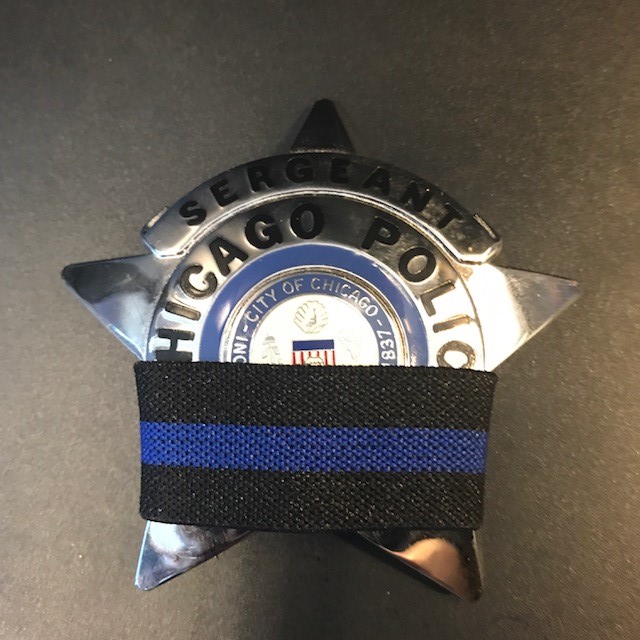
Star of Will County, Illinois Sheriff’s Department
Domestic violence homicide when Covid-19 strikes fear – coercion and control take over
There is no telling what triggered this tragic event. The Will County Sheriff’s Department had no prior contacts with the couple so no pattern of DV could be established. However, with fear of becoming infected with the virus it is plausible that Mr.Jasernik believed he was ending what he wrongly assumed would be a horrific end of life for them both amid the growing pandemic.







 MSefton's Human Behavior Blog