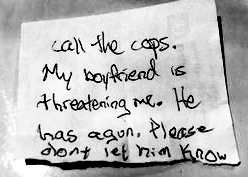
There are places in the world where intimate partner violence is pervasive. so pervasive that it Places the opposite gender in peril for 50% of the poor Places like Russia, Saudi Arabia, France, Egypt, and the United States have excessive rates of domestic violence and domestic violence homicide. This week in Russia, three sisters await trial for the murder of their physically and sexually abusive father. He was murdered while he slept. In spite of having first-hand audio of his abuse the three young women face over 10 years in prison for the crime
While France has a progressive reputation and pushes for women’s rights around the world, it has among the highest rates in Europe of domestic violence, in part because of poor police response to reports of abuse. Many of the women killed this year had previously sought help from police.
Violence against women is a costly and pervasive public health problem and a violation of human rights according to a 2010 paper by the Population Research Bureau. “In Egypt, a third of women are physically abused by their husbands,” according to the 2005 Egypt Demographic and Health Survey (DHS). “Most victims suffer silently and don’t seek help to prevent or stop the violence because they think it is part of life or they are embarrassed by the abuse.”
It is like that here in the U.S. as well. Victims undergo unbearable pressure to anticipate what triggers the violence they experience. Substance abuse adds to the unpredictable nature of the perpetrators. In some rural communities in Egypt and elsewhere, honor killings remain taboo and are often minimized as a “family matter”. When a woman falls in love with a man of a different religion she may face honor killing by her father or oldest brother who feels duty bound to revenge the dishonor brought by such behaviors. This is a significant problem here in the United Stages as well. In a recent article, a man in his taxi cab ran over his wife because he had a dream she was being unfaithful to him. There are over 25 honor killings estimated annually here in the U.S.
These are not isolated incident from third world countries. While I was working in law enforcement, one victim said to me that “she was beaten by her jealous husband for taking too long in the voting booth.” It was unacceptable to him that she visit with friends and neighbors she encountered while in line to cast her vote. He called her on the cell phone three times in 30 minutes which illustrates the coercive behavior and control seeking put upon victims of intimate partner abuse.
In the French Republic, French film and TV stars joined abuse victims and activists calling for an end to “femicide.” Many held banners reading “Sick of Rape.” Like many developed countries there is an engrained denial and secrecy about spousal abuse including rape. In parts of Africa, including Kenya, Tazania, and South Africa, domestic violence may reach 50 percent of girls over age 15. These figure illustrate the problem of gender inequality in the developing countries alike.
The protest in the French capital came on the U.N.’s International Day for the Elimination of Violence Against Women and is aimed at pressuring the French government before it unveils new measures Monday to tackle the problem. A shift in egalitarian gender roles will take generations to take hold. Meanwhile, protection of girls and women should include safety planning, early intervention in public education, greater police response to physical violence, and a zero tolerance policy for violating an order of protection.
Domestic violence is a major cause of disability and death among women worldwide, and puts women at a higher risk for unintended pregnancies and sexually transmitted infections, including HIV/AIDS. An undeniable double standard exists across the world when it comes to sexual violence and male infidelity. The incidence of honor killing remains a despicable happenstance in India, Pakistan, Turkey and Egypt and 5000 innocent girls annually.
The proposed intervention measures are expected to include seizing firearms from people suspected of domestic violence and prioritizing police training so they won’t brush off women’s complaints as a private affair. In late November, Time Magazine’s Angela Charleton featured a profile of intimate partner violence that is worth the read . However, countries like France, Saudia Arabia, and Egypt have a low rate of gun ownership so further study must but undertaken to understand the secret narrative that threatens an entire gender.
“…Such are the places where every man, woman, and child seeks equal justice, equal opportunity, equal dignity without discrimination. Unless these rights have meaning there, they have little meaning anywhere. Without concerted citizen action to uphold them close to home, we shall look in vain for progress in the larger world,” said Eleanor Roosevelt.
More than ever women around the globe are now shouting out in private and public spaces, regardless of the possible backlash, “I am equal!”
“The term femicide was first coined in the 1970s to refer to gender-related killings. Femicide is not recognized in the French criminal code, but Marlène Schiappa, the junior minister for gender equality, said the recognition would be discussed in the coming weeks” described Laura Fourquet in a September 2019 NY Times article on the topic
PRB. (2010). Domestic Violence High in Egypt, Affecting Women’s Reproductive Health taken November 25,2019.
 In response to recent acts of both terrorism and recurrent gun violence by home-grown psychopaths more should be done to maintain greater control over potentially violent persons. In the Las Vegas concert venue and the more recent Texas church massacre it becomes

 Before I am criticized for being insensitive, I point to the 12-step programs in alcohol and drug recovery. They are free and in many cases provide 24-hour support and mentoring at times of crisis. I strongly believe that if people can remain clean and sober than the need for crisis intervention will decrease. Ostensibly, this is a perfect first step toward recovery and will bring forth a palpable reduction in emotion and reduce the potential for violence. When substance abuse is stopped emotional growth is more able to take hold. Healthy, more effective problem solving may result from prospering emotional maturity allowing for resilience and enhanced coping.
 As a police officer I found jail diversion a discretionary tool that was used a great deal. Nevertheless there are times when arrest is the proper course of action but jail diversion remains a possible negotiating point for those charged with some crimes. The correct response to intimate partner violence should include aftermath follow-up and intervention when the immediate crisis has settled from the events that brought police to this dangerous threshold. Arrest is mandated by state statute when one spouse has visible injuries. Whenever possible using a restorative justice model – often limited to incarcerated individuals – may allow those arrested for crimes against persons to reconstruct their encounters with police and gain concrete understanding of events and the impact substance abuse may have had on the actions taken by themselves and law enforcement. Some never attain empathy for victims, family members including action taken by police and wind up behind bars. Police encounters with persons having co-occurring mental health and substance abuse are frequently violent and often result in charges for assault on a police officer and more. In the aftermath of these encounters offenders may be sent to treatment in lieu of formal charges with the understanding that sobriety and psychotherapy are indicated. In cases of treatment avoidance police have the option to file charges later on.



 MSefton's Human Behavior Blog