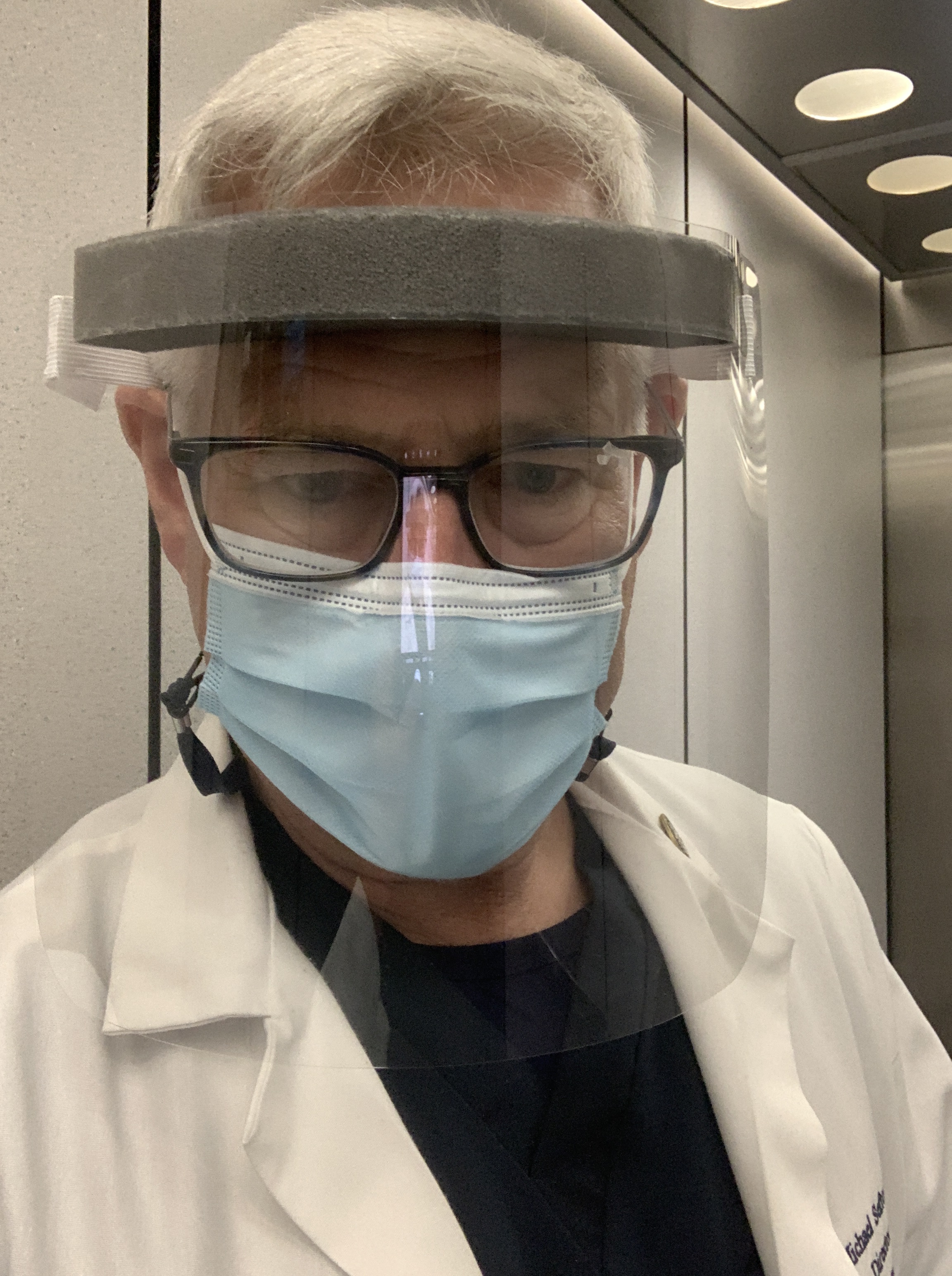
Career Burnout: The overwhelming impact of stress and understanding the cost to Human Capital

WESTBOROUGH, MA October 17, 2024 When we talk about career burn-out, we are looking at the impact of chronic and sometimes overwhelming stress on work efficiency and job satisfaction. As a clinical psychologist, I espouse the risk of stress and its associated malignancy to everyone I meet. Stress adds costs to workforce management because as workers become overwhelmed they start to look for better jobs. Surprisingly, it is often not the compensation that makes workers want to switch jobs – but the work ecology, those subtle factors most of us seek in the relationship between us and the company. Replacing intelligent and career oriented nurses and doctors is very expensive and disruptive to everyone. It means that supervisors are always interviewing and floor nurses are always orienting someone to the idiosyncrasies of the role.

It has been suggested that employees who are under chronic stress are at greater risk for making medical errors and other mistakes. Shortages in staff trickle down to patient care too. Hardly a day goes by when I do not hear someone say “I had to wait 30 minutes for someone to come and help me get back into bed.” When it comes to healthcare, people are not concerned with staff shortages when a loved one is hospitalized. Customer satisfaction is key to good medicine and community policing alike. And like police officers, a nurse or doctor who is on the last hours of a 12-hour shift is more likely to be ill-tempered and out of sorts. And like police officers, healthcare workers experience stress from long hours, shift work, and the nerver ending number of patients. Just ask any nurse or physician working in the emregency department and they will tell you it goes on and on round the clock. It is a mystery how some can stay in one job for any length of time given the current model of corporate medicine and the megagroup practice devouring one sole practitioner after another.

“The prolonged elevated cortisol levels that come with chronic stress and post-traumatic stress disorder (PTSD) can interfere with and damage the brain’s hippocampus” Wendy Suzuki author of Good Anxiety: Harnessing the Power of the Most Misunderstood Emotion.

The brain and body experience stress like a jolt of toxic hormones that have the power to gradually reduce the ability to relax and quiet the body. I am tasked with assessing employees following high acuity/high lethality calls for service who find themselves in an unsustainable state of physical tension and mental fatigue. I teach mindfullness and biofeedback strategies for people suffering with the effects of chronic exposure to high stress situations and the physical impact of these. When working with a group of medical providers stress may become overwhelming after a particularly stressful shift, like many hospitals experienced during the coronavirus pandemic.

I presented a conference on Stress and Healthcare providers: Caring for the Caregivers shortly after our emergence from the nationwide pandemic response in 2022. On that night, I wanted to bring some examples of current stress the frontline healthcare workers experience – especially with the pandemic now in the rear view mirror. In doing so I realized that even preparing for this 90 minute presentation was as much as I could handle with so much on my plate. I needed to remind myself, I am not a superman, I am not a warrior. I must take time for myself and cleanse my psyche of the evil spirits floating around in my unconscious mind. I am aware of the impact of stress on my thinking and my intimate life.

In the short term, our bodies need the adrenaline and cortisol to quickly activate our brains and other organs to react when a threat exists such as when a patient unexpectedly goes south. Since we were being chased my sabertooth tigers we have relied upon the “threat response” to keep us alive. In any environment our bodies need this fight-flight system to modulate and guide our behavior including when to run, fight, or freeze. It comes down to using our sensory system to be on guard for us and when we are exposed to something threatening, like a crash in our patient’s blood pressure or looking through a darkened building trying to find a burglar.

“If you exercise regularly, get good-quality sleep and take steps to reduce and/or manage your stress, “you can reduce stress activity in the brain, systemic inflammation and your risk of developing cardiovascular disease,” reported Ahmed Tawakol, a Massachusetts General Hospital physician quoted in Washington Post article on Stress published in 2022.

Chronic stress is hard on the human body. Most people who seek out a blog like this one are well aware of the toxic impact of an abnormal stress response. “The prolonged elevated cortisol levels that come with chronic stress and post-traumatic stress disorder (PTSD) can interfere with and damage the brain’s hippocampus, which is critical for long-term memory function,” Wendy Suzuki said in a Washinton Post article (2022). The hippocampus and amygdala are a constant filter for danger and threats to safety. Abnormal activation or damage to these organs leave a person struggling with constant activation of the fight-flight response that we know is unsustainable. Or even worse, we are left somewhat helpless without this cueing mechanism. When it starts to rain upon us and we do nothing to initiate staying dry or move away from the lightning. Long-term increases in cortisol can also damage the brain’s prefrontal cortex and its interconnective pathways. These are essential for focused attention and concentration, as well as the functioning of the higher order executive system needed for problem solving and other cognitive tasks we often take for granted. That is until they are corrupted by stress hormones running amock.

What are the signs of burnout? First, there are many nurses who have become numb and disinterested. Some career nurses pull the plug on their roles leaving to become a home health nurse or perhaps off to the nursing home nearest to their homes. Many experience caregiver fatigue and waning empathy from hours of high stress patient care and management. During the relentless pandemic Many want to go back to the “old way” of taking care of patients by using the primary nurse model which divides high acuity patient among the senior nurses on a shift. The primary nurse is usually repsonsible for attending team meetings designed to update physicians and consultants as to how treatment goals are being met.

Secondly, burnout can leave people exhausted, unmotivated, and cynical – the consequences of which can be catastrophic in many professions. As well as impacting professional growth, research suggests that these extreme stress levels can impair social skills, overwhelm cognitive ability, and eventually lead to changes in brain function and damaging physical disease and inflammation in vital organs leading to premature aging.

The stress of this is often overlooked. “During the pandemic began, newly minted residents who normally wouldn’t take care of patients with severe respiratory illnesses, such as those training to be psychiatrists, podiatrists, or orthopedic surgeons, have been asked to volunteer to work in COVID-19 wards” across the country according to a report by Deanna Pan in the Boston Globe on May 9, 2020. Professionals including residents in training, who ride a high stress career need time to process the trauma they face each day. That is not always possible. As a result, the cumulative impact can abbreviate even the most stalwart among us. Supportive supervision can assist young professionals to mitigate the impact of trauma and stress. Time for resilience should not be put off because of staffing shortages.

Working on the front lines with patients who are dying is horrific. This is especially painful when there is seemingly nothing that can be done to help them. First responders and frontline hospital workers are trained to provide emergency care. When their training is not effective, than feelings of helplessness will grow (Sefton, 2020). These feelings can be overwhelming. The cost has been great with increased rates of suicide since the shutdown began in March including those on the frontlines where the decisions they made both right and wrong may have been impacted by the unending stress of patient care.

On April 27, 2020 Lorna Breen, a physician specialist in emergency medicine took her own life after being witness to dozens of patient deaths during the peak of the coronavirus and contracting the virus herself and surviving it. Dr. Breen was a professional and emergency service medical director of NewYork-Presbyterian Allen Hospital and had no history of depression or mental health diagnoses. 

More should be done for employees to assist them in remaining emotionally hardy and resilient for long-term career satisfaction. We know that days of stress from never ending patient flow can undermine career-oriented nurses and shorten their work life – something that no employer wants to see. The same as in law enforcement, finding replacements for nurses, doctors, and other caregivers is not easy. It is important to get ahead of career paths and lower the chances of losing the best and brightest because they are pushed too hard by a hallow system that does not care for its employees. Its human capital is the source of all business success. The loss of its human capital is the actual cost of stress and should be better addressed with thoughtful awareness, firm compassion, and kindness.
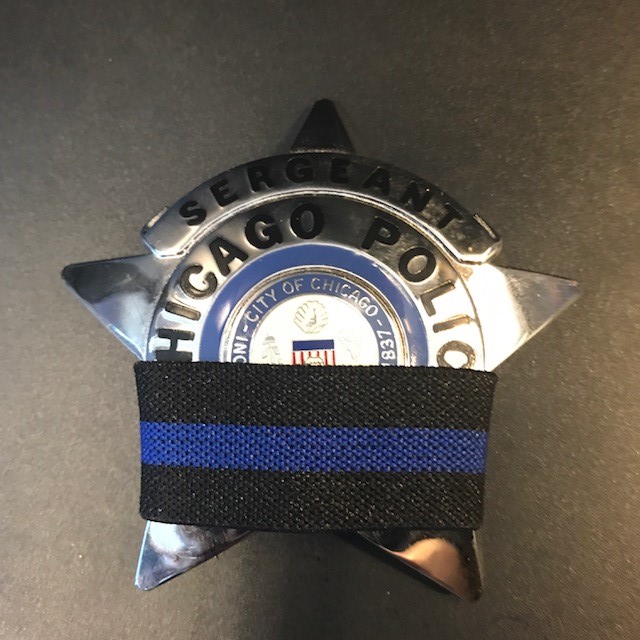

LODD – Unsustainable pain in the thin blue line

I recently read an article in the Washington Post first published in 2018 written by Michael Miller. I sent him a note suggesting he pick up the ball on this. I am interested in the topic of police behavioral health and understand the dynamic of law enforcement suicide and how the notion remains stuck in modern police service due to stigma with suicide and mental health wellness in police officers.  I am a former police officer and know there is nothing more horrific than a police officer suicide or death to a member. In Chicago officers have taken their own lives while in the driveway of their duty station. In Los Angeles, four active duty or retired officers committed suicide in one weekend in November 2023. In Washington DC, an officer who was ordered back to work following the attack on the Capitol killed himself while driving to his work. People are starting to connect years of service with risk for suicide and many departments are taking police officer wellness as the key to both career hardiness and job performance. One officer granted LODD status remains in conflict. Erin Smith wants her husband’s name added to the D.C. police department’s list of fallen officers and engraved on the National Law Enforcement Officers Memorial, and the official burial honors traditionally afforded to officers killed in the line of duty according to a Washington Post opinion piece from .

I was part of a panel about police suicide in Chicago in 2019.  The dark problem is especially taboo when cops are involved in a line of duty shooting and later kill themselves.  The Chicago program was held following a rash of suicide deaths in the Chicago PD. Most officers do not return to the job following the investigation of their actions. Some do. Those who do return are off the job within five years. I am a police consulting psychologist in the Boston area.  I am charged with pre-employment screening and fitness for duty exams after law enforcement exposure to trauma.  More needs to be done to link on-the-job exposure to horrific and despicable human behavior to suicide and afford them line of duty death status including the honors and pension compensation just like other officers who die in the line of duty. In Washington DC officers who took their own lives following the Capitol insurrection were afforded line of duty status. Why not others? 

“Police work took officers to “some of the darkest places in America,” he said, and few were darker than the scenes of officer-involved shootings, often called “critical incidents.” Line of duty death and police well-being are strongly impacted. Some police officers kill themselves after critical incidents they cannot unsee.”

“Chicago is kind of like ground zero with the number of suicides that are happening on a monthly basis now at this point,” said Daniel Hollar, who chairs the department of behavior and social science studies at Bethune-Cookman University in Florida. Dr Holler hosted Dr Doug Joiner to Chicago for a symposium in 2019. Dr Joiner taught us much of why officers kill themselves. He says they become embittered, they feel a deep sense of thwarted belongingness and grow increasingly detached with higher risk of suicide. “These are police officers answering calls of duty to protect lives. We (need to) do our job to make their jobs safer.”  said Dr. Joiner. After an officer suicide, personnel try to reconstruct what was going on in the person’s mind by systematically asking a set of questions, in a consistent format, to the people with the greatest insights into the person’s life and mind—family, co-workers, and friends.” This is known as a psychological autopsy, and I have proposed it for any officer who dies by suicide. If this is done effectively, I can assure you there will be no escalation of suicide among police officers. Something police chiefs and city counselors unfairly fear. 

I am working with one department where two officers have not returned to active duty nearly two years after being involved in a violent shooting while trying to help someone who had led them on a chase ending in a roll over motor vehicle crash.  As officers approach the overturned vehicle the driver began shooting at them with a semiautomatic rifle. These brave men were traumatized by the fatal shooting of a subject who first fled from a legal police car stop and then opened fire on them. They have been out of work on administrative leave receiving behavioral health support but are unlikely to return to service. 

I have conducted a psychological autopsy on a police constable who was involved in a line of duty shooting resulting in death in November 1971.  He was a full-time police officer in Mifflin Township, OH that had no formal police department.  No chief and no field training support.  He shot and killed a man and was cleared of wrongdoing.  Sadly, he killed himself in front of his wife one year later at Christmas. He grew restless and embittered after being villified by people inhis community. He believed nothing was being done to support and protect him. He is buried in a cemetery near the man he shot and killed.  I want this death changed to line of duty (LODD). Why?  When someone kills themselves most departments, including all smaller agencies, fail to discover the set of facts and red flags left behind leading to suicide. The investigation is often cursory, purportedly out of respect to the family. But there are factors in the careers of police officers that make them at higher risk for suicide then the public. This is not sustainable.  

I have been writing about this for 9 years in the pages of my human behavior blog. In Chicago, if an officer comes forward looking for help, they are stripped of their firearm, police powers, and their star (badge). This is demoralizing according to officers I have spoken to.  Why would anyone come forward if this is the protocol. This may be changing, whereas CPD has added therapists in each of their 23 police stations. Unfortunately, one cannot unsee some of the darkest scenes in human behavior like the death of a law enforcement officer or domestic violence resulting in death.  The psychological autopsy must include a 3-month list of calls the decedent answered including those for which he or she was given debriefing, defusing, or time off for respite from the job. I would want to understand how the call volume may have triggered underlying acute stress of new calls that triggered new trauma? In any case, the story was interesting and careful analysis is important in all incidents resulting in police suicide.

Conditions of bail and 8th amendment freedoms – reflections on domestic violence homicide

The 8th Amendment guarantees that people will not be faced with unfair conditions while in custody nor should they have undue hardship following adjudication. But when victim safety requires it then some modification of this rule must be considered. Dangerousness to possible victims requires some abusive subjects (usually men) be held without opportunity for bail at least as long as it takes to confirm that there is no immediate danger to possible family members. This evaluation sometimes takes hours to days to complete. In Massachusetts, here in the US, some courts have court clinics that can assess persons in custody for risk of suicide and dangerousness. The pandemic has reduced this option significantly and arraignments were conducted virtually for months. Many district courts work with domestic violence agencies on a regular basis sometimes in the court buildings near court rooms.

Maine Law Review

Not much has changed since the Maine Law Review cited our work in its 2012 in Nicole Bissonnette’s review of bail conditions following domestic violence. Ms. Bissonnette published second paper in 2017, in the same MAINE Law Review that gives some quick and easy fixes for the 8th Amendment conundrum as it pertains to domestic violence. It is a fact that victims generally do not call police when the abuse first begins. It is also a fact that if a victim has been threatened with death if she “leaves” or “asks for a divorce” then her risk is substantially elevated and a safety plan must be provided including an order of protection.

The 8th amendment guarantees that excessive bail nor excessive fines shall not be required when someone is in custody and when found guilty of a crime. In many cases of domestic violence assault, abusive spouses are released on personal recognizance – essentially no bail is taken. Abusers are required to show-up on the next court day (usually Monday morning) and answer to charges of assault, domestic abuse, or whatever the evidence shows. The 8th Amendment also specifies that punishment for crimes shall not be excessive, overly punitive or harsh. It is frequent that abusers may have no criminal record whatsoever. Given that fact, it is hard to argue for high bail in a case where the defendant is unlikely to skip out on an initial hearing. This is precisely the reason why officer reports must include detailed statements from victims and witnesses – especially children.

I agree in principle that bail should not be punitive but neither should a family be faced with constant fear and danger because of the arrogant defiance of an abusive spouse. People without means do not have money for bail and some individuals are unfairly kept in jail simply because they or their families do not have cash for release from custody. So, a person who may be unemployed and was picked up for shoplifting and has 2 prior arrests may have an artificially high bail so he sits for weeks in a county jail awaiting trial. There are times when dangerous supersedes the right to be released from custody. This requires close scrutiny for making bail conditions that reflect risk to community and red flags for individual families.

In the 2017 Maine Law Review, Nicole Bissonnette restated her 2012 premise that bail conditions must be considered carefully when it comes to letting violent intimate partners out of custody. Ms.Bissonnette smartly cited the work done by this author and colleagues that brought these issues into sharp focus (Allanach et al. 2012). The importance of orders of protection cannot be understated in preventing domestic violence homicide. “The purpose of this follow-up comment is to evaluate the existing (PFA) system and assess methods of improving outcomes while avoiding prohibitive fiscal impacts” according to Ms. Bissonnete, 2017. The process, structure and failings of the existing system will be illustrated by the tragic deaths of Amy Lake and her two children, who were murdered by Steven Lake, despite the PFA in effect at the time. It was this case that brought domestic violence homicide into national prominence and provided substantive recommendations for mitigating DVH. Information is often unavailable to bail clerks or even judges when PFA’s are needed most. Information such as whether the defendant has previously violated conditions of release, probation or other orders, including, but not limited to, violating protection from abuse orders according to Jennifer Thompson, 2004. When these factors are affirmed then bail conditions must be revised in real time accordingly. Substantial bail for violation of protective orders is but one of them. Some believe that having non-refundable, very high bail is the only sanction to prevent recurring violations of the PFA. The 8th Amendment informs that bail may not unfairly impact people without employment and those who do not have financial means to buy there way out of jail.

There are cases, as recently as 2021 where a protection order was denied and domestic violence escalated into death of the New Hampshire suspect and critical injuries to intimate partner who became the victim. A judge did not think a protective order was warranted. Similarly, in Austin, TX, a disgraced police officer shot and killed his step-daughter, the teen’s boyfriend and his former wife in April 2021, even after the teenage girl begged for a protective order with the option to hold the abuser in jail. Her fear was palpable. The shooter was required to wear an ankle bracelet for 90 days after which he was free to stalk his former family who were trying to move on. There were several flaws in the safety plan in this case that ultimately triggered the terminal event such as coming together for planned visitation so the former police officer could visit his son who was not murdered. In New Hampshire, a judge denied a protective order on the basis that the abuser had not been violent since 2016 although acknowledged that the man was coercive and controlling. The victim, Lindsay Smith, was shot and critically wounded in Salem, MA in November 2021. Her former boyfriend, who had stalked the victim for the years since the break-up reportedly said he intended to forever “turn her life upside down” died from a self-inflicted gunshot wound. This may have been avoided if the temporary restraining that had expired had been approved to become a permanent restraining order as the victim had petitioned.

The desire to mitigate police discretion in domestic violence cases stems, in part, from problems relating to “the inherent ambiguity of the police-citizen encounter in the context of domestic violence.”

Jennifer Thompson, 2004 Maine Law Review

The domestic violence literature suggests that after 5-7 beatings victims will reluctantly summon police – especially if they fear either they or their children are about to be murdered. The details Calais, ME case of domestic violence are being carefully guarded even today. It is known that Daniel Phinney, 26 was out on bail after being arrested and charged with domestic violence and criminal threatening in May 2013. At that point he must have both physically assaulted his significant other and threatened to kill or maim his family resulting in the charge of criminal threatening. Police are quick to say that Phinney had “no prior criminal history” perhaps in an effort to obfuscate public outrage evoked by the system of bail in Maine that releases violent abusers over and over again on low bail. Had anyone made an effort to determine the degree of risk posed by Daniel Phinney prior to his release? Had anyone registered safety concerns based on the defendant’s behavior and history? If there had been routine aftermath follow-up then this may have been a known fact. A psychological assessment of Phinney may have provided important details about his impulse control, substance use, coping skill, and proclivity toward violence and had been charged previously with domestic violence. Phinney was killed by police in a stand-off in Calais, Maine shortly after being released from custody.

The case is reminiscent of the 2011 Steven Lake homicide in Dexter. Lake had twice been released on bail before murdering his family.  The medical autopsy concluded that “in spite of psychological counseling (the state) failed to appreciate the degree of anger and violence in Steven Lake”.  He had also been charged with criminal threatening after holding his family at gunpoint as he drove home the point about how much he loved them but he could not let Amy move on. 

Using a firearm in the commission of a domestic violence incident is defacto evidence of dangerousness and no bail shall be considered until such time as all firearms are collected and a viable safety plan is in place for potential victims including police protection. Michael Sefton, Ph.D. 2021

I was a member of a team that conducted a psychological autopsy on Steven Lake that resulted in over 50 recommendations to the esteemed Maine Attorney General’s Homicide Review panel in November 2012. At first glance there appears to be brash indifference toward the court protection order and the failure to remove firearms held by the defendant. It is now important to study the case of Daniel Phinney and others, so we ma learn from the many red flags exhibited in the weeks prior to his death. These red flag events must lead to stopping and containments points in future cases of domestic violence and domestic violence homicide. No family should be kept in fear by a spouse whose loathsome behavior derails all human spirit and sense of dignity.

At what point does the well-being of victims and potential victims rise above the abuser’s right to bail?

Michael Sefton, 2014 on the 8th Amendment and PFA orders


Allanach, R et al., Psychological Autopsy of June 13, 2011, Dexter, Maine Domestic Violence Homicides and Suicide: Final Report 39 (Nov. 28, 2011), http://pinetreewatchdog.org/files/2011/12/Dexter-DVH-Psychological-Autopsy-Final-Report-112811- 111.pdf.

Bissonnette, NR (2012). Domestic Violence and Enforcement of Protection from Abuse Orders: Simple Fixes to Help Prevent Intra-Family Homicide, 65 Me. L. Rev. 287. Available at: https://digitalcommons.mainelaw.maine.edu/mlr/vol65/iss1/12

Thompson, J (2004). Who’s Afraid of Judicial Activism? Reconceptualizing a Traditional Paradigm in the Context of Specialized Domestic Violence Court Programs, 56 Me. L. Rev. 407.

Sefton, M. (2021) Domestic violence and the importance of red flag warnings for preventing homicide. WordPress Blogpost. https://msefton.blog/2021/04/24/domestic-violence-and-the-importance-of-red-flag-warnings-for-preventing-homicide/ taken 2-25-2021

The Psychological Impact of Pandemic: The best and worst of human behavior

On November 11, 2020, I presented a program on the Psychological Impact of Pandemic sponsored by Whittier Rehabilitation Hospital.  It was well attended with a mix of nurses, midlevel practitioners, social workers, and nonclinical participants. The program was presented on the zoom platform. I am now going to put to paper my perspective narrative espoused in my 90 minute presentation.  I had also invited members of law enforcement with whom I have regular contact as the information was drawn from the growing literature on mental resilience and its positive impact on coping with exposure to trauma.

ca-times.brightspotcdn

According to the PEW Research Group, 4 in 10 Americans know someone who has either been afflicted with Coronavirus or someone who has died from the virus. My mother was infected with the Coronavirus in mid April in the same nursing facility where I lost my 93-year old aunt in the first wave of the virus in May, 2020. My mother survived the virus but it has taken a significant toll on her physical and cognitive well-being. We were not permitted to see my mother during her illness and my aunt was alone on May 1 when she succumbed to the virus. Both living on a nursing unit that was doing its best to render compassionate care under extraordinary conditions, in some cases with nurses, aides, and therapists working round the clock. Both of these loved ones received extraordinary care. Nursing units across the country suffered unimaginable loss of life including over 70 elderly veterans at the Soldier’s Home in Holyoke, Massachusetts.  We all saw the images of refrigerated trucks holding victims in expiated purgatory hidden behind hospitals. It may bring horror to those who lost loved ones and never saw them again.

I saw my mother on November 12. She looked frail and disheveled.  The nurse practitioner had ordered a blood draw out of concern for her physical well-being. She is 92 and may have a blood disorder. They had three staff people hold her in place to obtain the small sample of blood which took over and hour.  She has always had difficulty having her blood drawn and this has gotten worse as she has gotten older. She fought and screamed from pain, and fear, I was told. It was torture for all those involved, including me.

Little did anyone realize the extent of disease, contagion, and trauma this pandemic would bring to the United States and the world. We waited in February and March with curiosity and vague forewarning from our leadership. We were led to believe the virus would dissipate once the weather became warm and it would essentially vanish in the heat of summer. This did not happen and public health officials at CDC and WHO were spot-on in terms of the contagious spread of covid-19 and the deaths it would bring.  Now with the approach of winter our fear borders on panic.

This virus poses significant stress and emotional challenges to us all. It raises the specter of both an overwhelmed medical system as well as increasing co-occurring emotional crisis and a collapse in adaptive coping, for many. Sales of alcohol went up 55 percent in the week of March 21 and were up over 400 percent for alcohol delivery services. Americans were in lock-down and many made poor choices. The link between stress and physical health and well-being is well documented and will be a factor as American’s find their way free from the grip of Covid-19. 

“The human mind is automatically attracted to the worst possible case, often very inaccurately in what is called learned helplessness”

Martin Seligman

Whenever human beings are under stress they are going to utilize skills they have learned from other times when they felt under threat. Chronic stress has been shown to have negative effects on health including autoimmune functions, hypertension, inflammatory conditions like IBS, and pain syndromes. Many find it impossible to think about anything but the worst case scenario. Marty Seligman described the concept of “catastrophizing” that is an evolutionarily adaptive frame of mind, but it is usually unrealistically negative.” This leads to a condition known as learned helplessness. In another book, Dr. Seligman writes about learned optimism published in 1990. His cognitive strategies hold true today.

So many use the same coping mechanisms over and over, whether they are effective or not like drinking or gambling to let off steam. These things may help in the short term but can cause further health and social problems later on. They are not adaptive strategies. Stress is unavoidable and the best thing we can do is to understand its physical impact on us and adapt to it in healthy, adaptive ways. Stress raises the amount of cortisol and adrenaline in the body activating the fight-flight response. For many, that meant an uptick in the procurement of spirits in late March to help bring it down. Others think differently. Many began a routine of walking or running or cycling. Regular exercise contributes to reducing stress and when kept in perspective, is an adaptive response to the threat of coronavirus.

Many people in our hospital were afflicted with the virus or some other health concern and became immersed in loneliness and isolation that can lead to disconsolate sadness. It is hard not to be affected by this suffering. Most reviewed studies reported negative psychological effects including depression, anxiety, post-traumatic stress symptoms, confusion, and anger, according to Brooks, et.al. Lancet 2020. At Whittier, we had many cases of ICU delirium where patients became confused and frightened by healthcare providers wearing PPE including face shields, masks, and oxygen hoods. Many thought they were being kidnapped or that the staff were actually posing as astronauts. This made it hard to help them feel safe and to trust the core staff including doctors, nurses, and rehabilitation therapists.

Michael Sefton

We have had some very difficult cases including a man who found his wife on the floor without signs of life. He fell trying to get to her and both lay there for over 2 days. He was unable to attend her funeral because of his broken hip. We had another man who pushed us to be released from the hospital. He worried about his wife who needed him to assist in her care at home. She has Parkinson’s disease. He was discharged and died shortly after going home. His wife fell while getting ready for his funeral and is now in our hospital undergoing physical rehabilitation and receiving support from our psychology service. The table below is a list of observations from recent admissions:

  • Anxiety – what will my family do while I am here?
  • Deep felt sense of loneliness
  • Depression – loss of support; loss of control 
  • Exacerbation of pre-existing conditions i.e. sleep disturbance, asthma, uncontrolled diabetes, hypertension
  • Slower trajectory toward discharge
  • Debility greater than one might anticipate to diagnosis
  • Subtle triggers to prior trauma – changes in coping, regression, agitation, sleep and mood

What is left for us to do? Have a discussion about what it means to be vulnerable – talk about family members who have been sick with non-covid conditions like pneumonia or chronic heart disease, COPD, etc. It is important to be ready to work from home again such as when schools switched to remote learning this spring and when governors’ call for closing things down. Consider the return of college kids as campus dorms everywhere are likely to close this winter.

The 1918 Spanish Flu pandemic killed 50 million people worldwide. 500 million people were infected with the virus that lasted 2 years. The virus was said to have been spread by the movement of troops in WW I. The website Live Science reported that there may have been a Chinese link to the Spanish flu as well due to the use of migrant workers and their transportation in crowded containers leading to what we now call a super spread event. We know a lot more about this virus than we did in March 2020 when it first took hold but we need to understand the eradication will be a herculean task driven by science.

“The coronavirus has profound impact on the emotional stability of people around the world because of its unpredictability and lethality. It evokes fear, and uncertainty as it spreads unchecked. Later, the virus can serve to trigger long hidden memories in a way that can sabotage healthy human development leading to vague anxiety, physical symptoms, loss, and deep despair” said Michael Sefton, Ph.D. during a recent Veteran’s Day presentation. People must have resilient behaviors that foster “purpose in life, to help them survive and thrive” through the dark times now and ahead, according to police consulting psychologist Leo Polizoti, Ph.D. at Direct Decision Institute in Worcester, MA.


The common man who left no footprints

Hospital video of BPD officer initial encounter with Juston Root on February 7, 2020

On February 6, 2020 Juston Root posted a few minutes of video in which he espoused a disjointed series of thoughts espousing the importance of being aware of the common man and using friends for support. Was Root speaking about himself, in need of someone? He died one day later in a frightening series of events that lasted seven chaotic minutes leaving this common man dead and shot over thirty times by law enforcement.

Juston Root had a long history of mental illness. On the day of his death, he was seen at a local hospital in Boston displaying what appeared to be a firearm. Interestingly, his parents reported he liked to carry replica handguns sometimes using a should holster. This bespeaks an attraction to firearms and yet he did not own a real weapon. It is not clear why he chose the hospital district on Longwood to make his initial foray. He was said to have made threatening statements to law enforcement officers who he first encountered. What was said? Did Mr. Root make threatening statements to the first BPD officer seen in the video. Did the officer get a look at the weapon shown and could he have been expected to recognize it as a replica? Our training and experience set the stage for this level of acumen when at close range blue steel looks nothing like black plastic.

Video of the scene showed Root parked in the middle of traffic wandering in and out of the frame. 4-way hazard lights activated. Was Root so rule bound that even on his last hurrah he had the provision of thought to set his hazard lights? This seems unlikely for someone in a terminal state of homicidal or suicidal rage. What was his state of mind once shot?

At some point shortly after this initial encounter a parking lot valet was shot in the head and critically injured. Mr Root did not shoot the parking attendant, but this was not clear amid the next moments of radio traffic. The fact that the attendant was injured by friendly fire simply was not reported and was not clear at this point in the investigation. This set the stage for manhunt that quickly came together looking for someone who had shot a parking lot attendant and pointed a weapon at the police officer. It is at this point that Root made a run for it setting into action an all hands-on deck police gauntlet that he had little chance of evading.

What happened next triggered a chaotic police response that led to his death just minutes after he displayed a replica handgun aiming it toward a Boston Police Officer. It may have ended right there had the first responding officer rightfully met force with force. The physical reaction of the first officer almost looked as though he was expecting Root’s replica to go “boom”. But he held fire. An officer 20-30 feet further away saw this and fired upon Mr. Root wounding him and hitting someone down range of the incident. Officers are responsible for where the rounds go once, they leave their weapon, so it is always best they hit an intended target on the range or in the street.

It is likely that area police agencies were put on tactical alert. When this happens, adjacent cities and towns clear their call screens and have available units staged at intersections watching for the suspect vehicle. In the end, the weapon he carried was determined to be a replica or toy.

In his preamble on February 6, he suggested that people should not call police because they often are not aware of what was happening, and 911 calls often result in police “storming in” to eliminate a threat to the public. Root seemed aware that “a lot of bad things can happen in the name of justice” when people call police in what he says are “fabricated phone calls”. This presentiment may be his experience living with mental illness for decades of his life. Juston Root was known to stop taking prescribed medication aimed at keeping hallucinations and delusions at bay and regulating his mood.

The body worn video is chaotic and has been edited. Multiple officers can be heard shouting instructions at Root, a 41-year-old with a long history of mental illness who had brandished a fake gun at an officer earlier in the day. When situations like this occur the adrenaline often drives officers into elevated state of arousal that requires keen environmental awareness to assure actions taken are lawful. The county D.A. in the case has determined that, given the totality of the circumstances, the degree of lethal force directed at Juston Root was lawful.

In the moments before he was killed by police gunfire an off-duty paramedic tried to care for root but was ordered to back away by police. The crash was caught on video tape from the traffic light camera on Route 9 in Brookline. It was sensational and Mr. Root was obviously traveling at a high rate of speed when he crashed. He was attempting to flee.

“Moments later, he walks onto the mulched area where Root was shot, approaching an officer standing over an object that appears to be a gun.” Video that is released reveals police officers warning each other about talking openly on tape. Some say there was bravado and even laughter after the threat was gone.

” Is it fake?” the first officer asks. Yes, was the answer and officers at the scene began to understand that Root may have died because of officer-assisted suicide. Something no officer ever wants to encounter. Someone so distraught that they put themselves into the line of fire by acting as if they are holding a firearm or other weapon forcing police to use deadly force. It is not clear that this was his intention given the remarks he recorded one day earlier.

Mr. Root had grown up with mental illness that was first diagnosed when he was 19-years old. This is quite typical of the major mental illnesses like schizophrenia or bipolar depression that present themselves in late adolescence. The National Alliance on Mental Illness described schizoaffective disorder as having clinical features of both schizophrenia and major depression. They can be unpredictable and often exhibit signs of hallucinations, delusions, poor impulse control, and suicidal behavior. Among these patients, officer-facilitated suicide would not be unheard of. But Root’s father said he had been stable over the preceding five years although he had a history of carrying fake guns. He was quick to point out that his son often stopped taking his prescribed medication. But in his taped preamble he was not angry and made no threats toward law enforcement. In fact, he indicated that he had friends on the police force although it is the friends of whom he speaks were officers he encountered over the years, but I am being conjectural.

If Mr. Root intended to die by police officer gunfire he may not have activated his hazard lights which can be seen blinking as he staggered away from the wreckage of his Chevrolet Volt. In his video statement he started by saying he had friends on the police force. There was no obvious animosity toward law enforcement. If he had had a genuine firearm and intended to go out in a blaze of glory, he may have made a final stand either at the wreckage of his vehicle or somewhere nearby like behind a tree. That was not the case. Root was trying to get away. No final stand. No “fuck you” to the world. He was down when he was shot and there was a person there to help him who was ordered away. An officer can be heard saying “he is still moving” after the barrage of rounds over thirty in all.

Juston Root was mentally cogent enough to activate his 4-way hazard lights after the high-speed crash and in video that could be seen when he first entered the Longwood hospital district. Why? A formal psychological autopsy that is transparently guided might find an answer to that question. Hospital police were on guard and had been victim of a homicide that took place inside the hospital itself in January 2015. Juston Root was here for 41 years living in what he perceived was a dangerous world. He came and grew to have an affinity for law enforcement he left without leaving any footprints or important last words.

Harlem domestic violence homicide calls for transparent psychological autopsy

The psychological autopsy is an individually designed case study that elicits a broad range of factual data regarding the behaviors of a decedent in the immediate day or days leading up to domestic violence homicide. The study is especially important when first responders and essential workers are involved all the while a pandemic ravages the city in which they live. Michael Sefton, Ph.D. Direct Decision Institute, Inc.

The recent domestic violence homicide in Harlem raises the specter of an essential city worker who killed his sister-in-law while his wife called for help. The police stopped the attack resulting in the death of Ubaldo Gomez but not before he shot and stabbed a women in the head with a kitchen knife. The fact is that domestic violence has increased during the pandemic as it does at other of life’s stress points. Did the fact that the alleged murderer was an MTA employee considered to be “essential personnel” have an impact on his mental health that may have been foreseen? What role, if any, did his role as an auxiliary police officer for the NYPD have in the terminal event? A psychological autopsy would answers these questions and establish a worst case scenario of frontline exposure to trauma and possibly offer insight into underlying history that may have been anticipated and stopped. Certainly the hierarchy at 1 Police Plaza will have an interest in this case. The Corona virus has added to risk of DV and DHV.

For too many women who are abused repeatedly during times of crisis there is no place to run and no one to keep them safe. Orders of protection are ineffective and without GPS monitoring and they are nearly impossible to enforce. In a 2011 domestic violence homicide in Maine, the protective order was violated 4 times by Steven Lake who killed his wife and children in Dexter before killing himself in June 2011. That alone was grounds to hold Lake without bail. No police agency removed access to his collection of over twenty firearms. The scene diagrams illustrate how Lake was armed with two firearms and a hunting knife. He murdered his children while forcing his estranged intimate partner to watch. It was thought that he planned a murder spree and he left 9 suicide notes. The final despicable act, as police arrived, was to attempt to light the bodies on fire.

In general, there is little interest in such a comprehensive post hoc psychological examination because there is no pending prosecution. Nevertheless, a psychological autopsy conducted on Lake in the Fall of 2011 revealed a clear timeline littered with red flag warnings that were missed or ignored. The research conducted in 2011 was done pro bono. It undertook over 200 hours of interviews and presented the Domestic Violence Review Board with over 50 recommendations for reducing high rates of domestic violence homicide in Maine (Allanach et al. 2011). The medical autopsy editorialized the case in its final report:

“Despite receiving some mental health counseling it is apparent, in retrospect that the degree of violence and anger possessed by the abuser was not realized.”                                                            Chief, Maine State Medical Examiner

This latest case in point involved an estranged wife, her sister, and the building manager in Harlem. The three were having dinner when someone armed with a firearm broke into the apartment. It was the estranged husband of one of the women. He was wearing his Metropolitan Transportation Authority uniform, and he had a gun according to the NY Post reports. In the meantime we have been told that the perpetrator was an auxiliary police officer and was licensed to carry a firearm. What triggered this paroxysmal violence? If it was foreseeable, then Mr Gomez should not have had access to his firearm.The psychological autopsy will address prior history of intimate partner violence, protection orders in place, work-related stress, recent health concerns related to the corona virus and Mr Gomez trauma exposure history, and his mental health in the days before the murder. 

Police officials said the transit worker, Ubaldo Gomez, shot his sister-in-law and stabbed her in the head with a knife, while his wife reached out for help. When Gomez refused to drop a 12-inch kitchen knife and tried again to stab the man, a police sergeant opened fire, killing him. In the end, there is always at least a single person who knows what is about to happen and often does nothing to stop it. A family member of Gomez suggested “he had some mental issue, something happened. He was always working day and night. He barely slept. He worked.” as quoted in the NY Post. Whether this duplicity and denial stems from cultural beliefs about the supposed “privacy” of DV, society must change the way in which law enforcement manages these cases. The buy-in from police, legislators, judges, probation, and the public-at large needs to be fully endorsed for real change to happen and for safety plans to work. Many states across America are planning to enact “red flag” rules that will remove weapons from individuals with a known history of domestic violence e.g. choking spouse during fight (Sefton, 2019).

Family members who may be in the crosshairs of these insidious events often see but lack the knowledge to stop the emotional and behavioral kinetics once they start. The fear of being murdered by an intimate partner creates emotional paralysis. In a large percentage of DV occurrences, financial and self-image influences as well as outright fear of the abuser by the victim limit moves toward safety. Therefore, a continuum of interagency cooperation is needed to effectively measure risk and understand the pre-incident red flags that are common manifestations of abuse and often forecast terminal violence, all of which occurred in this case. As the totality of these red flags comes into focus it becomes incumbent upon each of us to take action to prevent domestic violence threats from becoming reality (Allanach, et al. 2011).

It would seem to be vitally important that a transparent psychological autopsy be initiated to gain an understanding of the factual behavior that was observable and measurable in the days leading up to the murder especially given the likely unintended victim. Preliminary reports described Gomez as having a pattern of pathological jealousy and victim stalking. For her part, Gomez’ wife Glorys Dominguez called for help in the weeks prior to the terminal event seeking help.

active shooter addiction Bail conditions in domestic violence CIT Community Policing crisis intervention Dexter domestic violence domestic violence homicide DV DVH DV Homicide extended family fitness health psychology intimate partner violence jail diversion Law Enforcement Leo Polizoti Maine Mass shooting mental health mental illness Michael Sefton parenting Personality Police police behavior police mental health liaison police officer police suicide pre-incident red flags psychological autopsy PTSD red flags Resilience Ron Allanach Sefton Sefton Blog Social skills Suicide terminal rage toxic relationships violence workplace violence

Allanach, RA, Gagan, BF, Loughlin, J, Sefton, MS, (2011). The Psychological Autopsy of the Dexter, Maine Domestic Violence Homicide and Suicide. Presented to the Domestic Violence Review Board, November 11, 2011

Sefton, M (2019) Violence prediction: Keeping the radar sites on those who would do us harm. Blog post https://wordpress.com/block-editor/post/msefton.wordpress.com/5012 taken May 23, 2020.

Sheehan, K, Moore, T. Woods, A. NY Post May 21, 2020 https://nypost.com/2020/05/21/man-killed-in-nyc-police-involved-shooting-was-auxiliary-cop/?

Chaos, Fear and Death from Covid-19: The loss of trust in leadership

The Coronavirus has brought to bear chaos and fear among Americans from coast to coast. I am unsure whether any of us expected the virus would grow and infect over 1 million Americans alone in 6 short weeks. The death toll at the time of this post is just under 80 thousand lives. Personally, my aunt and my mother were both infected with the virus at their living facility. Sadly, my aunt has died from the coronavirus but my mother, has been without symptoms, in spite of testing positive 2 weeks ago. Over 30 percent of Americans know someone who has died or been infected by the virus. The fallout to mental health is real. I see it in my own family as nerves become frayed 8 weeks on.

The virus’s threat to basic needs and personal security has eroded the trust in federal leadership. This is due to the lack of an integrated plan to develop a vaccination, provide testing and contact tracing, support unemployed workers, and reconcile still-rising numbers of Covid positive cases while at the same time as some states begin opening businesses. In doing so, potentially asymptomatic individuals may unknowingly carry the invisible killer into a restaurant, laundromat, or tattoo parlor – all deemed essential services as states like Georgia begin coming back on line. This is a fact, whether or not they meet federal government mandates for “opening up” including 2 weeks worth of reduced rates of infection, decreased death rates, and lowering hospital admissions due to Covid-19.  Many epidemiologists believe that opening businesses too quickly will result in a rise in cases of the virus and an increased rate of death.

Now, the White House Task Force is finding itself in the crosshairs of the invisible and lethal disease as members of the White House staff are being diagnosed with Covid-19 and self-quarantined because of exposure to the virulent disease. Members of the inner circle have been tested and some have been diagnosed with the virus including members of the White House service staff and the Vice President’s personal secretary. In the west wing, there is chaos among the staff as to what precautions should be taken while potentially being exposed to the coronavirus. Dr. Anthony Fauci, who has been the face of the response to the virus is now in a voluntary quarantine as a result of the spread of the virus in the west wing among staff members of the White House. Three physicians have gone into voluntary quarantine as a result of coming into contact with the virus as protocols recommend.

Former President Barack Obama harshly criticized President Donald Trump’s handling of the coronavirus pandemic as an “absolute chaotic disaster” during a conversation with ex-members of his administration. Yahoo News May 9, 2020

Medical personnel across the country are on the front line and they are being recognized for their tireless bravery in the hot zones in American cities like New York, Boston, and New Orleans. The law enforcement and fire service have all shown their appreciation with 7 PM shows of support. This also includes members of newly graduated physicians who have been sent to the front lines of the virus in ICU’s and Covid-19 floors in America’s best hospitals. The stress of this is often overlooked. “Since the pandemic began, newly minted residents who normally wouldn’t take care of patients with severe respiratory illnesses, such as those training to be psychiatrists, podiatrists, or orthopedic surgeons, have been asked to volunteer to work in COVID-19 wards” across the country according to a report by Deanna Pan in the Boston Globe on May 9, 2020. These are teaching moments that have brought out the best in young physicians and the old seasoned veterans who supervise. But the cost has been great with increased rates of suicide since the shutdown began in March including those on the frontlines.

On April 27, Lorna Breen, a physician specialist in emergency medicine took her own life after being witness to dozens of patient deaths during the peak of the coronavirus and contracting the virus herself and surviving it. Dr. Breen was a professional and emergency service medical director of NewYork-Presbyterian Allen Hospital and had no history of depression or mental health diagnoses. In the hours before her death her father, himself a physician could tell something was wrong.

Lorna Breen, M.D.

On the night when the nation’s top virus spokesperson physician Anthony Fauci, M.D. went into voluntary quarantine, the president of the United States had a meeting of his senior staff and none of the members at the meeting were wearing personal protection, like masks. Physicians and epidemiologists are calling for social distancing and personal protection yet the White House resists and engages in ongoing updates and meetings without the use of masks or social distancing. With two White House staffers testing positive for the virus, including Mike Pence’s secretary Katie Miller, the president is making light of the protocols set forth by the CDC and the WHO. This inconsistency and disingenuous message is not lost on anyone.

NBC News profile of Dr Breen

Delayed actions at the top have resulted in confusion about what steps the U.S. Government and the individual states must take to reduce the impact of the viral outbreak. The U.S. has the highest number of Covid-19 cases and the highest number of deaths in the world. The streets of America are empty and businesses are shut down and many will never reopen. The unemployment rate is nearly 15 percent. This is the highest rate of unemployment since the great depression. People are worried and in conflict over medical information they are hearing and what they see in the White House increases that conflict.

“It’s a terrifying, solitary, dehumanizing death that these people go through, and it’s going to leave wounds in our society for a long time,” Tara Bylsma, 30, a second-year internal medicine resident at Boston University Medical Center in Boston Globe May 9, 2020

Working on the front lines with patients who are dying is horrific. This is especially painful when there is seemingly nothing that can be done to help them. First responders and frontline hospital workers are trained to provide emergency care. When their training is not effective than feelings of helplessness will grow. These feelings can be overwhelming. At the same time, the rule of law comes into question and there is growing suspicion that the virus is man-made or an overblown scam. People are pushing for release from social distancing and using the argument that their constitutional rights are being infringed upon by forcing them to remain in their homes. Some are becoming angry and out of control.

In late January, 2020, the World Health Organization declared a pubic health emergency because of the exponential growth of the virus in China and later in Italy and Spain. Trump has since denuded the WHO as being overpriced and undervalued as only he is capable of doing. Sadly, Americans were unprepared when it’s first case arrived in February and we were told not to worry the virus would soon disappear. But it has not gone away and the United States is in lock down as a result.

Human to human transmission of the disease was thought ‘not possible’. The pandemic was first publicized and forewarned by a physician in Wuhan, China who ultimately died from the virus. He had been arrested and warned by police against speaking publicly about the risk of the virus and threatened with sanctions.

Meanwhile, President Trump was publicly yammering about his trust in Chinese President Xi Jinping and the deals he was making to benefit the American economy. His focus was not on the growing fear of American workers but the vulnerable economy that President Trump needs to get himself reelected in 6 months. In the meantime, the virus has not vanished nor faded away with warmer weather but continues to claim over 1000 lives each day across the country. Now, with the coronavirus in the White House, the presidential spin over wearing masks and maintaining social distancing takes on new meaning.

How will the political narrative shift now that Trump and his team has been directly exposed to the virus and members of the Coronavirus Infectious Disease team have become quarantined leaving the president alone in the garden for his bite of the apple?

Thailand: Royal Thai police face daunting job to reform national agency

“Police suicides and police apathy are two of many issues highlighting a dire need for constructive police reforms within the Royal Thai Police for some time.” Bangkok Post October 14, 2019 The Thai National Police (TNP) are mired in politics and age-old tradition which has contributed to significant tension within the TNP ranks.

As recently as early February, 2020, an embittered Thai police officer went on a rampage in the northern province in Thailand. Over 20 persons were killed in an extremely rare display of public rage and terminal violence. The perpetrator ultimately took his own like as members of the Thai Special Forces moved in.

Dr Ronald Allanach and Dr Michael Sefton are pictured with the Northern Police District Administrator during a meeting 2 weeks before the rampage. There was no sense among the officers we met that tension and despair underlie this outwardly professional police agency. The officers we interviewed were all happy and content with their assignments. There was no sign of the frustration and vulnerability identified in the Bangkok Post report.

Dr. Ronald Allanach (left) pictured with Northern Sector Thai National police administrator and Dr. Michael Sefton in January 2020

Police reform is a problem across America and the world. In Thailand, a centralized police force is overseen by the country’s prime minister who is responsible for naming the chief general who leads the Thai National Police. This is no easy task. Some believe there are complex issues that contribute to the distress felt by police across Thailand. The investigation into the February 2020 rampage is in its early stages but links to conflict between the officer and a higher ranking administrator are being floated. A psychological autopsy would provide added facts to the “red flags” that may have lead up to the terminal event and offer substantive interventions that can reduce the growing problem in The TNP.

These include officers who are sent to distant police assignments leaving them without the normal emotional and agency supports they need. The pay is low and the trust felt by the TNP from its citizenry is inauspicious at best.

In a 2018 published paper in the Journal of Humanities and Social Sciences by Police Major Thitiwat Yachaima, similar factors affect the levels of stress in Thai police officers as that impacting cops in the United States. This includes work environment, relationship to superior officers and peers, specific work and hours of weekly service, support from family

“Today police morale and emotional health have hit rock bottom, he said, because of a number of factors, including botched policy-making when it comes to their career path that doesn’t take into consideration the officer’s needs and desires.”

Bangkok Post December, 2019

The Bangkok Post published an article about police suicide in Thailand. According to the Bangkok Post, “four police officers – based in Chumphon, Chiang Mai, Sing Buri and Kamphaeng Phet – were overwhelmed by stress and took their own lives after being transferred from their home provinces to investigation units in the other provinces.” 

More recently, police officers in Thailand have been able to request transfer to their home provinces in an effort to reduce the stress experienced by newly deployed officers and other specialists. There are over five thousand unfilled positions in the investigation units for the Thai National Police. As a result of this shortage, it requires that officers be shared among divisions across the country adding to the stress officers’ experience.

Overall, Thai police are defensive about the underpinnings of officer suicide citing “physical health and personal problems” as a primary source of the problem – not simply job assignment. National police chief Pol Gen Chakthip Chaijinda has recently come under attack from subordinates for making what appeared to be abrupt, politically motivated transfers for those who challenged his authority as he nears retirement age.

What factors need to be examined when looking to reduce police stress in general and to understand factors that are shared among law enforcement officers across societies? A study conducted in 2011 in the Journal of Nursing Science suggested that officers who have self-efficacy and respect from the communities they serve as among the factors that yield the greatest health-related behaviors and personal hardiness.

The Field Training Officer: Important things they may not know

Most departments has active field training protocols that recruits must pass after leaving the academy.  This means they ride along with the FTO until they are ready to function independently as LEO’s.  The specific time line for this depends on FTO daily observation reports during the phases of field training.  These begin with close supervision where the trainee does little of the daily work. In the latter phase of training the FTO may pull back and provide intervention only if needed by allowing the trainee to be the lead on all calls.

Officer resilience depends upon solid field training with adequate preparation for tactical encounters, legal and moral dilemmas, and mentoring for long-term physical and mental health.  Michael Sefton, Ph.D. 2018

Law enforcement officers begin their careers with all the piss and vinegar of a first round draft pick.  This needs to be shaped by supervised field training and inevitably will be effected by the calls for service each officer takes during his nightly tour of duty. Much like competitive athletes, law enforcement officers at all levels exhibit “raw” talents, including leadership abilities and the cognitive skills to go along with them.  Moreover, like competitive athletes, these raw abilities have to be honed, refined and advanced through a combination of modeling, coaching and experience in order for the officer to develop the skills needed to improve performance, as well as prepare them for career advancement according to Mike Walker.  This important task falls upon the field training officer (FTO) and is a critical phase in probationary police officer’s development.  “The FTO is a powerful figure in the learning process of behavior among newly minted police officers and it is likely that this process has consequences not only for the trainee but for future generations of police officers” according to Caldero and Crank (2011).  In 1931 the Wickersham Commission found over 80 percent of law enforcement agencies had no formal field training protocols for new officers entering the field of police work described by McCampbell (1987). In 1972, formalized field training protocols were introduced by the San Jose, CA police department that became a national model for post academy probationary field training.

Just before I was promoted to sergeant while working for a law enforcement agency, USCG Vice Admiral John Currier, a friend of mine said to me: “Michael, move up or move out”.  I wasn’t sure what he meant by that but given my 9 years as a patrolman, I started to lobby for a promotion to sergeant.  The agency at which I worked had little turnover in the middle ranks so I was never sure I would get a chance for promotion.

All law enforcement officers should have a career path when they graduate the academy that lays out a career path based on officer interest, career improvement goals, on-going training interests, and agency needs.  Training opportunities offer new officers the chance to gain experience in anything from specialized investigations i.e. sexual assault and child abuse, firearms instructor, domestic violence risk assessment to bike patrol and search and rescue.  Our chief believed strongly in incident command, active shooter response, and emergency medical technician training.  I went on to take the paramedic technician course at a local college in 2011-2012. In many ways my former agency was well ahead of the curve in training opportunities and tactics including use of body worn video cameras, taser training, stop sticks, and individually deployed patrol rifles.  I was encouraged by my chief to participate in a research opportunity I was offered in domestic violence homicide from a case in northern Maine, a community much like the one I served. From this research we introduced a risk assessment instrument developed by  Jacquelyn Campbell.

The chrysalis for me came in August, 2012 when I was appointed by the Select Board to sergeant at the recommendation of my chief.  Before this could occur, I had put in a significant amount of time developing a field training program, domestic violence awareness and lethality assessment protocols, and police-mental health encounter training. I learned the hard way that most police officers do not like working with citizens with mental illness and hate attending training classes on mental health awareness and crisis intervention training. I realized that I needed to become a leader and in order to do so I needed to become better in communicating with the troops and with those up the chain of command. In order to develop leadership I was sent to sergeants school but what I learned was the importance of being a role model for those in training and to teach by doing, teach by example. I also learned that field training is demanding, exhausting work if done with the precision needed to fully socialize the trainee and provide needed modeling while gradually offering greater independence for the trainee.

cropped-images.jpgField training involves months of practicing ‘what if‘ scenarios, learning the ropes of the police service, use of force, and writing reports. Early in the phase of training the tough discretionary decisions faced by a probationary officer are made by the senior training officer based on prior judgement, experience and what is most prudent for the specific incident and conditions on the ground.  “Agencies should thus maintain a greater degree of FTO supervision, not just trainee supervision. Such an effort would go a long way toward improving FTO programming and better informing the needed research base” Getty et al. (2014, pg. 16). Field training is often time limited with special consideration for officers who need additional training in specific skills or personal areas of concern. Some officers are put on career improvement plans and extended field training, when needed, and some probationers are discharged from the agency because of skills or behavior that are not compatible with police work. Law enforcement agencies want active police officers who represent the core beliefs of the agency and individual community needs.

Field training has perhaps the most potential to influence officer behavior because of its proximity to the “real” job according to Getty, Worrall, and Morris (2014).

Probationary officers can be taught the how and when of effecting an arrest but the intangible discretionary education comes from FTO guidance and socialization that takes place during the FTO training period.  Research has revealed that officers’ occupational outlooks and working styles are affected more by their FTOs than formal “book” training, Fielding, 1988.  The selection of who becomes an FTO is not well defined.  In a study at Dallas PD probationary trainees were exposed to multiple FTOs over 4 phases (Getty et al. 2014).  The study revealed a correlation between new officer behavior – in the 24 months after supervision, as measured by citizen complaints and the FTO group to whom they were assigned. It is conceivable that the results in the study may be due to the relative brevity of training at each phase may have stopped short of instilling good habits or extinguishing bad habits in many new police officers. I have worked in agencies where only the sergeants were the FTO’s by virtue of rank and supervisory acumen long before systematic field training programs were introduced.  In Dallas, results showing officer misconduct via high citizen complaints may too have been associated with unprepared FTO’s who were drafted to supervise the trainee and who were not prepared for that role.

“Bad apple” and/or poorly trained FTOs may thus have a harmful influence on their trainees. Getty et al. (2014)

Choosing successful FTO’s is of critical importance for new officer development and for future generations of law enforcement officers. The values espoused by the FTO have enormous impact on the behavior, habits, and professionalism of new police officers. It has been shown that the quality of this training belies post-supervision job behavior and success.  Haberfeld (2013) has offered a supportive assessment of the assessment center approach to FTO selection suggesting there are qualities that may be quantified in the selection process. This may be helpful in the selection of FTO’s who are professionally resilient and emotionally hardy as they lead the new probationary officer into his career. If officers are randomly assigned to provide field training without forewarning or preparation this may staunch career growth in the probationary LEO.  If this becomes the norm then FTO’s may have provide more of what probationary officers need such as correct values, discretionary wisdom, and perhaps less negative socialization that can lead to embitterment, misconduct, and citizen complaints.

At times of high officer stress when high lethality/high acuity calls are taken the probationary LEO is apt to require greater support and guidance from the FTO. It is during these critical incidents that post hoc peer support and defusing may take place.  Training LEO’s should be permitted to openly discuss and express the impressions they experience to calls that may be more violent, and outside of the daily norm for what he or she has been doing.  In doing so, the impact of these high stress exposures may be mitigated and emotional resilience may germinate. The responsibility of FTO’s to reassure and invigorate trainee coping skill and mindful processing of critical incidents cannot be under emphasized.  FTO’s understand that healthy police officers must be permitted to express horror when something is horrible and feel sadness when something leaves a mark. They will become better equipped in the long run if allowed to fully appreciate the emotional impact that calls for service will elicit in them.  The stigma of high reactive emotions from high stress incidents, i.e. homicide or suicide, is reduced when officer share the call narrative and its allow for its normal human response.

Michael Sefton, Ph.D.
2019

REFERENCES
Caldero, M. A., & Crank, J. P. (2011). Police ethics: The corruption of noble cause (3rd ed.). Burlington, MA: Anderson.
Fielding, N. G. (1988). Competence and culture in the police. Sociology, 22, 45-64.
Getty, R, Worrall, J, Morris, R. (2014) How Far From the Tree Does the Apple Fall? Field Training Officers, Their Trainees, and Allegations of Misconduct. Crime and Delinquency, DOI: 10.1177/0011128714545829, 1-19.
Haberfeld, M. R. (2013). Critical issues in police training (3rd ed.). Upper Saddle River, NJ: Pearson.
McCambell, M. Field Training for Police Officers: The State of the Art (1987). DOJ: NIJ, April.

Police officer vulnerability previously ignored, hidden from plain site

What is currently understood as repeated exposure to trauma and its emotional impact was once thought to be a testament to toughness invoking the specter of a wall of silence. Law enforcement and first responder suicide has increased over the past several years and now exceeds the number of LEO’s killed in the line of duty. Why are cops choosing to take their lives? This is especially felt in Chicago where seven officers have taken their own lives in the last 8 months. In more than one case an officer committed suicide in the police vehicle or in the police department parking lot.

My colleague Dr. Leo Polizoti, Police Consulting Psychologist at the Direct Decision Institute, Inc. has been active in law enforcement training, fitness, and prescreening for over 40 years. He served over 30 agencies across New England and provides supportive psychotherapy as needed.

Dr Polizoti and I were recently involved in a symposium on Police Suicide in Chicago sponsored by Daninger Solutions from Daytona Beach, Florida. Among the presenters were Dr Thomas Joiner from the University of Miami, recognized expert in suicide, police sergeant Mark Debona from Orlando, Florida and Dr Daniel Hollar, Chairman in department of Behavior Science at Berthune-Cookman University in Tallahassee, Florida and CEO at Daninger Solutions.

There are many reasons why police officers have an increased levels of depression and stress.  Most are associated with repeated exposure to traumatic events like exposure to dead bodies, violence, childhood injury or death, terrorism, fatal car crashes, and more.  Most officers are able to remain professionally hearty when provided the opportunity to defuse the exposure soon after an incident. Career performance should include reducing officer depression and embitterment by building resilience starting in the academy and lasting throughout an LEO’s career.

The Mind-Body connection is well established and the role of stress in LEO career well-being is becoming a agency focus beginning in the academy.

“Not only must we as negotiators learn to take care of ourselves emotionally and physically – we must also be prepared to intervene with an actively suicidal officer. “

Dave DeMarco FOX News Kansas City

Is it any wonder officers lose hope and resilience.  There are inherent risks that LEO’s assume when they sign on like forced overtime, changing shifts, off-duty court appearances, the chance they may become injured, disabled or killed while serving the community.  There are also systemic stressors like supervisory bullying, professional jealousy, lack of opportunity to have an impact on policy, career stagnation, and paramilitary chain of command that often devalues education and innovation.  Agencies are beginning to track exposure to trauma and its correlated change police officer resilience in real time.

In Worcester, Massachusetts, LEO’s are required to attend defusing sessions following high lethality/high acuity exposure.  These sessions are kept private from members of the command staff and records are saved by the police consulting psychologist. The department has nearly 500 officers who are paid for their participation when they attend. It has been proposed that officers undergo annual “wellness checks” as a routine in some agencies such as KCMO. I have proposed a system of tracking officer call acuity and invoking mandated behavioral health assessment after a specified number of high acuity/high lethality calls for service. This is one way of reducing the stigma that officers face when they are sent for “fitness” evaluation or any sort of behavioral health care. The stigma associated with mental health may be reduced by having specified referrals following identified high profile incidents. Officers may be considered to be getting peak performance training at these defusing sessions as they are designed for enhancing officer awareness and reducing the human stress response.

Now, the KCMO department has mandated yearly wellness exams for officers in certain units like homicide and those dealing with child abuse. This was initiated to decrease the impact of traumatic events on police officer well-being. Officers at KCMO can also get up to six free anonymous visits to a mental health clinician each year, and the department has a peer support team.  Mental health clinicians must have experience working with law enforcement officers for best results.  Training for clinicians should be provided to best work with LEO’s and first responders. This is especially true for officers who self-refer.  Clinical hours should be supervised by the police consulting psychologist.