Leadership
Career Burnout: The overwhelming impact of stress and understanding the cost to Human Capital
WESTBOROUGH, MA October 17, 2024 When we talk about career burn-out, we are looking at the impact of chronic and sometimes overwhelming stress on work efficiency and job satisfaction. As a clinical psychologist, I espouse the risk of stress and its associated malignancy to everyone I meet. Stress adds costs to workforce management because as workers become overwhelmed they start to look for better jobs. Surprisingly, it is often not the compensation that makes workers want to switch jobs – but the work ecology, those subtle factors most of us seek in the relationship between us and the company. Replacing intelligent and career oriented nurses and doctors is very expensive and disruptive to everyone. It means that supervisors are always interviewing and floor nurses are always orienting someone to the idiosyncrasies of the role.
It has been suggested that employees who are under chronic stress are at greater risk for making medical errors and other mistakes. Shortages in staff trickle down to patient care too. Hardly a day goes by when I do not hear someone say “I had to wait 30 minutes for someone to come and help me get back into bed.” When it comes to healthcare, people are not concerned with staff shortages when a loved one is hospitalized. Customer satisfaction is key to good medicine and community policing alike. And like police officers, a nurse or doctor who is on the last hours of a 12-hour shift is more likely to be ill-tempered and out of sorts. And like police officers, healthcare workers experience stress from long hours, shift work, and the nerver ending number of patients. Just ask any nurse or physician working in the emregency department and they will tell you it goes on and on round the clock. It is a mystery how some can stay in one job for any length of time given the current model of corporate medicine and the megagroup practice devouring one sole practitioner after another.
“The prolonged elevated cortisol levels that come with chronic stress and post-traumatic stress disorder (PTSD) can interfere with and damage the brain’s hippocampus” Wendy Suzuki author of Good Anxiety: Harnessing the Power of the Most Misunderstood Emotion.

The brain and body experience stress like a jolt of toxic hormones that have the power to gradually reduce the ability to relax and quiet the body. I am tasked with assessing employees following high acuity/high lethality calls for service who find themselves in an unsustainable state of physical tension and mental fatigue. I teach mindfullness and biofeedback strategies for people suffering with the effects of chronic exposure to high stress situations and the physical impact of these. When working with a group of medical providers stress may become overwhelming after a particularly stressful shift, like many hospitals experienced during the coronavirus pandemic.
I presented a conference on Stress and Healthcare providers: Caring for the Caregivers shortly after our emergence from the nationwide pandemic response in 2022. On that night, I wanted to bring some examples of current stress the frontline healthcare workers experience – especially with the pandemic now in the rear view mirror. In doing so I realized that even preparing for this 90 minute presentation was as much as I could handle with so much on my plate. I needed to remind myself, I am not a superman, I am not a warrior. I must take time for myself and cleanse my psyche of the evil spirits floating around in my unconscious mind. I am aware of the impact of stress on my thinking and my intimate life.
In the short term, our bodies need the adrenaline and cortisol to quickly activate our brains and other organs to react when a threat exists such as when a patient unexpectedly goes south. Since we were being chased my sabertooth tigers we have relied upon the “threat response” to keep us alive. In any environment our bodies need this fight-flight system to modulate and guide our behavior including when to run, fight, or freeze. It comes down to using our sensory system to be on guard for us and when we are exposed to something threatening, like a crash in our patient’s blood pressure or looking through a darkened building trying to find a burglar.
“If you exercise regularly, get good-quality sleep and take steps to reduce and/or manage your stress, “you can reduce stress activity in the brain, systemic inflammation and your risk of developing cardiovascular disease,” reported Ahmed Tawakol, a Massachusetts General Hospital physician quoted in Washington Post article on Stress published in 2022.
Chronic stress is hard on the human body. Most people who seek out a blog like this one are well aware of the toxic impact of an abnormal stress response. “The prolonged elevated cortisol levels that come with chronic stress and post-traumatic stress disorder (PTSD) can interfere with and damage the brain’s hippocampus, which is critical for long-term memory function,” Wendy Suzuki said in a Washinton Post article (2022). The hippocampus and amygdala are a constant filter for danger and threats to safety. Abnormal activation or damage to these organs leave a person struggling with constant activation of the fight-flight response that we know is unsustainable. Or even worse, we are left somewhat helpless without this cueing mechanism. When it starts to rain upon us and we do nothing to initiate staying dry or move away from the lightning. Long-term increases in cortisol can also damage the brain’s prefrontal cortex and its interconnective pathways. These are essential for focused attention and concentration, as well as the functioning of the higher order executive system needed for problem solving and other cognitive tasks we often take for granted. That is until they are corrupted by stress hormones running amock.
What are the signs of burnout? First, there are many nurses who have become numb and disinterested. Some career nurses pull the plug on their roles leaving to become a home health nurse or perhaps off to the nursing home nearest to their homes. Many experience caregiver fatigue and waning empathy from hours of high stress patient care and management. During the relentless pandemic Many want to go back to the “old way” of taking care of patients by using the primary nurse model which divides high acuity patient among the senior nurses on a shift. The primary nurse is usually repsonsible for attending team meetings designed to update physicians and consultants as to how treatment goals are being met.
Secondly, burnout can leave people exhausted, unmotivated, and cynical – the consequences of which can be catastrophic in many professions. As well as impacting professional growth, research suggests that these extreme stress levels can impair social skills, overwhelm cognitive ability, and eventually lead to changes in brain function and damaging physical disease and inflammation in vital organs leading to premature aging.
The stress of this is often overlooked. “During the pandemic began, newly minted residents who normally wouldn’t take care of patients with severe respiratory illnesses, such as those training to be psychiatrists, podiatrists, or orthopedic surgeons, have been asked to volunteer to work in COVID-19 wards” across the country according to a report by Deanna Pan in the Boston Globe on May 9, 2020. Professionals including residents in training, who ride a high stress career need time to process the trauma they face each day. That is not always possible. As a result, the cumulative impact can abbreviate even the most stalwart among us. Supportive supervision can assist young professionals to mitigate the impact of trauma and stress. Time for resilience should not be put off because of staffing shortages.
Working on the front lines with patients who are dying is horrific. This is especially painful when there is seemingly nothing that can be done to help them. First responders and frontline hospital workers are trained to provide emergency care. When their training is not effective, than feelings of helplessness will grow (Sefton, 2020). These feelings can be overwhelming. The cost has been great with increased rates of suicide since the shutdown began in March including those on the frontlines where the decisions they made both right and wrong may have been impacted by the unending stress of patient care.
On April 27, 2020 Lorna Breen, a physician specialist in emergency medicine took her own life after being witness to dozens of patient deaths during the peak of the coronavirus and contracting the virus herself and surviving it. Dr. Breen was a professional and emergency service medical director of NewYork-Presbyterian Allen Hospital and had no history of depression or mental health diagnoses.
More should be done for employees to assist them in remaining emotionally hardy and resilient for long-term career satisfaction. We know that days of stress from never ending patient flow can undermine career-oriented nurses and shorten their work life – something that no employer wants to see. The same as in law enforcement, finding replacements for nurses, doctors, and other caregivers is not easy. It is important to get ahead of career paths and lower the chances of losing the best and brightest because they are pushed too hard by a hallow system that does not care for its employees. Its human capital is the source of all business success. The loss of its human capital is the actual cost of stress and should be better addressed with thoughtful awareness, firm compassion, and kindness.
Only Darkness for Uvalde: Now asking tough questions of law enforcement two years on

Front page of Uvalde Leader following mass shooting on May 24, 2022 now two years on
This post reflects on the tragic events in Uvalde, Texas that occurred 2 years ago this week. Nobody wants to remember this day in Texas that happened two years ago. But the totality of events suggests not one but two tragic occurrences, the active shooter and the police response. As frightened parents were threatened with arrest for wanting to enter the Robb elementary school, a man named Salvatore Ramos hunted for kids and had an hour alone in the building while shooting. The parents waited outside with police during that hour when no one initiated the call to order and the call to stop the shooting.
The day started normally enough with a ceremony for children who had made the honor roll. The parents of these children had no idea that the ceremony would be the last bright moments of their young child’s life. Shortly after the end of the honor roll ceremony the proud fourth graders went back to their classrooms. When a few minutes later, the school was breached by a former student – a wolf in sheep’s clothing. At 11:28 AM, Salvadore Ramos entered the Robb elementary school through an open door. The 911 system had been activated. His plan had been foretold on a chat group saying, “wait and see.” Law enforcement was in the building and then took fire. Retreat and wait.
Only months earlier, they had trained for this. The tactical training instructs officers to move to contact and bring the fight to the sound of the guns even when you must step around or over victims. In the Pulse Nightclub massacre in Orlando, FL officers had to ignore victims pleading for their lives as a small group of sheriff’s deputies chased the shooter in pitch darkness into a men’s room and neutralized the threat. We were taught that as few as three officers could bring an end to an active shooter incident by quickly entering a building and moving to the sound of the shooting to neutralize the threat. The FBI says as few as two officers to teams of five should enter the scene without hesitation and move to contact. Moving forward not back.
Our chief in Massachusetts vowed that he would drive his cruiser through the front door of the school if needed, to gain immediate access to save lives. The New Braintree elementary school was much like the school in Uvalde with many doors and easy access to classrooms. The important message we recieved in all active shooter trainings was not to hesitate for extra back-up if it meant waiting. Early entry with two or three officers, find the shooter, and end the assault. Waiting meant more children would perish.
We learned from Columbine, that the longer we waited the more children, teachers, and staff would be lost. These events are over in 5-7 minutes. There was no way a SWAT team could deploy in the time needed to move into the school, find the bad guy, and put an end to the killing. We trained in neighboring schools too so we might be familiar with the maze of corridors common in most school buildings.
In this case Ramos was in the building for 60 minutes when a team from the U.S. Border Patrol made its move. Uvalde turned into a large crime scene and a heart-breaking stain on dozens of onlooker police officers. At least nineteen ten-year old children and two teachers were killed by a member of their own community. Former Uvalde High School student Salvadore Ramos was just 18 years old. He killed nineteen 3rd and 4th grade students and their teachers in tiny Robb elementary school in west Texas over the course of an hour. That hour will be scrutinized by the FBI, Texas Rangers, and other active shooter experts to discern law enforcement strengths and weaknesses in the handling of this event. Had law enforcement followed the protocol as practiced? Two years on the collective say no.
Much of the aftermath scrutiny will catalog social media red flags that may have informed law enforcement of his disaffected beliefs. The psychological autopsy will chronicle the facts of Ramos’ final weeks especially his social media presence. Information about his state of mind will slowly emerge and the roadmap of his disaffected early beginning. No one knows how long Ramos may have been percolating when he purchased 2 high powered rifles after turning 18 in March. On Facebook, Ramos leaked his plan to Cece, a teenager in Germany. It became visible to other members of a chat group including “Cece” who could do nothing to stop Ramos’ intentions.
His mother, Adriana Reyes said he was angry for failing to graduate high school with his fellow classmates, adding that “he was not a monster.” In an NBC News interview, Adriana Ramos’ boyfriend, Juan Alvarez, said that Ramos went to live with his grandmother after a fight with his mom over Wi-Fi. He said the relationship between Ramos and his mother was tumultuous and that the two often fought.” Since the pandemic quarantine Ramos’ mother described him as mean. His closest friend said that Ramos was bullied in middle school because of a stutter and years later after posting a photo of himself wearing black eye liner. He grew distant from friends and sometimes used a BB gun to shoot people while driving around with friends. He had an online presence and played violent video games with friends like Tour of Duty. His social media chat foretold his intent to murder starting with his grandmother. The psychological underpinnings for these murders will be studied for years to come. The police response will also be critiqued for its dearth of leadership and tactical failure.
But Valdez (Ramos’ friend) said he was horrified when Ramos once showed up at the park with numerous slashes across his face, initially claiming the cuts had been caused by a cat scratching him. “Then he told me the truth,” Valdez said. “That he’d cut up his face with knives over and over and over. I was like, ‘You’re crazy, bro, why would you do that?'” Ramos reportedly told him he did it “for fun,” the newspaper stated.
Chloe Mayer, Newsweek Newsletter
The 18-year old high school student shot his grandmother in the face before heading for his primary target in much the same way mass murderer Adam Lanza, then age 20, killed his mother in December 2012 before heading to the elementary school in Newtown, CT at 9:39 in the morning. The two killers are seen as similar in mental health domains. Ramos withdrew from his family and from school. He was angry, Lanza too was detached and played video games hours each day. He was homeschooled at age 16 and was fixated on guns. He too was also angry. His mother purchased him his first firearm, a pistol. He took some college classes. Bought some more guns like a Savage Mark II bolt action .22 caliber. Then back to school – Sandy Hook elementary with his Bushmaster XM-15 E2S semiautomatic rifle, Glock 20 .22 & the shiny Sig Sauer .226. Unlike Sandy Hook, there are many questions about the time line of events at Robb elementary on May 24th that have become the focus of community outrage.
Just like Sandy Hook, the outcome in Uvalde was as hideous as anything one could imagine. But unlike Sandy Hook the tactical response took too long. Like Sandy Hook and Marjorie Stoneman Douglas before them, parents at Uvalde experienced the horrendous reality of the disaffected person having access to guns.
For his part, Salvadore Ramos would receive no awards on that day. His mother was wrong. He was no longer a student; he became a monster no one will forget. By all rights, his rampage may have been cut short by an hour or so, had law enforcement brought the tip of the spear to him as shots first rang out. We know this from Columbine. Ramos’ day would end in blackness, just like the front page of the Uvalde Leader-News.
Only Darkness for Uvalde: Now asking tough questions of law enforcement two years on
Front page of Uvalde Leader following mass shooting on May 24, 2022 now two years on
This post reflects on the tragic events in Uvalde, Texas that occurred 2 years ago this week. Nobody wants to remember this day in Texas that happened two years ago. But the totality of events suggests not one but two tragic occurences, the active shooter and the police response. As frightened parents where threatened with arrest for wanting to enter the Robb elementary school, a man named Salvatore Ramos hunted for kids and had an hour alone in the building while shooting. The parents waited outside with police during that hour when no one initated the call to order and the call to stop the shooting.
The day started normally enough with a ceremony for children who had made the honor roll. The parents of these children had no idea that the ceremony would be the last bright moments of their young child’s life. Shortly after the end of the honor roll ceremony the proud fourth graders went back to their classrooms. When a few minutes later, the school was breached by a former student – a wolf in sheep’s clothing. At 11:28 AM, Salvadore Ramos entered the Robb elementary school through an open door. The 911 system had been activated. His plan had been foretold on a chat group saying “wait and see.” Law enforcement was in the building and then took fire. Retreat and wait.
Only months earlier, they had trained for this. The tactical training instructs officers to move to contact and bring the fight to the sound of the guns even when you must step around or over victims. In the Pulse Nightclub massacre in Orlando, FL officers had to ignore victims pleading for their lives as a small group of sheriff’s deputies chased the shooter in pitch darkness into a men’s room and neutralized the threat. We were taught that as few as three officers could bring an end to an active shooter incident by quickly entering a building and moving to the sound of the shooting to neutralize the threat. The FBI says as few as two officers to teams of five should enter the scene without hesitation and move to contact. Moving forward not back.
Our chief in New Braintree, MA vowed that he would drive his cruiser through the front door of the school if needed, to gain immediate access to save lives. The New Braintree elementary school was much like the school in Uvalde with many doors and easy access to classrooms. The important message we recieved in all active shooter trainings was not to hesitate for extra back-up if it meant waiting. Early entry with two or three officers, find the shooter, and end the assault. Waiting meant more children would perish.
We learned from Columbine, that the longer we waited the more children, teachers, and staff would be lost. These events are over in 5-7 minutes. There was no way a SWAT team could deploy in the time needed to move into the school, find the bad guy, and put an end to the killing. We trained in neighboring schools too so we might be familiar with the maze of corridors common in most school buildings.
In this case Ramos was in the building for 60 minutes when a team from the U.S. Border Patrol made its move. Uvalde turned into a large crime scene and a heart-breaking stain on dozens of onlooker police officers. At least 19 ten-year old children and 2 teachers were killed by a member of their own community. Former Uvalde High School student Salvadore Ramos was just 18 years old. He killed nineteen 3rd and 4th grade students and their teachers in tiny Robb elementary school in west Texas over the course of an hour. That hour will be scrutinized by the FBI, Texas Rangers, and other active shooter experts to discern law enforcement strengths and weaknesses in the handling of this event. Had law enforcement followed the protocol as practiced? Two years on the collective minds say “no.”
Much of the aftermath scrutiny will catalog social media red flags that may have informed law enforcement of his disaffected beliefs. This is obvious but no one can see the musing of someones anger without the help of those privy to his intentions. The psychological autopsy will chronicle the facts of Ramos’ final weeks especially his social media presence. Information about his state of mind will slowly emerge and the roadmap to his disaffected life. No one knows how long Ramos may have been percolating when he purchased 2 high powered rifles after turning 18 in March. On Facebook, Ramos leaked his plan to Cece, a teenager in Germany. It became visible to other members of a chat group including “Cece” who could do nothing to stop Ramos’ intentions.
His mother, Adriana Reyes said he was angry for failing to graduate high school with his fellow classmates, adding that “he was not a monster.” In an NBC News interview, Adriana Ramos’ boyfriend, Juan Alvarez, said that Ramos went to live with his grandmother after a fight with his mom over Wi-Fi. He said the relationship between Ramos and his mother was tumultuous and that the two often fought.” Since the pandemic quarantine Ramos’ mother described him as mean. His closest friend said that Ramos was bullied in middle school because of a stutter and years later after posting a photo of himself wearing black eye liner. He grew distant from friends and sometimes used a BB gun to shoot people while driving around with friends. He had an online presence and played violent video games with friends like Tour of Duty. His social media chat foretold his intent to murder starting with his grandmother. The psychological underpinnings for these murders will be studied for years to come. The police response will also be critiqued for its dearth of leadership and tactical failure.
But Valdez (Ramos’ friend) said he was horrified when Ramos once showed up at the park with numerous slashes across his face, initially claiming the cuts had been caused by a cat scratching him. “Then he told me the truth,” Valdez said. “That he’d cut up his face with knives over and over and over. I was like, ‘You’re crazy, bro, why would you do that?'” Ramos reportedly told him he did it “for fun,” the newspaper stated.
Chloe Mayer, Newsweek Newsletter
The 18-year old high school student shot his grandmother in the face before heading for his primary target in much the same way mass murderer Adam Lanza, then age 20, killed his mother in December 2012 before heading to the elementary school in Newtown, CT at 9:39 in the morning. The two killers are seen as similar in mental health domains. Ramos withdrew from his family and from school. He was angry, Lanza too was detached and played video games hours each day. He was homeschooled at age 16 and was fixated on guns. He too was also angry. His mother purchased him his first firearm, a pistol. He took some college classes. Bought some more guns like a Savage Mark II bolt action .22 caliber. Then back to school – Sandy Hook elementary with his Bushmaster XM-15 E2S semiautomatic rifle, Glock 20 .22 & the shiny Sig Sauer .226. Unlike Sandy Hook, there are many questions about the time line of events at Robb elementary on May 24th that have become the focus of community outrage.
Just like Sandy Hook, the outcome in Uvalde was as hideous as anything one could imagine. But unlike Sandy Hook the tactical response took too long. Like Sandy Hook and Marjorie Taylor Douglas before them, parents’ at Uvalde experienced the horrendous reality of the disaffected having access to guns.
For his part, Salvadore Ramos would receive no awards on that day. His mother was wrong. He was no longer a student; he became a monster no one will forget. By all rights his rampage may have been cut short by an hour or so, had law enforcement brought the tip of the spear to him as shots first rang out. We know this from Columbine. Ramos’ day would end in blackness, just like the front page of the Uvalde Leader-News.
Death by First Responder by Michael Sefton, Ph.D.
“You can’t watch this appalling video posted by brave eyewitnesses on social media without seeing police officers’ callous disregard for a black man’s life,” ACLU of Minnesota Executive Director John Gordon said, calling the death “both needless and preventable.” ACLU of Minnesota Executive Director John GordonThe death scene in Minneapolis, MN was horrific. I am sickened by the bull shit police work that brings forth justifiably angry people who are themselves suffocating in a society who does not regard them as human. I get that and I share the anger they espouse toward law enforcement. That is not how I was brought up and it was not how I was trained. But not all cops are murderers. First off, there was no need to kill this suspect – George Floyd. No urgent call to control his life and ultimately end it. Mr Floyd had not committed a felony nor was he trying to escape or attack the police. The African American male was suffocated to death by the officer placing his body weight upon the carotid artery of the human being who was in custody. It is well known that once someone is under control and in handcuffs the need for such restraint is reduced appreciably.
“There will always times when police officers encounter those with mental health needs especially in times of crisis and social disorder. Training and education offer the best hope for safe and efficient handling of cases. A continuum of options for detox, dangerousness assessment and symptom management must be readily available – but here in Massachusetts they are not” Michael Sefton, 2017I have had previous posts about the use of force continuum. Officer’s can get off the suspect once control has been established. A law enforcement officer can let up the fight and assuredly, most do so when the fight is over. Whether or not suspect X fought the police after being identified as a suspect in a check forgery scheme or not he did not deserve to die. Even if he were the ringleader in the check forgery scheme and cashed thousands of dollars worth of bad checks, he did not deserve to die. He did not deserve to die. The police will say that the suspect fought until his death – trying to hurt or kill police. Perhaps they will say he was thrashing about and kicking – just off camera. Even if he was the use of deadly force would not be allowed. Bystander video tape will prove or disprove this theory. There is also the body worn camera footage that will surely be published into evidence. From the video released so far, it does not appear that Mr. Floyd was continuing to threaten law enforcement after he was handcuffed. It would appear that the police officer whose full weight rested upon the neck of George Floyd did not reduce his use of force to meet the resistance put forth by Mr. Floyd in kind. That is a serious abuse of power and the officer is now being held on the charge of murder in the second degree.
“It emphasizes accountability, making amends, and — if they are interested — facilitated meetings between victims, offenders, and other persons like the police.” Center for Justice and ReconciliationCommunity policing requires not only programs bringing community members together with police officers in various ways including block meetings, police athletics leagues, and “coffee with a cop” but also developing a mutual trust between law enforcement and the people they are sworn to protect. How does this happen? Police chiefs, deputy chiefs, superintendents, command staff, and patrol officers need to press some flesh out in the neighborhoods. Trust and visibility brings forth accountable and transparent policing. By doing so it opens the doors to community membership by inviting input and honest dialogue. Restorative justice is a process that slowly repairs the harm caused by crime and malfeasance through ongoing dialogue, respect, and genuine contrition even as it pertains to police abuse of power. Community members, including police officers, and victims of abuse meet for talks aimed at transforming mistrust and anger. Policing reforms are being introduced from coast to coast Most cities have (again) banned the choke hold that was taught but not permitted in 1982 when I first went through police training. On June 22, 2020, a NYPD officer was put on unpaid suspension for again choking out a suspect who was black. The suspect survived the arrest and was checked out at a local hospital. Meanwhile, the work of the police must continue especially now as Americans learn what to expect from the new normal and beyond. Call 911 if you have an emergency and need the police.
Benchmark behaviors for healthy police service

What are the bench-mark behaviors that are reflective of healthy police officer career development? How does a young man or woman go from a squared away academy graduate to an over burdened, irascible and embittered mid-career cop? There is a growing literature that suggests officer behavior and law enforcement culture become instilled in the field training process that takes place immediately following successful formal classroom training. The answer to the question about officer embitterment is a mystery but after spending time with members of law enforcement in Chicago in late March 2019 it begins to become apparent that police officers grow and remain productive in an environment of support: both within the organization and within the community in which they serve.
There are factors intrinsic to law enforcement that detract from career satisfaction like the risk of personal harm or death, career ending injury, time away from family, shift work, and forced overtime. This is a well known set of stressors that officers learn shortly after signing on. But things that may be unexpected include the quasi-military chain of command that often stifles education and innovative thinking, professional jealousy, arbitrary executive orders, the lack of opportunity to participate in policy making, nepotism among non-civil service personnel, and the lack of support for the sacrifice made by the field qualified troops for physical and behavioral health injuries. The period of field training differs from job to job. Field training picks up where the academy classroom education leaves off. Newly minted LEO’s all must undergo field training and are assigned to a single field training officer (FTO) who provides on-the-job training about the realities of frontline police work and closely monitors officer behavior and responses in the field.
Field training usually lasts between 12-18 weeks and was first initiated in San Jose, CA in 1972 according to research published in 1987 by McCampbell of the National Institute of Justice at DOJ (1987). “The primary objective of the Field Training and Evaluation Program (FTEP) is to ensure that all probationary police officers receive optimal field training, predicated upon staffing the Field Training Officer position with qualified officers, and to ensure through proper training and evaluation that only competent, motivated, and ethical individuals become Chicago police officers” as published in the Chicago PD Field Training Program and Evaluation Standards (2018). Field training officers have specific training in mentoring with an understanding of the demands of “street work” and the transition from classroom recruit to patrol officer. The FOR training process lasts several weeks as seasoned veterans learn how to be mentors and evaluation the training needs of individual probationary officers.
The selection of FTO’s differs from department to department and has implication on long-term officer success. Attrition rates exceed 25 % under the FTO’s leadership and tutelage in many agencies. FTO’s can be expected to experience training fatigue and should be permitted time between assignments. “Dworak cautioned about agencies falling into situations in which they over-work their FTOs, resulting in diminished quality of work, and subsequently, decreased value delivered to the recruit being instructed” Wyllie, 2017
“The FTO is a powerful figure in the learning process of behavior among newly minted police officers and it is likely that this process has consequences not only for the trainee but for future generations of police officers that follow.” Getty et al. (2014) There is little standardization of training protocols aside from FTO catechizing war stories day after day with tales from the street followed by endless inquiry over possible decisions based on department protocol as the sometimes defiant FTO sees fit.
“New officers can be taught when to legally arrest and use force, but the academy cannot instill in each trainee the breadth of intangible, community, value-based decision-making skills that are necessary to manage unpredictable incidents in varying situations.” Getty et al. (2014)
FTO’s are closely monitored by the department training hierarchy and are required to provide daily observation report as to the demonstrated progress of probationary police officers toward developing competence in over 10 areas of police-related duties including decision making, judgment, court testimony, use of force, etc. At the end of each 28-day cycle FTO’s submit a detailed review of progress and potential deficiencies that arise. In Chicago, IL a probationary police officer (PPO) must complete a minimum of 3 28-day cycles with an FTO. It is known that FTO’s help to instill the police culture in PPO’s including policing by the book and prevailing beliefs and attitudes as they exist within individual agencies. I strongly believe that FTOs play a role in reinventing the police service and lowering the stigma associated with behavioral health and response to exposure to trauma.
Job satisfaction is greatest soon after the law enforcement officer is taken off field training and designated “field qualified”. Following the 12-18 week field training officers remain on probationary status for up to 2 years from date of hire. There is some thinking that FTO behavior rubs off on PPO’s and can impact career identity including misconduct later on long after field training has ended. Officer resilience depends upon solid field training with adequate preparation for tactical encounters, legal and moral dilemmas, and mentoring for career development, job satisfaction, and long-term physical and mental health.
Chicago Police Department (2018) FIELD TRAINING AND EVALUATION PROGRAM http://directives.chicagopolice.org/directives/data/a7a57be2-1294231a-bf312-942c-e1f46fde5fd8c4e8.html taken March 29, 2019.
Wyllie, D. (2017) Why the FTO is one of the most important police employees. Police One https://www.policeone.com/police-products/continuing-education/articles/338249006-Why-the-FTO-is-one-of-the-most-important-police-employees/ Taken March 30, 2019 Sun, I. Y. (2003a). A comparison of police field training officers’ and nontraining officers’ conflict resolution styles: Controlling versus supportive strategies. Police Quarterly, 6, 22-50. Getty, R, Worrall, J, Morris, R (2014) How Far From the Tree Does the Apple Fall? Field Training Officers, Their Trainees, and Allegations of Misconduct Crime and Delinquency, 1-19. McCampbell, M. S. (1987). Field training for police officers: The state of the art. Washington, DC: National Institute of Justice.Thin Blue Line
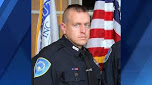
The loss of Weymouth, MA Sgt. Michael Chesna impacts all of law enforcement and the behavior of the shooter must not be repeated. Sgt. Chesna will be buried on Friday July 20, 2018 with the full honors for the hero he was.
“And maybe just remind the few, if ill of us they speak, that we are all that stands between the monsters and the weak.” Michael Marks
 MSefton's Human Behavior Blog