Investigating domestic violence, predicting danger, and containing the anger

image_502116fc-2724-4fe0-bba0-c375c3c85c13.img_0646
Dr Michael Sefton
Domestic violence homicide results when victims decide to move on with their lives and inform a jealous, insecure spouse that they no longer want a relationship. October is Domestic Violence Awareness month. The risk is greatest when victims decide to leave. At first glance one might say “Lots of people break up and do not murder their spouse and family” according to Michael Sefton shown in the photo above. That is a fair statement, but it happens enough in the United States and elsewhere that domestic violence homicide must be considered in the most egregious cases of DV. Last week in Massachusetts a family was murdered because one spouse asked to be let go and people were stunned that they saw nothing to warn them of what was brewing.
“Domestic violence is not random and unpredictable. There are red flags that trigger an emotional undulation that bears energy like the movement of tectonic plates beneath the sea.” according to Michael Sefton (2016).
At what point does a potential victims begin to wonder whether she and her children are safe? We are lead to believe that abusive intimate partners cannot be held in jail unless they are in violation of an order of protection, AKA: restraining order. This is untrue. But time and again, violent and abusive partners stalk and ignore orders of protection – especially using social media tracking software and trolling social media sites like Facebook, Instagram, and What’s App to find victims and watch their activity. It is all about control, pathological jealousy, and instilling fear and terror. Restraining order’s are authorized by a district court judge who is on call night and day in most parts of the country. Restraining orders are not authorized unless substantial threat to the victim exists.  These orders are carefully crafted by investigating police officers whose reports highlight the exact nature of the violence and the reason the victim needs protection. “Protection orders are offered to the victim after the first sign of physical violence. It has been espoused that the police are not called until after the 6th or 7th episode of domestic violence” according to Sefton, 2016.  DV is a secret affair between members of a family who are often ashamed or embarrassed to come forward for help often until things gradually get worse – sometimes years into a pattern of violent dysfunction. Research is clear that separating spouses for the night does not positively impact the level aggression and risk in the household as much as the formal arrest of the aggressor.  What usually happens is the police break up the fighting couple by sending the aggressor off to the home of a friend or family member – less often to jail unless there are obvious signs of abuse. Arrest is mandated by law when physical signs of abuse are apparent. It has become all too often the case that hindsight – taken seriously – may have saved a life. It is when they are attempting to leave that abuse victims are at greatest risk of death due to domestic violence as in the case of Amy Lake, a victim of domestic violence homicide whose case was carefully studied in the Psychological Autopsy of the Dexter, Maine Domestic Violence Homicide (Allanach, et. al. 2011) that occurred in June 2011. Lake’s husband and murderer was heard to state that “if you ever try to leave me I will kill you”.  In research conducted by this author and colleagues we learned that as soon as police leave the scene the risk for violence is increased. We interviewed a man who served 18 years for the murder of his wife and he described in vivid detail how he used nonverbal coercion to manipulate his wife while being interviewed by sheriff’s deputies in Maine. He admitted that as soon as the police were out of the driveway he strangled and drowned his wife for calling them. In our interview, he claimed that she was his best friend. In the end, there is always at least a single person who knows what is about to happen and often does nothing to stop it. Whether this unwitting duplicity stems from the cultural belief that what happens behind closed doors is “nobody’s business” or the conscious result of intimidation should not change the proper law enforcement intervention in these cases. Early incarceration provides opportunity to draft a viable safety plan for potential victims and in some cases, will instill a desire for change in the violent partner. In the meantime, substantive buy-in from police, legislators, judges, probation, and society needs to be fully endorsed for real change to happen and for safety plans to work and violent partners to be contained. 
Allanach, RA, Gagan, BF, Loughlin, J, Sefton, MS, (2011). The Psychological Autopsy of the Dexter, Maine Domestic Violence Homicide and Suicide. Presented to the Domestic Violence Review Board, November 11, 2011 Sefton, M (2016). https://msefton.wordpress.com/2016/07/20/the-psychology-of-bail-and-alternatives-to-incarceration/ Blog post: Taken October 9, 2019
Domestic Violence Awareness October 2019

Today, as we read about another family destroyed in domestic conflict here in the Boston area, I can imagine the images seared into the eyes of those who responded to the call finding 3 children dead along with their parents.  The Abington, MA police chief described the death scene in the Boston Globe as “something unimaginable”.  Some people are better equipped to handle horrific cases where death is on public display – perhaps even today’s horrific domestic terror attack here in Massachusetts. Others become impacted by the recurring images and how they are all the same after a while. Too many calls resonate with the officer’s personal well-being and safety leaving him or her constantly on guard. But over time – even the neurosurgeon – will become harmed by embitterment when his learned craft can do nothing to fix a leaking brain and his patient dies. Perhaps he feels that with updated equipment and training he may have been able to save the life?

This is what LEO’s face.  A loss of purpose in life and the unmitigated stench of a decomposing society over which they have no control and, too often, a internal command structure who does not know what it is like to be in a lonely barn at 2 AM and see the hanged remains of someone who, after 5 hours, would leave even the most hardened of us on our knees and wanting out.

October is Domestic Violence Awareness month. Cases such as today’s Abington murders often leave emotional tracers that can grow a database which LEO’s can utilize when investigating calls for service. Lives will be saved when society takes a closer look at red flag violence – these are the pre-incident indicators that violence and domestic violence homicide are at highest risk (Sefton 2018). Some behaviors are secretly guarded among intimate partners – as “nobody’s business”. Police officers must inquire and listen carefully to the victim who firmly believes her spouse intends to kill her. The underpinnings of her fear are generally spot on as in the case I that investigated in Maine using the psychological autopsy in 2012. For the cases with high likelihood of domestic violence homicide, greater care for victims must be initiated from the beginning before it is too late. It can be a hard sell, I know, but the reports we write must also be “spot on” when it comes to dangerousness, risk, and containment.

Sefton, M (2018) Violence prediction: Keeping the radar sites on those who would do us harm. Blog post: https://msefton.wordpress.com/2018/05/20/violence-prediction-keeping-the-radar-sites-on-those-who-would-do-us-harm/ Taken October 8, 2019

What is involved in CIT and Jail Diversion?

“The important part of crisis intervention training comes in the interdisciplinary relationships that are forged by this methodology. Trust and respect between the police and its citizens builds slowly one person at a time. “

Michael Sefton, 2017

Police officers have historically been ill prepared to deal with people exhibiting signs of mental illness or severe emotional disturbance. Many were thought to be unpredictable and therefore resistant to the typical verbal judo officer’s are trained to use. The CIT programs provided training to police officers in an attempt to bridge the gap between myths about mental illness passed down from one generation of LEO’s to the next and actual training and experience in talking with citizens experiencing a crisis in their life, learning about techniques to manage a chaotic scene, strategies for enhanced listening, understanding the most commonly encountered disorders and role playing. For one thing some person’s afflicted with mental illness have difficulty following directions such as those suspected of hearing voices, paranoia or command hallucinations but this is not always the case. Many individuals CIT trained officers will encounter are normal human beings who are experiencing a high stress, crisis such as the death of a loved one, financial loss, failed marriage or relationship, or major medical illness. This adds a layer of complexity to the CIT model that officers soon experience.

Acuity increases with encounters of mentally ill who are both substance dependent and have some co-occurring psychiatric condition. The alcohol or drugs are often veiled in the underlying “mental illness” but in truth they are not mutually exclusive. The importance of treatment for substance dependence and mental illness cannot be understated as violent encounters between law enforcement and the mentally ill have been regularly sensationalized. The general public is looking for greater public safety while at the same time M.H. advocates insist that with the proper treatment violent police encounters may be reduced and jail diversion may be achieved. 

5 Stages of Police Crisis Intervention

  1. Scene safety – Assess for presence of firearms – obtain history of address from dispatch – have back-up ready
  2. Make contact with complainant & subject – express a desire to help; listen to explanation of the problem – ascertain what is precipitating factor?
  3. Establish direct communication with subject – attempt to establish trust; support for taking steps toward change; “why now?”; identify any immediate threats – sobriety, weapons
  4. Pros and Cons for change – ascertain how willing  is subject to begin change process, i.e. sobriety, counseling, detoxification
  5. Positive expectations for change = direct movement toward change – hospital program; rewards that will come with positive change

“A crisis event can provide an opportunity, a challenge to life goals, a rapid deterioration of functioning, or a positive turning point in the quality of one’s life”

(Roberts & Dziegielewski, 1995)

There is a high degree of stress in any call involving a person in crisis. Repeated exposure to trauma is known to change the fight/flight balance we seek for emotional stability. Excessive autonomic arousal poses a threat to cardiac functioning and damaging hypertension. After high intensity/high lethality calls I suggest a defusing session take place immediately after the shift or as soon as possible. Excess adrenaline from an abnormal stress response can have significant health effects on LEO’s. Defusing or debriefing sessions can help reduce the impact of these types of calls. Full critical incident debriefing should wait until the normal effects of such calls wear off.

Sefton, M. (2017) Human Behavior Blogpost: https://msefton.wordpress.com/2017/03/30/police-are-building-bridges-and-throwing-life-savers/ taken December 10, 2017

Protecting the Victim’s of Intimate Partner Abuse: The aftermath of domestic violence homicide

DV_note B&W
Victim passed this note to Veterinarian staff – Photo VCSD

“You can’t say that nothing can be done, because nothing will be done,” said Michael Sefton, a former Westbrook, Maine  police officer who is a psychologist and former police sergeant in Massachusetts at the New Braintree Police Department.

Bangor Daily News

Orders of Protection – Underpinning the Good Safety Plan

Many cases of domestic violence (DV) result in an order of protection being issued.  The protection order is based upon the personal report of the victim which is substantiated by police report and perceived risk and may be implemented 24 hours a day. The approval of a court judge or magistrate  is generally required for its issuance. This order requires that the abuser “stay away” from the victim and is based on the totality of circumstances presented to a district or family court judge at the time of arrest.  Police officers use report narratives to construct the details of the protection from abuse (PFA) or restraining order (RO).  Different states utilize differing nomenclature to define what is the substantive court directive that provides the underpinning of a victim safety plan. They are granted on an emergency basis for 24-48 hours and are sustained for up to 6-12 months following a review by the court.
What happens between the time the initial PFA is granted and when the victim is expected in court to chronicle his or her intimate partner violence is often a mystery.  Victims often fail to show for the initial hearing that allows the initial PFO to go away.  Why? In some cases they become intimidated by their violent spouse who has made promises to straighten up and fly right. This is the core dynamic of intimate partner violence and it is well-described in these pages and elsewhere.
cropped-seats1.jpg
“Domestic violence is not random and unpredictable. There are red flags that trigger an emotional undulation that bears energy like the movement of tectonic plates beneath the sea.” according to Michael Sefton (2016).
In all states a protection order requires that no contact be made via telephone, through acquaintances, text messaging, or in person.  By violating a PFO requires that law enforcement make an arrest of the person in violation. This information becomes the grist of the underlying risk to the victim.  The marginalized abuser sometimes becomes obsessed with his loss of control and may take to cyber stalking in order to keep tabs on his partner.  As just mentioned any violation of the protection order renders the abuser subject to arrest and should require a high amount of bail before he is released from jail.  This is rarely the circumstance as violators easily make bail ironically blaming the victim as the root cause of the marital strain. These are the hubristic remarks of building tension and frustration described in the cycle of violence.
It is important to note that social media has given abusers extra means to “creep” into the privacy of estranged spouses without detection.  It played a significant role in the domestic violence homicide according to the psychological autopsy report of the Dexter, Maine homicide/suicide in 2011 (Allanach, R. et al., 2011).  Social media may also be used to intimidate and unfairly influence friends and family.
Bail amounts differ from state to state and sometimes even from county to county within a single state. The amount of bail should be high enough to inconvenience and deter the abuser from being tempted to coerce and manipulate his victim and family.  Most often the bail amount is low and inconsequential to the abuser who often has no criminal record.  However, changes in bail conditions and risk assessment must be integrated into orders of protection – especially when a single abuser has had more than one PFO filed against him. This sets the stage for measuring the degree of violence one might expect as the abuser becomes further marginalized and feels his control over the victim begin to collapse.  “Someone with a history, particularly a continuing history of violence, can be presumed to be dangerous.” according to Frederick Neuman, MD.
The order of protection belies the fundamental safety plan that is crafted by police and domestic violence experts and is designed to prevent further victim injury or death.

Sefton, M. (2016) Blog post: DVH in MA: 4 year old child begs his father.  https://msefton.wordpress.com/2016/10/02/dvh-in-ma-4-year-old-child-begs-father-not-to-murder-his-mother/. Taken 8-20-2018
Allanach R. et al., (2011). Psychological Autopsy of June 13, 2011, Dexter, Maine Domestic Violence Homicides and Suicide: Final Report 39 (Nov. 28, 2011), http://pinetreewatchdog.org/files/2011/12/Dexter-DVH-Psychological-Autopsy-Final-Report-112811-111.pdf.
Neuman, F. (2012) Is it possible to predict violent behavior? https://www.psychologytoday.com/au/blog/fighting-fear/201212/is-it-possible-predict-violent-behavior?collection=113345

The Agony of Releasing a Murderer

CITflickCOURTp0719183-1
 
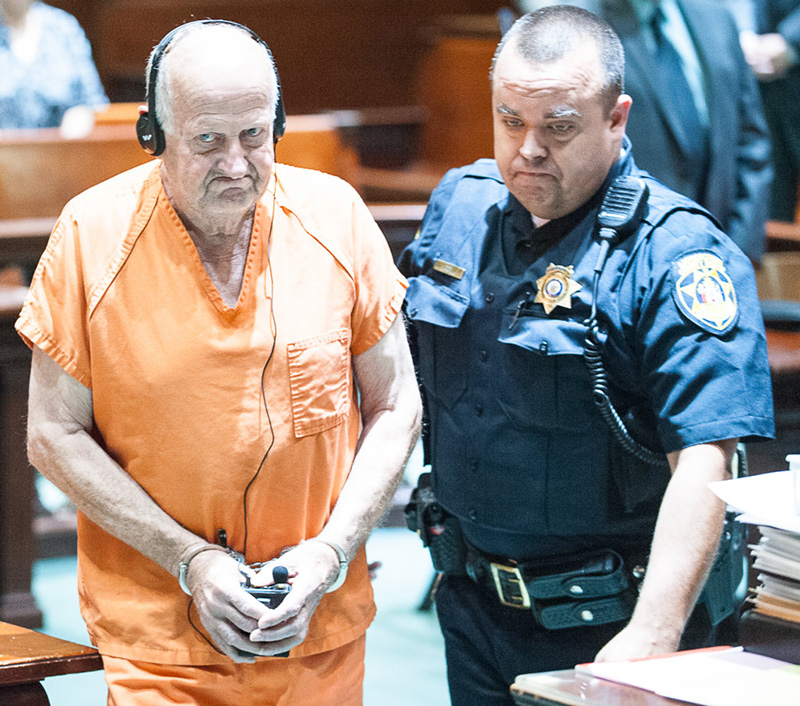
Albert Flick is led out of the courtroom following his initial appearance in the Androscoggin County Court house in Auburn Wednesday morning. (Russ Dillingham/Sun Journal)
 
There is no pleasure when a parole board must decide on whether to release or not a man who violently murdered his wife. Especially the case of Albert Flick – arrested in Westbrook, Maine in 1979 and convicted of the brutal murder of his wife. Mr. Flick asked not to be released perhaps out of some inner sense of foreboding and primal instinct of things to come – if such a thing exists among killers. He is a wolf in sheep’s clothing -underneath he is ravenous.
Fast forward to Sunday July 15, 2018 Albert Flick who had been released from jail for committing the violent murder of his wife again killed a woman with whom he had an infatuation. He had been stalking her for weeks prior to her murder.  He followed she and her two little boys from place to place in Lewiston, Maine.  She had an inner sense that he was dangerous but was fearful of going to the police at the time of her death. Yet she had spoken to friends about her worries. What may have prevented the victim from calling police when she first noticed Mr. Flick was stalking her? Why was she fearful of the very people charged with preventing violence? What may have happened if she had notified the officer on her beat? Or a police officer walking in her neighborhood?
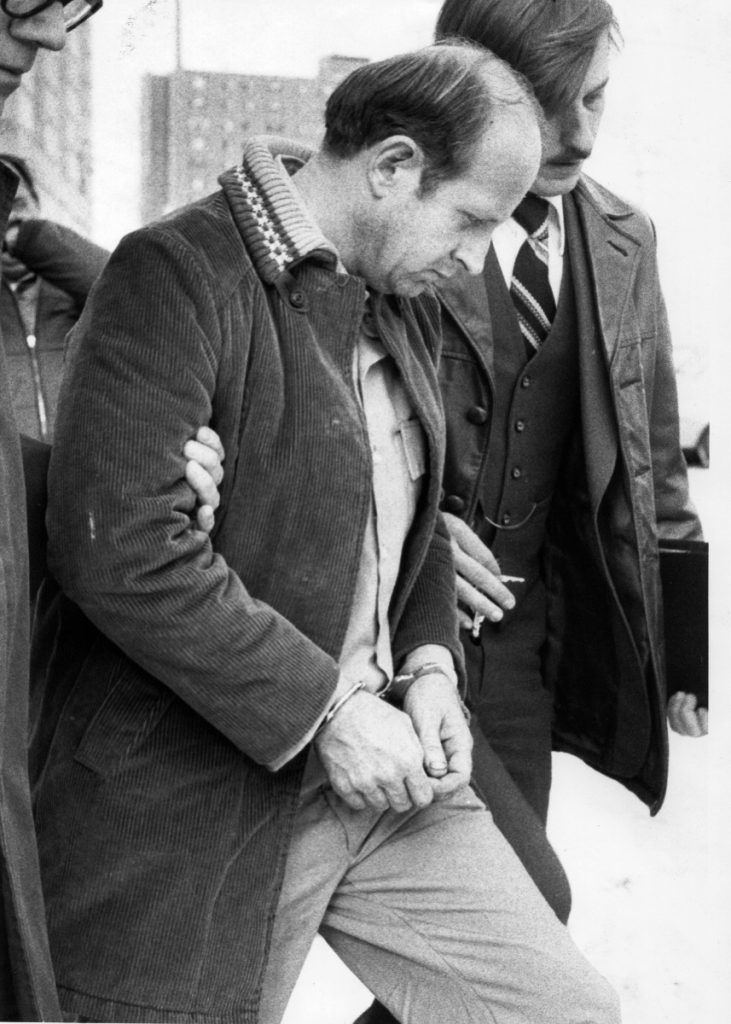
The answer is that Mr. Flick would have had a visitor that in all likelihood would derail his infatuating behavior. If not, he would have had is parole revoked as it should have rightfully been done.  I was a police officer in Westbrook, Maine when Flick murdered his wife in 1979. I was on duty when the call came in to the station but as a junior officer was not dispatched to the scene. The scene was horrific even by todays standards of violence. Nevertheless, the case is well know to me as I later worked closely with the arresting investigator Ron Allanach and his partner Wayne Syphers – both exemplary career law enforcement officers.  Ron went on to earn his doctorate in counseling and was Chief of Police for 8 years at the end of his career in Westbrook. Both men were instrumental at convicting Albert Flick.  Flick is shown in the 1979 photograph below being taken to court in Portland by Detective Syphers who made a heroic effort to save the life of the victim. The female victim ultimately died in his arms in 1979.  Albert Flick should have remained in jail for life and many in law enforcement who remember the case are agonizing over  his release after serving 20 years.
“Clearly, probation is not working. … At this point, I just don’t know what else to do. I think there’s a huge safety risk to women and society when it comes to Mr. Flick.” Prosecutor Katherine Tierney, 2010
WayneSyphers and Flick
Albert Flick with Det. Wayne Syphers (right) at Cumberland County, Maine trial in 1979
Flick was known for a proclivity for violence against women. After being released from his murder conviction Flick was arrested for chasing an intimate partner with a screw driver with intent to due harm. There would be other charges and other arrests that were red flags for the underlying anger he felt toward woman.  A group of us will reach out to Mr. Flick in the coming months for a sit down.
The female victim, Kimberly Dobbie, in this 2018 Lewiston, Maine case had felt threatened by Flick. Her instincts were keen as it related to his potential for violence against her. But she told only her friend and no one else.  She was 30 years his junior and had spurned his love interest. She had twin children who were present during the despicable killing and are traumatized having witnessed their mother’s death. In his book “The Gift of Fear“, Gavin deBecker espoused the value of trusting our primal instincts as they pertain to our personal safety.
Flick had been in and out of prison for crimes involving intimate partner violence and intimidating female witness who were courageous in coming forward against Flick. At some point he himself reported asked to be kept in custody.
“You can’t say that nothing can be done, because nothing will be done,” said Michael Sefton, a former Westbrook police officer who now works in Massachusetts for the New Braintree Police Department.
Keep Me Current, 2011
The judge who authorized Flick’s release is retired from the bench but his stated opinion for releasing Flick was that “he had aged-out and was no longer criminally inclined” yet he himself asked to remain behind bars.  Why?
Technically this was true, Flick no longer fit the stereotypic picture of a repeat murderer.  He was older and physically growing infirm.  Most men who commit domestic violence homicide do not recidivate once released from prison especially those over the age of 70.  While researching a case of family murder-suicide, I have spoken to a man who served 18 years for strangling his wife who was released and became a model citizen and amateur photographer. He published a book of his photographs that were quite good – even sensitive.  This man was not a risk and was somewhat younger than Flick.  So by all reasonable judicial standards Flick was considered a low-risk release. Probation would keep him in line.  Not so fast, information was available from his first release that included repeated violence against women raising a red flag of potential violence in the future.  Plus the horrific nature of the stabbing murder in 1979 was not a factor in the release conditions once he had served his time. Finally, there is also information that suggested that Mr. Flick did not seek his own release as reported above. He may have been institutionalized with the simmering anger he himself expected would again leach from his despicable soul.

Desperate Victim’s plea for help

DV_note B&W
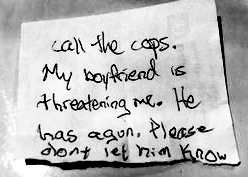
Victim passed this note to Veterinarian staff – Photo VCSD

WESTBOROUGH, MA  June 6, 2018 A case of domestic violence unfolded on Memorial Day weekend in Volusia County, Florida when a female victim was being held by her live-in boyfriend. The note implores staff members of the DeLand Animal Hospital to call police because her partner was threatening her and had a gun.  These kinds of desperate measures occur occasionally and are dramatic and newsworthy. The staff at the DeLand Animal Hospital are to be commended.  But there are intimate partners everywhere who live in fear just as the indomitable victim who passed this note had been living.

“From coast to coast LEO’s are caught in this moth eaten, patchwork system that lacks resources for both the mentally ill and those addicted to alcohol and drugs.” Michael Sefton, Ph.D. 2018

As the story goes, her boyfriend had beaten her and was refusing to allow her to leave the couple’s home.  To her credit (perhaps life saving) she convinced the man that she needed to bring the dog to the veterinarian.  He agreed but would not allow her to go without him. Upon arrival this note was passed to a member of the hospital staff who knew just what to do.  The man is now behind bars being held without bail – manning his defense.

There is a consensus among experts in domestic violence that victims are abused multiple times – often threatened with death – before they call police for help.

As a society, more needs to be done to fill-in the holes in the system designed to keep families safe.  Safety plans and orders of protection are not enough.  From coast to coast LEO’s are caught in this moth eaten, patchwork system that lacks resources for both the mentally ill and those addicted to alcohol and drugs. The holes in the system allow for violence prone individuals to allude police and coerce victims into silence.  But every once in a while, a silent victim writes a life saving note and gives it to the right person.

Domestic violence happens in family systems that are secretive, chaotic, and dysfunctional.  This lifestyle pushes them into the margins of society – often detached from the communities in which they live.

The abusive spouse makes his efforts known within the system by his barbaric authoritarian demands.  He keeps his spouse isolated as a way of controlling and manipulating whatever truth exists among these disparate family members.  The consequence of this isolation leaves women without a sense of “self” – alone an emotional orphan vulnerable to his threat of abandonment and annihilation.

Successful intervention for these families must slowly bring them back from the margins into the social milieu. Arguably, the resistance to this is so intense that the violent spouse will pull up stakes and move his family at the first sign of public scrutiny.

Police officers are regarded as the front line first responders to family conflict and DV.  For better or worse, the police have an opportunity to effect change whenever they enter into the domestic foray.  This affords them a window into the chaos and the opportunity to bring calm to crisis.  In many cases, the correct response to intimate partner violence should include aftermath intervention when the dust has settled from the crisis that brought police to this threshold.  When this is done it establishes a baseline of trust, empathy, and resilience.

Community policing has long espoused the partnership between police and citizens.  The positive benefits to this create bridges between the two that may benefit officers at times of need – including the de facto extra set of eyes when serious crimes are reported.  But the model goes two ways and requires that police return to their calls and establish protocols for defusing future events meanwhile processing and understanding the current actions of recent police encounters. When done effectively the most difficult families may be kept off the police radar screens for longer periods of time that can be a good thing when it comes to manpower deployment and officer safety.

The threat raised by stereotyping

Stereotyping plays a significant role in human behavior and is known to impact police and citizen interactions. In many instances circular feedback loops operate – sometimes unconsciously – that impact the interaction between individual citizens and members of law enforcement  This was first identified when describing how school-age students respond to teacher stereotype expectations “When we use stereotypes, we take in the gender, the age, the color of the skin of the person before us, and our minds respond with messages that say hostile, stupid, slow, weak. I know this to be true having been labeled “pathetic” at age 8 by a third grade teacher.  I was active, curious, and inattentive.  But I was not pathetic yet I sometimes feel this way even now. “Those (personal) qualities aren’t out there in the environment. They don’t reflect reality.” according to John Pargh, Ph.D.  The subtle, somewhat hostile incredulity shown to me as a young child had an impact in my effort, learning style, and self-image. I learned much later in life that the teacher I describe had more than a few problems that had nothing to do with me.  But still I have lingering doubts and understand the power of stereotyping.
These signs are independent of an individuals’ guilt or danger, and rather reflect a situationally- based psychological process, called social identity threat.  Police officers undergo defensive tactics instruction throughout their formal academy training learning pre-attack danger indicators and methods of managing the threats associated with physical attack.  This post hopes to connect the pre-attack signs with the social psychological literature on stereotype threat.
“Stereotype threat refers to the concern that stereotyped group members experience when they are in a situation where they might be negatively judged by a group stereotype (Steele 1997). This psychological threat produces high levels of anxiety, physiological stress, and impaired cognitive processes, as individuals are concerned about negative treatment based on their identity (Bosson et al. 2004; Osborne 2006; Schmader and Johns 2003).”
Community policing, when implemented effectively will provide a “buffering effect” to stereotype threat. It does so by providing identity and cultural affirmation that belies an ongoing dialogue among LEO’s and neighborhood residents that are affirming and without bias and prejudice. This has a way of reducing cultural bias, perceived threat, and misinterpretation of behavior. Community policing does much to bridge a gap in social identity by building bridges.
“ST occurs when environmental cues make salient to a person the negative stereotypes associated with their group, thereby triggering physiological and psychological processes that have detrimental consequences for their performance on certain tasks, on their behavior more generally, and on their self-understanding.” Becoming aware of stereotyping and the threat it raises in those who are stereotyped can shape the behavior of police officer and culturally diverse members of the community.

Kahn, K. MacMahon, J. and Stewart, G. Misinterpreting Danger? Stereotype Threat, Pre-attack Indicators, and Police-Citizen Interactions. Journal of Police and Criminal Psychology , Volume 33, Issue 1, pp 45–54 https://link.springer.com/article/10.1007/s11896-017-9233-1 Taken May 17, 2018

Maine to Consider “Red Flag Law”

WESTBOROUGH, MA April 25, 2018  Maine is the latest state to consider a so-called red flag law. It would let family members or law enforcement officers petition a judge to take away a “high risk” person’s firearms temporarily, if the judge determines the person poses an imminent risk. In a recent post I describe the updated terminology for individuals who are a potential threat called Gun Violence Restraining Orders.  The proposed action would allow law enforcement to remove the firearms of people who are known to be threatening or physically violent toward intimate partners.  “Felons, the dangerously mentally ill, perpetrators of domestic violence – these people have demonstrated their unfitness to own a firearm” said David French, 2018.  In cases such as these police have reasonable cause to disallow gun ownership based not on prior conviction but on the elevated risk to potential victims.
Here in Massachusetts, in August 2013 I published a blog after the death of Jennifer Martell who was murdered in front of her 4-year old daughter by Jared Remy, son of Red Sox broadcaster and former player Jerry Remy.  The younger Remy had received one break after another some say linked to his celebrity father’s influence.  He was never held until a dangerousness hearing could be undertaken.  Had this been done Ms. Martell may be alive today. In 2011, Stephen Lake murdered his wife and children after he was kept from attending his son’s 8th grade graduation.  Lake had exhibited several red flag warnings prior to the murders.  In spite of these he was not held nor were his firearms removed from his control Allanach, et al. 2011.
Several states have debated similar red flag laws in the wake of the school shooting in Parkland, Florida. Supporters argue a red flag law could have prevented the Parkland shooter, but some gun owners say it’s an overreach that threatens their 2nd Amendment rights.
Like many states in the U.S. Maine has more than its share of calls for domestic violence and domestic violence homicide.  “All law enforcement personnel who respond to incidents in which an individual’s mental illness appears to be a factor receive training to prepare for these encounters; those in specialized assignments receive more comprehensive training. Dispatchers, call takers, and other individuals in a support role receive training tailored to their needs.” Communication between members of a response team with awareness and understanding of red flag warnings will reduce the impact of coercion and control that belies the secretive relationships between intimate partners.  It will also bring to light the need for danger assessment and containment of people who are high risk for violence as in the case of Jared Remy in Massachusetts and Stephen Lake in Dexter, Maine.

Red Flag Warnings (2018) https://www.necn.com/news/new-england/Maine-to-Consider-Red-Flag-Law-478687253.html Taken 4-4-18
Allanach, R.A., Gagan, B.F., Loughlin, J., Sefton, M.S., (2011) The Psychological Autopsy of the Dexter, Maine Domestic Violence Homicide and Suicide. Presented to the Domestic Violence Review Board, November 11, 2011

Protection from abuse: the role of social media in the reduction of safety

WESTBOROUGH, MA March 20, 2018  Greater protection of victims of domestic violence is needed.  When provisions for a plan of safety are executed victims are expected be afforded greater safety but not always. Domestic violence victims are at greatest risk when they make the decision to leave a violent partnership.  This often means having a safety plan – especially when specific threats have been made. Safety plans are often drawn up by women in conjunction with counselors who specialize in helping families stay off the grid and hidden from violent spouses.  In one case of familial homicide and suicide it was clear that the commonalities needed to be exposed among cases of familial homicide.
In particular, when I teach law enforcement officers about DVH,  I encourage detailed witness statements much as possible especially if the victim described the fear and belief that she will one day be murdered by her partner. These documented statements, if spontaneously uttered, are often the greatest predictor of potential harm to victims and her children. If written into a police report the decision about dangerousness and bail may be influenced.
In the 2011 homicide from Maine, Steven Lake used social media to track his wife and 2 children from whom he was mandated to stay away.  Yet, if his wife posted a photograph of his children he went to great lengths to undermine their safety by identifying anyone who “liked” the photo or commented on it. He used these posts to triangulate her whereabouts and living arrangements.  This was a large part of what marginalized Stephen Lake and in turn Lake posted his own propaganda espousing his loneliness and love for his children. Lake garnered significant support from those social media “friends” who knew nothing about what he had done to require the protection from abuse order. Many, in fact, encouraged him to fight for his children which may have been a catalyst in his festering resentment and ultimately terminal rage. He was provided information and access to his wife’s social media platforms by a family member.  For her part, Lake’s wife wanted to remain close to her in-laws in an effort to normalize her children’s life as much as possible. For example  Lake’s parents were invited to the family’s thanksgiving celebration but declined because Steven Lake could not attend.
Similarities in domestic violence
Cases of domestic violence have similarities across socioeconomic status, ethnic and cultural background, and the cycle of abuse. The growth of social media platforms affords those inclined to control and isolate intimate partners from persons who might provide them security. Cases of domestic violence share the common theme of intimidation, coercion and control.  Social media are a fun and useful medium to keep in touch with friends and family.  But it is also lends itself to sometimes nefarious trolling to gain a perceived advantage in undermining the safety plan. Social media trolling contributes to the control they seek especially when victims seek protection.  In order to limit the impact of social  media stalking victims need to shut down all social media accounts and activity. Greater protection of victims and family members requires a comprehensive plan with provisions for times when they are violated – including mandatory arrest, risk assessment and no bail containment if deemed necessary.
“That is one conclusion of four former and current police officers in a recently released report. The men, who were volunteers and had no connection to the shootings, spent the last several months interviewing 69 people about the triple homicide and suicide in Dexter in June, to suggest ways to prevent future tragedies.” Portland Press Herald, November 11, 2011
The Psychological Autopsy report suggests improvements that may prevent future domestic violence homicides:
 Use of social media platforms by people involved in conflicts should be minimized, to prevent intimidation and stalking.
 Protection-from-abuse orders and bail conditions should mandate disclosure of all firearms that are accessible to the domestic-violence offender.
 An offender who seeks, hides, uses or attempts to acquire a gun or ammunition when a protection-from-abuse order is in place should be charged with a felony and not allowed bail.
 Bail amounts should be high enough to deter abusers from violating a protection orders.
 When a protection order violation involves a deadly threat, a judge should set bail, not a bail commissioner.
 Global positioning systems should track abusers during periods of protection orders in any incidents that involve deadly threats or evidence of weapons.
 At least two officers should be sent to all domestic-violence calls when officers suspect violence is likely.
 At-risk spouses should be advised to live in as secure an environment as possible, with deadbolts on doors, secured windows, motion sensor lights and a land telephone line.
 People charged with domestic violence crimes should not wait more than a year to go to trial.
The safety of potential victims including children is the penultimate goal of protection orders but too often they are ignored via stalking efforts that include using social media to track the activities of an estranged spouse.  This overt defiance requires careful analysis and requires the arrest of the violator.  Once this takes place a dangerousness hearing must take place before he or she is released but this rarely takes place.