New age cops – the future innovation of community policing

WESTBOROUGH, MA December 29, 2016 I have long been an advocate for prompt and comprehensive treatment for those afflicted with mental illness.  Now police are increasingly linking up with mental health agencies as a way of diverting mentally ill person’s from jails into treatment for their emotional affliction.  In my experience this is no easy task.  In some cases criminality and mental illness are not mutually exclusive.  Some who suffer with emotional issues like bipolar depression, drug addiction or anxiety may respond poorly to treatment and may need containment. Those most refractory to treatment often become most difficulty to manage in society.  The untreated mentally ill have a higher rate of violence than those in voluntary treatment.

psychology2As early as 1984, I served the pediatric population in Boston at the Boston City Hospital Pediatric Emergency Department as the on-call clinician in psychology. That same year I was appointed to the ED at Hale Hospital in Haverhill, MA for screening people in crisis.  Those who were stable and had support systems in place would be released – usually with an outpatient referral. Meanwhile, patients without at-home safe guards who could not plausibly answer the question “what brought you to the decision to harm yourself?” were admitted to the hospital.  Other mitigating factors like healthy living arrangements, employment, sobriety, and no history of suicidal behavior were positive indicators of future outcome.  It was a position I loved and is an important clinical role to this day across the United States.  Later as a community mental health psychologist in Long Beach, CA, I served the Children’s Service as someone charged with screening adolescents in crisis living across Los Angeles County. In each of these locations I worked closely with social workers, case managers, police and gatekeepers at state and county psychiatric units to find open beds for kids in need.

In 25 years since there has been very little innovation and fewer still treatment beds for those in need. Today’s depressed and emotionally wounded often spend days in emergency department hallways further wounded by a demoralizing system of delivery that is overwrought and has no place to send them.  This scenario was the case in 1985 and remains the case in 2016.  In Massachusetts and counties across the United States publicly funded hospital beds – including state hospital beds have been eliminated.  In the 1970’s and 1980’s the pendulum of advocacy swung toward community-based care and away from hospital-based treatment.  This left the chronically mentally ill without a support net for treatment, medication management and long range hope.  Many became homeless, unemployable and abusive of drugs and alcohol.

Police provide frontline intervention – often with little training

Police officers became the first line of defense as the hospital beds were eliminated. The mentally ill and those addicted to any number of drugs or alcohol grew homeless and sometimes menacing as they struggle with symptoms. Now police officers are being trained to intervene with these marginalized citizens with crisis management skills.  This poses a conundrum for the current zeitgeist of community policing theory in that the notion of dangerousness relies on critical scrutiny of the underpinnings of human behavior and often nonverbal indices of psychopathology. Some believe this is state of the art police science.  Departments from Augusta, Maine to Los Angeles, CA to San Antonio, TX are using frontline officers as crisis resolution specialists for police encounters with the acutely mentally ill. Many are paired with licensed clinicians while others are working the streets alone.

The collaboration between police and mental health personnel is not new.  But the use of police officers as crisis intervention specialists is innovative and gaining traction in many places around the country. Yet these officers must always be aware of the uncertainty of some encounters with police and those suffering with paranoia or psychotic, illogical delusions, PTSD, or traumatic brain injury that may not respond to verbal persuasion alone.  Decisions about when to utilize greater force for containment of a violent person is sometimes instantaneous.

The use of force must be fluid and officers in the field are expected to modulate the force they apply to the demands of the situation and be ready to respond to changing threat levels.             Michael Sefton, 2015

In 2002, I was appointed to a Massachusetts police department having once served in southern Maine right out of college.  As a psychologist I made an effort to bring mental health concepts into police work without much fanfare or interest.  Mental health topics are not as sexy as defensive tactics or firearm training, I was once told, so finding numbers was sometimes tenuous.  There are still many myths about intervening with those who are making suicidal and homicidal threats and training opportunities are taking on more importance.  Especially these days.  Suicide by cop became a phenomenon that no officer ever wants to confront. All violent police encounters guide officer behavior. “The degree of response intensity follows an expected path that is based on the actions of the perpetrator not the actions of the police” (Sefton, 2015).

Suicide by cop – predicting behavior

In the 2014 FBI Bulletin, Suicide by cop (SBC) is defined as “a situation where individuals deliberately place themselves or others at grave risk in a manner that compels the use of deadly force by police officers” according to Salvatore, 2014.  This happens more than one might expect and is often preceded by rehearsal events according to Salvatore.  “Suicide rehearsals are practice for the attempts that will follow within a few hours or days. SBCs may be tested. Officers should use caution when recontacted by an individual who previously presented signs of mental illness, had no need for assistance, was standoffish when asked what was needed, or was anxious to assure the officers that everything was fine. The initial contact may have been practice for an SBC.”

The best predictor of behavior is past behavior.  The prior demeanor that police have observed in those frequent flyers who pop up on police radar over and again often sets the stage for violent conflict later on. But not always.  Situations grow exponentially more grave in the presence of drugs and alcohol raising the level of lethal unpredictability. For many struggling with depression or other serious mental illness being sober or drug free can be the healthiest thing they can do for themselves.  The uncertainty of the SBC scenario makes the likelihood of a successful de-escalation a tenuous exercise in the life and death force continuum.

The motives for SBC are multifactorial and undeniably linked to poor impulse control associated with drug and alcohol intoxication.  The triggers are identified by Salvatore as “individuals who feel trapped, ashamed, hopeless, desperate, revengeful, or enraged and those who are seeking notoriety, assuring lethality, saving face, sending a message, or evading moral responsibility often attempt SBC”(2014).  Some believe they will become famous and earn large monetary settlements for their surviving families following a SBC scenario.  Other victims are tortured souls who make no demands and offer no insight into their suicidal motive and are killed when they advance on police or turn a weapon toward responding officers.

Training in police-mental health encounters has slowly taken hold.  This innovation in community policing offers hope for reducing fatal encounters.  No amount of training in crisis management will reduce incidence of SBC to zero but ongoing training to identify the behavioral indices of imminent violence, psychosis, and suicidal/homicidal ideation will reduce these lethal encounters.  Most officers are highly skilled at using their verbal skills to de-escalate a violent perpetrator without using lethal force – even when a higher level of force may have been warranted.


Salvatore, T. (2104), Suicide by Cop: Broadening our Understanding. FBI Law Enforcement Bulletin, September. Taken 12-29-16 Bulletin website https://leb.fbi.gov/2014/september/suicide-by-cop-broadening-our-understanding.

Sefton, M (2015) Blog post Law Enforcement- Mental Health collaboration. Taken 12-28-16, https://msefton.wordpress.com/2015/11/27/law-enforcement-mental-health-collaboration/
What are immediate signs?

“…there are cases in the literature that identify a pattern of behavior that is observable in the days, months or years preceding these monstrous events that may signal a need for high risk containment”

Taken from Psychological Autopsy of Steven Lake in 2011 presented to Governor’s DV Abuse Board

Allanach et al. 2011

WESTBOROUGH, MA October 31, 2016 People often see signs of imminent violence in the days weeks or months in the lead up to DVH.  As a society, these signs must evoke action on behalf of potential victims. The roadmap to understand domestic violence requires clarity and courage that should not be placed solely in the hand’s of victims.

It is frequent that the abuser tips his hand as to what his intentions might be.  In the Lake homicide-suicide in 2011 in Dexter, Maine, Steven Lake hinted to his son that “the cost of a divorce is 25 cents – the price of one bullet.” Lake also verbalized that when he “did it – it would be on CNN.”

DVH in MA: 4-year old child begs father not to murder his mother


  • “… He stood in the doorway with a loaded gun and talked about killing himself and/or children and myself. He was bringing up old verbal threats and I thought they were going to come true”

    Amy Lake – from July 2010 order of protection

The words above were taken from a requested order of protection in the state of Maine in 2010.  The threats upon this victim and her family became a reality exactly one year to the day after this order was put in place in 2011. Amy

IMG_0771-1
Michael Sefton

Lake and her two children were murdered by her husband Steven Lake who killed himself as well. Immediately following the killings a Maine district attorney said “there was nothing we could have done to prevent these killings”. These were the words that triggered a team of professionals including myself to research the sequence of events that lead to this event.  A formal psychological autopsy was undertaken in 2011 following these murders and over 50 recommendations were generated (Allanach, et al 2011).

I am sick to my stomach as I write about another senseless killing of Wanda Rosa in Methuen, Massachusetts in late summer 2016.  The case resembles so many cases of domestic violence homicide – manipulation and control.  Ms. Rosa had a permanent order of protection but had recently modified the order to allow Emilio Delarosa to see the child they had in common. Why in the world would anyone allow Delarosa to see his son? He is no role model and the potential for terminal violence was readily apparent as depicted in the order of protection.  He expressed his intent to kill his girlfriend on more that one occasion.  Delarosa’s history of intimate partner violence had risen to the level of a permanent ban – signaling that the pattern of violence was undeniable and the red flag indicators for domestic violence homicide (DVH) were apparent in the eyes of the police and judiciary when the permanent order was granted.

Permanent orders of protection are rarely granted unless the pattern of violence was so prevalent and unremitting that the potential of harm or death to the victim and her family was unsurpassed as in this case.  It is known that Delarosa was manipulative and controlling of his girlfriend getting her to drop charges over and over and later alter the terms of the restraining order – ultimately resulting in her death.  Secondly, the person against whom the stay away  order is granted must have demonstrated a blatant indifference of the order of the court by having recklessly violated the order over and again. It should not have been altered.  In the past 18 months cases meeting these requirements (such as this one) have resulted in intimate partner violent deaths.  The Jarod Remy 2013 murder of Jennifer Martin is a despicable reminder of the need for change in cases of DV. Remy killed his girlfriend by stabbing her multiple times as the couple’s 4-year old child bear witness. In spite of laws designed to reduce the likelihood of DVH Rosa was not adequately protected.

Rosa’s boyfriend Emilio Delarosa is on the run as of September 20.  He is accused of murdering his former girlfriend after years of abuse, strangled her to death as their 4-year-old boy pleaded with him to spare her life, according to court records. “No Dad” the child was heard to say over and over. As in the Remy case, the 4-year old witnessed his father choking  Wanda Rosa until she was dead.

“I suspect there is a strong likelihood that he too will be among the deceased in the coming days as is the common eventuality among those who commit the unconscionable, violence that manifest in this terminal event” according to Michael Sefton, Ph.D., director of psychology and neuropsychology at Whittier Rehabilitation Hospital in Westborough, MA.  When some men violate the permanent protection order it is the result of unbridled rage and defiance against a “system” they believe has failed or unfairly humiliated them said Sefton in a release. They are murderous and often turn their rage inward in an act of suicide. I would look for the triggers of what set Delarosa’s terminal rage into action.  It could be something as simple as being told he needed to have monitored visitation with is son or learning that the female was seeing another man – both conjectural on my part.  After the alleged killing Delarosa was heard to say “It’s over, it’s over, it’s over” when speaking to his sister.

“This is the complexity of domestic violence and the cycle of abuse,” said Arelis Huertas, who oversees domestic violence and sexual assault programs at the YWCA of Greater Lawrence. “Many survivors say, ‘He’s a great father, he was only abusive toward me.’ 

“Domestic violence is not random and unpredictable. There are red flags that trigger an emotional undulation that bears energy like the movement of tectonic plates beneath the sea.” according to Sefton.  A psychological autopsy should be undertaken to effectively understand the homicide and in doing so contribute to the literature on domestic violence and DVH according to Michael Sefton who with colleagues published the Psychological Autopsy of a case from Dexter, Maine where a father murdered his child, estranged wife and ultimately himself (Allanach, et al, 2011).  In the days preceding the murder there are usually red flags or pre-incident indictors that people see that signal the intentions of the murderer.  These clues provide police and the judiciary with data to craft protection plans and are the commonalities found in cases of DVH across the state and across the world.  Some red flag behaviors signal the emergence of imminent terminal anger that can be seen in the social media accounts of intimate partners who go on to kill their spouses.  I am quite interested in the compelling reasons that Delarosa may have argued that resulted in the change in the permanent order of protection.  The outstanding Boston Globe article about the slaying is a sad reminder of the early warning signs of DVH.  All the red flags were present.  In a blog published in 2013 I list the tell tale warning signs of intimate partner homicide and the need for tougher bail conditions (Sefton, 2013).

The impact on the child will be lifelong. At age 4, children are developing their sense of gender identity in the setting of developmental growth, cognitive maturity, social functioning and continued individuation. Imagine the child who is reunited with his parent after a period of mandated protection due to DV.  He is now able to see his family and may be fraught with both excitation and fear.  It would be normal for the child to have fantasies of reunification of the family and perhaps self-blame for not having stopped the action of his father. Just like the daughter of Jennifer Martin and Jarod Remy this 4-year old boy will forever be reminded of the life he will not have.


Ronald Allanach et al., Psychological Autopsy of June 13, 2011, Dexter, Maine Domestic Violence Homicides and Suicide: Final Report 39 (Nov. 28, 2011), http://pinetreewatchdog.org/files/2011/12/Dexter-DVH-Psychological-Autopsy-Final-Report-112811-111.pdf.

Sefton, M. The red flags of intimate partner violence. Blog post taken October 2, 2016.

Sefton, M. Prior history of crime not predictive of DVH. Blog Taken October 2, 2016. post: http://enddvh.blogspot.com/2013/07/prior-criminal-history-used-to.

Is a DV registry an abuse of rights?

“The implementation of a domestic violence registry would inform potential victims that they are at risk and greatly reduce the cases of domestic violence in New York state.”  NY State Senator Michael Nozzolio

WESTBOROUGH, MA April 4, 2016 The prospect of mandated reporting in cases of domestic violence will add to already the over burdened state and federal bureaucracy. It cannot be done and may be a violation of the privacy rights of those accused of domestic violence.  Or at least that is what they tell us.  I have encountered abusive men who I have escorted off someone’s property after a verbal argument – before it became a physical encounter. In conducting my investigation, I learned that the guy had active protection from abuse orders that were taken out by three different women. That should be fuel for thought and the first question asked on the dating websites.  

In New York, state Senator Michael Nozzolio has proposed a bill that would create a registry for those convicted with violent felony domestic violence.  The bill entitled Brittany’s Law after a 2009 murder in which Brittany Passalacqua and her mother were killed in a domestic violence homicide. It has been passed in one form or another by the NY State Senate four times but the state legislature has yet to take up the bill.  Why? Some believe that a published list of abusers is a violation of human rights – like if a guy shows up on the list he may not be able to get anyone to date him anymore.  That seems like a reasonable consequence for beating up an intimate partner or two.

Predicting violence: the psychology of bail and alternatives to incarceration

WESTBOROUGH, MA July 19, 2016 The Worcester Telegram published the story of a case of domestic violence that occurred in that central Massachusetts city of 185,000.  A police officer was dispatched to a residence where a subject was suspected of violating the terms of a restraining order.  RO’s – as they are commonly referred to – offer a safety net between the victim of domestic violence and the abuser.  RO’s are authorized by a district court judge who is on call night and day. They are not authorized unless substantial threat to the victim exists.  These orders are carefully crafted by investigating police officers whose reports highlight the exact nature of the violence and the reason the victim needs protection.  Protection orders are offered to the victim after the first sign of physical violence. It has been espoused that the police are not called until after the 6th or 7th episode of domestic violence.  DV is a secret affair between members of a family who are often ashamed or embarrassed to come forward for help often until things gradually get worse – sometimes years into a pattern of violent dysfunction. Greater latitude for judges in handling violent offenders must be legislated including holding someone without bail.  This rarely takes place due to the fact that so many abusers are law abiding citizens and have no record against which to negotiate bail. Arguably, at some point violent spouses must be held for the safety of the victim and her children as in the case of Jared Remy in 2013. Remy killed his live-in girlfriend Jennifer Martell in front of the couple’s 4-year old daughter hours after being released from custody for violating an order of protection.

In other cases of violence against the police, noncompliant behavior that results in violence toward police officers must be dealt with in kind including no bail holds, dangerousness assessments and GPS monitoring for those who may be released. Past behavior is the best predictor of future behavior.  In Massachusetts one police officer lost his life because a career criminal was repeatedly released on no or low bail.  Auburn Police Officer Ron Tarentino paid the ultimate price in exactly such a case.

“Hindsight tells us that this guy should have stayed in jail. Maybe, if the court had had more time to spend on the case, that would have happened. However, we can’t generalize from this case to all cases, according to Vic Crain, a New Jersey-based Market Research and Public Policy firm.” Vic Crain, personal correspondence July 2016.

im_cycle
Cycle of abuse in domestic violence is well described – TAKEN 2016

On this day, a Worcester police officer was cut with a steak knife wielded by the angry spouse who was being arrested for violation of the stay away order. Bail conditions must be carefully considered whenever a restraining order is violated. It is a sign that the alleged perpetrator has blatantly ignored a legal court order by contacting his partner in some way – even by telephone or via social media. He need not be menacing against his spouse and family. Violation of an RO may signal an outright decline in the violator’s coping skill and perhaps an ominous sign of impending terminal rage toward a spouse.  Terminal rage results in a loss of self control along with an erupting emotional maelstrom of blame and hate – sometimes resulting in a fugue state. Episodes of terminal anger will last just so long and ultimately results in the self-destruction of the abuser.  The cycle of abuse in DV is well described by Lenore Walker and is depicted to the right.

In Gardner, MA on 7-19-16, a North Carolina man was charged with burning two vehicles and menacing his ex-wife with a shotgun. He is being held without bail until a hearing can be held to determine if he is dangerous and should be kept behind bars according to the Worcester Telegram story. The Worcester case resulted in charges of violation of restraining order, mayhem, assault and battery with a dangerous weapon and attempted murder.  A Worcester Police Officer was severely cut with a knife during the violent arrest.

Decisions on bail of the two cases described are straight forward and no bail was allowed in either until such time as the court psychiatrist or psychologist was able to assess dangerousness.  This is where society needs to begin the change in expectations for those involved in DV – measuring dangerousness.  The measurement of dangerousness can be nebulous and forensically uncertain.

In August 2013 I published a blog after the death of Jennifer Martell who was murdered in front of her 4-year old daughter by Jared Remy, son of Red Sox broadcaster and former player Jerry Remy.  The younger Remy had received one break after another some say linked to his celebrity father’s influence.  He was never held until a dangerousness hearing could be undertaken.  Had this been done Ms. Martell may be alive today. In retrospect, Jared Remy was a prototypic abuser and ultimately Ms Martell was left unprotected when he should have been behind bars. Whether or not he had bipolar illness, abused drugs – including steroids or likely both Jennifer was no match when Remy launched his fatal attack.  But all who know Jared say he loved Jennifer Martell and his daughter.

I have answered calls like these and they are mostly the same. I am trained to look for “red flag signs of violence” that would automatically raised my level of concern. Unfortunately there are people who believe intimate partner violence is nobody’s business.  That belief system is harmful. Slowly people are learning that secret violence robs our society of its civility.  My police report in all cases would specify the immediate need for a dangerousness hearing – especially when there had been more than one prior order of protection and violating an existing order of protection.  Other facts such as substance abuse, loss of job, a blended household, pregnancy and the lack of transportation add to the risks of leaving a violence man in the household.

The reporting party in a recent case had been threatened by the spouse.  These verbal threats began as soon “as I said I do”with slight humor.  The physical abuse began shortly thereafter. On this day he was angry at his wife wife who had spent the day with her sister and had arrived home the same time as her husband.  Dinner was not ready.  This led to a significant escalation of his baseline level of anger, suspiciousness and borderline paranoia by the time police were called.  He had thrown the dishes all over the kitchen and dining room out of protest – lamenting his lazy wife.  His children were frightened and crying.

The signs of violence are finger marks on the neck from choking, forced intercourse, obvious trauma from open or closed fists, threats of death or some other random act of stupidity toward a spouse that leaves her and her children in great fear.  Any of these should result in arrest.

Research is clear that separating spouses for the night does not positively impact the level aggression and risk in the household as much as the formal arrest of the aggressor.  What usually happens is the police break up the fighting couple by sending the aggressor off to the home of a friend or family member – less often to jail unless there are obvious signs of abuse. Arrest is mandated by law when physical signs of abuse are apparent. It has become all too often the case that hindsight – taken seriously – may have saved a life.

There needs to be a clear consequence for the violation of a protection order – and yet violent abusers are given chance after chance as in the case of Jared Remy.  In the research I conducted with 3 colleagues – cited below – failure to hold a spouse when there are numerous red flag warnings. In this case, after holding his family hostage for 3 hours at gun point, a reluctant and frightened spouse called the local sheriff’s department.  Patrols found the perpetrator who remarked to his son “your mother has done it this time…” as the blue light were activated.  He later went on to murder his wife and his two children – including the boy mentioned in this post.

REFERENCES

  1. Allanach, R.A., Gagan, B.F., Loughlin, J., Sefton, M.S., (2011). The Psychological Autopsy of the Dexter, Maine Domestic Violence Homicide and Suicide. Presented to the Domestic Violence Review Board, November 11, 2011
  2. Crain, Vic (2016) personal correspondance, “Hindsight shows us this guy should have stayed in jail”, July 17, 2016.

Probationary lapse: Massachusetts officer killed by career criminal

Some arm chair psychologists are critical of probation officers in central Massachusetts following the shooting death of a police officer.  Critics believe that Jorge Zambrano should have been in jail rather that be free to take his murderous intentions to the street.  He had at least three arrests that were said to have resulted in resistance and ultimately violence toward police officers.  This information must have been provided to Officer Tarentino at the time of the traffic stop.  Whenever an operator is checked either on the mobile data computer in the police cruiser or by a police dispatcher flags come up indicating that the operator has a history of violence.  This is a necessary officer safety protocol. 

Unfortunately, that same level of safety awareness is not provided to judges when they are making decisions about bail or no bail holds for the like of Jorge Zambrano and thousands of other career criminals who are in and out of court like a revolving door. It is up to the office of probation and parole to provide this essential information on “dangerousness” to judges as they review charges and consider bail in the cases being brought before them each day.  Otherwise, decisions about bail cannot be made with any accuracy leaving law enforcement and the general public at great risk from those who are dangerous. We have seen this disconnect over bail among domestic violence assailants and the family members they terrorize.  Sometimes serious aggression toward a spouse including strangulation and forced sexual contact are ignored or minimized when this violence occurs within the scope of a “relationship” and yet information about violent tendencies must be provided to potential victims whenever a threat exists.  

“There are points when pre-incident indicators scream for containment of violators.  Relationship behavior should be considered – especially when relationship violence is apparent in case after case”.  Michael Sefton, 2015

Bail decisions rarely include the incidence of violent behavior – especially that which occurs toward law enforcement otherwise Officer Tarentino may be alive today.  In an article in the Boston Globe detailing the criminal history of the killer of Auburn, Massachusetts Police Officer Tarentino. Zambrano was a career criminal from what was described in several background articles. I was especially sickened by the remarks of Mr. Scola the attorney for Zambrano.  Scola verbalized his surprise that Mr. Zambrano could do something so violent toward a police officer. I am puzzled by that remark and wonder if Scola has actually passed the bar examination because anyone could see that Zambrano was on the fast track toward a violent explosion of hate.

images-1

“He was a high risk for violence and recidivism,” said DOC spokesman Christopher M. Fallon. 

Former Boston police commissioner Edward Davis, now a private security consultant, said Monday night that judges have to consider a defendant’s “propensity for violence” at sentencing according to a Boston Globe article written in the aftermath of the killing of Ronald Tarentino, Jr..  “There are some people who are not amenable to counseling,” said Davis, whose security clients include The Boston Globe. “When you see a repeat record of violent activity, then you have to get really tough with a person like that and get them off the street.”

“There’s nothing more dangerous than that space, that moment, when a guy who is facing charges that can send him back to jail sits there behind death’s door, sizing up both his chances and the cop drawing nearer in the sideview mirror.”  Kevin Cullen Boston Globe   (5-24-16)

America’s moral failure: Veteran health and the slide into oblivion

WESTBOROUGH, MA December 26, 2015 The topic of suicide among America’s war veterans comes up over and over when morbid stories become known – generally after the death of a former soldier, marine, or airman. This must raise the consciousness of each of us and greater attention to the health of our veterans is our moral duty. So far, the incidence of suicide among America’s war heroes seems not to have diminished in 2014.  22 veterans are said to commit suicide daily – more than are killed fighting in war. How is it possible that more is not being done for these men and women and their families?  A society unmoved by these facts is a moral failure.

veterans-ptsd-widow-eley
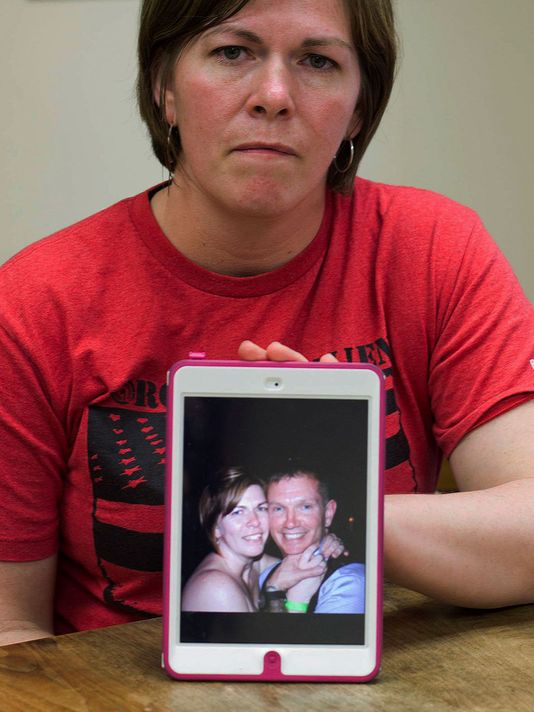
Amy Miner now speaks out on PTSD (AP PHOTO – Holly Ramer

No greater failure comes to mind but the case of Kryn Miner, a Vermont veteran of 11 wartime deployments who was killed by his son in 2014 after threatening his family with a firearm. Miner was seriously injured in 2010 sustaining a TBI after a roadside blast threw him into a concrete wall. But it was not his first exposure to trauma. He returned to his home with a brain injury and PTSD and was unable to receive the treatment he needed to release his demons.  His wife Amy was quoted as saying “the truth of the matter is if we can’t take care of our veterans we shouldn’t be sending them off to war.”  Miner’s mental health slowly languished as he fought the fight to gain access for veteran’s health benefits.

America failed to provide for access to meet his basic needs causing both he and his family to suffer immeasurably.  Some might argue that Kryn Miner and his family represent the unconscionable and symbolic misfortune of  America’s war heroes. Ironically, it was Kryn Miner who strove to gain access to benefits for many of his fellow Iran and Afghanistan war veterans via the Lone Survivor’s Foundation.  Eventually, he became a spokesman for the foundation.  But Miner struggled with his own demons that eventually cost him his life in a troubling case of patricide in rural Vermont.  Kryn Miner suffered with a traumatic brain injury and post-traumatic stress.  On the day he died, he had attended a wedding with his wife and arguably consumed too much alcohol.  He became angry and menacing ultimately threatening to kill his family.  In self defense, one of Miner’s children used a handgun to defend members of the family.  The state’s attorney general did not bring charges calling Miner’s death a justified homicide.

This family, like so many others has suffered immeasurably and will experience the pain of this death forever. It would be all too easy to point the finger at the Veteran’s Administration Healthcare System for having too few mental health clinicians or too long a waiting list. In fact as much of an advocate Kryn Miner was for his brother servicemen and women he did not help himself. He threatened his family with a firearm and may have killed them all were he not stopped by a courageous child in a unconscionable turn of events that no one could anticipate.

“To say that it is because they lack training in techniques of crisis de-escalation is short sighted” Sefton 2015

WESTBOROUGH, MA  October 28, 2015 “To say that it is because they lack training in techniques of crisis de-escalation that some deaths may have been prevented is unfair and short sighted.” This quote was first published in the summer 2015 when people (perhaps in the media) first started calling for police officer training in mental health awareness and de-escalation training for police officers. One source actually suggested providing more training in mental health de-escalation and less training in the use of force – including firearms. Some wrongly believe that this “sensitivity training” will reduce the number of officer involved shootings with those who are known to be mentally ill.  Unfortunately police shootings of mentally ill suspects has been on the rise in the past 12-18 months.  Yet the use of force in police work continues to enter the collective consciousness when images of police officers acting aggressively toward defiant high school student go viral on social media.

SRO aggression
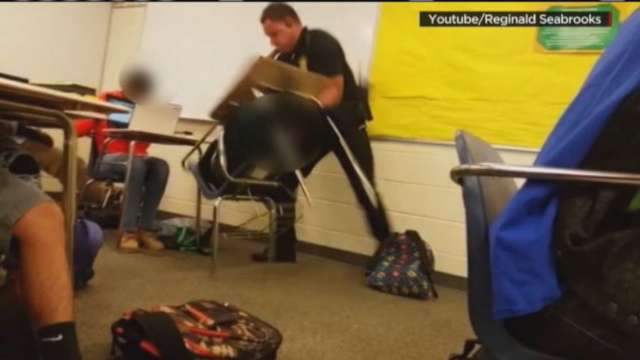
School Resource Officer take down of resistant student from posted You Tube video

Arguably, when the police are called to keep the peace or investigate a violent person call they are required to meet this threat with heightened vigilance for personal and citizen safety.  When a violent person is encountered the use of force continuum comes into play.  In the case of the Columbia, SC high school student who was aggressively choked and slammed to the floor while seated at her desk, the school resource officer was rightfully fired. The student posed no immediate threat such that hands on tactics were required to control a menacing suspect. In this case, the student was angry at being told she needed to put away her cell phone and was defiant to teacher direction. The police were called to the classroom as a show of force when neither the teacher nor the administrator could redirect her behavior.

If the violent person is actively aggressive or menacing with threat of lethal injury to the police or others than there is unlikely going to be any successful de-escalation until the threat of lethal force is eliminated.  If the violent person responds to officer directives to cease and desist all violent action and submit to being taken into protective custody or arrest – only then can mental health assessment be initiated. At the moment of crisis the need for public safety in all violent situations supersedes the individual need for care of a mentally ill person.  In the case of the South Carolina high school student no such threat existed but non-physical tactics were ineffectively deployed. The officer may have been able to diffuse the situation with empathy, understanding, and firm authority. The arrest could not be made without a higher degree of force for an actively resistant student that first punched the police officer.

Sefton, M. (2015) Blog post taken 10-28-2015 https://msefton.wordpress.com/2015/08/23/calling-for-de-escalation-training/

Emotionally distraught – nearly one quarter of all officer-involved shootings go fatal

WESTBOROUGH,MA July 1, 2015 As the analysis of officer involved shootings gradually becomes clear it becomes inevitable that people begin to wonder about the cumulative number of victims of these shootings who may be diagnosed with some form of mental illness.  When it comes right down to it the fact that these persons may or may not of been a victim of unjustified police officer involved shootings will be evaluated on an individual basis based on the use of force continuum to which all police officers adhere. “The underpinnings of violence are often present in some form or another whether or not someone has a mental illness ” according to Michael Sefton, Director of Psychological Services at Whittier Rehabilitation Hospital in Westborough, MA.  Now a groundswell of support has begun for victims of police shootings that may be the result of untreated conditions with psychiatric etiology.  Some are calling for advanced training in crisis management as a way of avoiding officer involved shootings of those who may be emotionally distraught.  I agree to a point that better police-citizen interactions may reduce the incidence of escalating violence.  But this will not work when someone is exhibiting the cognitive confusion and distorted thinking associated with terminal rage.

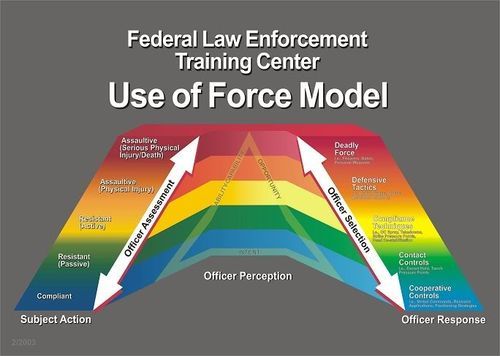
The Use of Force continuum guides officer response to violence and lethal threat

Police officers respond to violent scenes only to face real threats from people who mean to harm them or themselves whether mentally ill or not.  To say that it is because they lack training in techniques of crisis de-escalation that some deaths may have been prevented is unfair and short sighted. Lives may have been saved if those individuals purported to have metal illness had chosen not to pick up a weapon and become menacing.  Lives may have been saved if those same individuals were not intoxicated or high on drugs when they encountered the police and then became menacing. And again, lives may be saved if there were treatment programs available for those same individuals to provide containment of the most violent, unpredictable and paranoid and psychotherapy for those who might profit from the talking cure.  The facts are clear that deadly force was utilized in cases when someone’s life was threatened. Step one of de-escalation training calls for strong voice commands to “put down the weapon”.  In cases where these commands were not heeded the use of lethal force may be a last resort.

Police officers are called upon to use deadly force in the protection of themselves of someone else. Training and experience kick in when violent intentions are directed at police officers who are expected to protect potential victims from violence.  But yelling and pointing guns is “like pouring gasoline on a fire when you do that with the mentally ill,” said Ron Honberg, policy director with the National Alliance on Mental Illness cited in the Washington Post article on July 1. Mr. Honberg fails to realize that if officers are yelling and pointing firearms it is because the force continuum has already exceeded the level of a shoot-don’t shoot lethal force scenario. The degree of response intensity follows an expected path that is based on the actions of the perpetrator not the actions of the police.  The  Post integrated video clips from officer involved shootings and the Longview, TX incident depicts how quickly someone with a knife can cover the distance between two officers.  Read my published blog on the Myth of Mental Illness as it cites the truly low incidence of crime and violence among those diagnosed with mental illness.  (https://msefton.wordpress.com/2015/03/02/the-myth-of-mental-illness-and-school-violence/)

  • kids_imagesThe mere fact that someone has mental illness such as schizophrenia, bipolar depression, or anxiety has less to do with whether or not they are at higher risk for lethal force being used against them. Rather, the behavioral context in which they become involved with police officers, i.e. the “nature of the call” is what guides the and officers tactical use of force along a continuum.  The use of force continuum is drafted by the National Institute of Justice as a template for guiding the response of officers to tactical scenarios of degrees of resistance exhibited by civilians with whom they come into contact. Verbalization of commands tends to be the most commonly used by police in most encounters with resistant persons. For those individuals who exhibit more defiant and aggressive posture officers are permitted the use of elevated degrees of response (increased use of force) including the deployment of pepper spray and perhaps the deployment of a taser or baton for gaining compliance.  A confounding variable in all calls for service – including those where someone wants help for his illness is the co-morbid or co-existing addiction and substance abuse.  Its role on crime and violence elevate the threat exponentially.
  • In a published a blog I have reported that mentally ill persons are no more likely to be violent than individuals without mental illness. However, individuals exhibiting paranoia and those with the acute suicidal ideation are at high risk for acting out violently against police officers and engaging in “suicide by cop” behaviors and place them at greater risk for having lethal force being used against them.  There are no single words that will de-escalate someone who has decided on killing themselves or someone else.  More importantly, the dynamics of the suicide by cop scenario are a lose-lose for everyone involved – except perhaps the suicidal person who gets what he wants.
  • “Nationwide, police have shot and killed 124 people this year who were in the throes of mental or emotional crisis, according to a Washington Post analysis. The dead account for a quarter of the 462 people shot to death by police in the first six months of 2015” (June 30, 2105).  This is but a fraction of the number of persons who experience suicidal ideation on a daily basis who do not act out their behavior in such a destruction manner.  Published accounts have recently blamed the lack of police officer training in managing psychiatric emergencies as a possible underpinning of increased officer involved shootings of persons exhibiting signs of mental illness.  Arguably, as a psychologist who has worked with people in crisis, it is often quite difficult to assess who is most at risk for self-destruction because those who are most dangerous often appear quite sane. 2007 Virginia Tech mass murderer Seung-Hui Cho gave off few clues of his grave intentions before killing 32 innocent students – yet the video taped manifesto left no doubt that he was experiencing significant emotional conflict.  Ultimately, Cho had been hospitalized at least once for depression and paranoia but was free to purchase the firearms he used on April 16, 2007 culminating with his frenetic shooting spree and suicide.
  • In Los Angeles, CA the police have an active mental health response team that assist police officers on scene by “slowing things down” using trained, persuasive negotiation in an effort to defuse high stress incidents and lower the number of lethal encounters.  The program in L.A. seeks greater communication and understanding between the police and members of the mentally ill community, according the the Washington Post.  Mary Jo MacArthur is the assistant chief of the L.A. police training program.  She teaches that those in crisis do not process information like other persons and may experience fear and anger when given verbal commands they do not understand.  The L.A. model provides for professional support from trained psychologists or psychiatrists on scene.  But an officer who encounters an impulsive and violent man menacing with a firearm or knife cannot be expected to de-escalate and “slow down” a volatile situation when the threat of lethal force being used against them or someone else exists in real time.
  • It is inflammatory to say that police did not handle this case or that case appropriately. The use of force continuum is clear that force is met with similar degree of force in order to control and de-escalate. Any other mismatch of force place everyone in grave danger.  Once the lethal threat is neutralized – such as when the mentally ill person drops all weapons and submits to verbal commands to surrender – additional investigation and support may be provided by local mental health teams including hospitalization as needed. Another program exists in Vancouver, B.C. that I will review in my next update.
  • Police officers are regarded as the front line first responders to family conflict and crisis.  The most volatile scenes are those where mental illness coexists with substance abuse like heroin addiction and domestic conflict.  For better or worse, the police have an opportunity to effect change whenever they enter into the domestic foray or crisis involving members of the mentally ill community.  This affords them a window into the chaos and the opportunity to bring calm to crisis. In past blogs I have introduced the notion of aftermath intervention as a means to ending the repetitive nature of those in crisis.  Added training to deconstruct the myths of mental illness after each encounter may be useful but time is seldom provided for such debriefing.  As with many states who review domestic violence homicide – mental health response teams based on the L.A. model and post hoc analysis of red flag indicators of the potential for violence fueled by mental illness i.e. delusions, hallucinations, active PTSD, should be carefully crafted for officer and community safety.
  • “Community policing has long espoused the partnership between police and citizens.  The positive benefits of this create bridges between the two that may benefit officers at times of need – including the de facto extra set of eyes when serious crimes are reported” (Sefton, 2013).  These extra eyes may be called upon to identify red flags as they wave suggesting someone may be headed down the path of destruction.  In the case of some noteworthy domestic violence, post hoc analysis often reveals that people were aware that something was going to happen and not a single person stepped up to strike a warning (Allanach, 2011). Police agencies cannot work in a vacuum and must have the help of citizens if they are to have any impact de-escalating the mentally ill prior to onset of terminal rage.
  • In many cases, the correct response to intimate partner violence should include aftermath intervention when the crisis has settled from the crisis that brought police to this threshold. Techniques for understanding mental illness may facilitate mutual understanding and establish the needed bridge to facilitate treatment. When this is done it establishes a baseline of trust, empathy, and resilience and may lessen the likelihood of the violent menacing that demands force be met with force regardless of the diagnosis.  In the next blog I will identify the role of police officers in pre-incident intervention and identify a chilling case.  By the time a person is in crisis there may be little time to talk “sense” and de-escalate no matter how skilled and well trained the police become.

REFERENCES

  • Ronald Allanach et al., Psychological Autopsy of June 13, 2011, Dexter, Maine Domestic Violence Homicides and Suicide: Final Report 39 (Nov.28,2011), http://pinetreewatchdog.org/files/2011/12/Dexter-DVH-Psychological-Autopsy-Final-Report-112811-111.pdf
  • Lowery, W, Kimberly Kindy, K, Alexander, KDistraught people – deadly results, Taken June 30, 2015 http://www.washingtonpost.com/sf/investigative/2015/06/30/distraught-people-deadly-results/?hpid=z3
  • Sefton, M. (2013) Blog: Aftermath Intervention: Police first to the threshhold. December 8, 2013 Taken June 30, 2015, https://www.msefton.wordpress.com/2013/12/08/aftermath-intervention-police-first-to-the-threshold/

The Myth of Mental Illness and School Violence

This blog was initially published in March 2013 as a retrospective on the recent spate of “active shooter” tragedies across America.  There have been several high-profile shootings in the past 3 years that have involved perpetrators whose mental health is in question.  This is often not the case in school violence whereas the perpetrator of the action was deceased at the conclusion of the incident.  In these cases an effort must be made to uncover substantive causal factors in the perpetrator’s terminal actions.
The true incidence of violence among people diagnosed with a nervous and mental disorder is quite low. It is a common misconception that whenever something hideous occurs it must be mental illness that is the driving force behind its fury. In most cases this is neither the reality nor the underlying cause of terminal rage. In light of the information being uncovered about the Newtown, CT mass murderer, the specter of mental illness insures a convenient scapegoat. Updated information from Newtown recently confirmed that Adam Lanza had studied the media stories of prior mass killings as he planned for his despicable final melt down. In retrospect, I wonder what “red flags” have been uncovered that offer insight into his substantive motivation. People will speculate about random causes of Lanza’s behavior with uncertainty unless it can be studied scientifically.
There are some instances when mental illness has be associated with serial homicide such as the Son of Sam killer who plied his murderous delusions in NYC during the 1970’s using a Charter Arm’s Bulldog .44 caliber revolver. David Berkowitz used that weapon to kill 6 and wound 7 during his spree. He claimed to have been commanded to kill random couples he saw in cars by a dog he believed possessed by the demon. After spending time in a mental institution following his conviction he was transferred to the state prison at Sing Sing and finally Attica to serve 6 life sentences. When he was on trial Berkowitz plead not guilty by reason of insanity – the delusions he had about communicating with demons. In the end, it was determined that Berkowitz was not mentally ill. The Columbine, CO high school killers, Klebold and Harris were methodical in their planning of the attacks on the school and its students. They built explosive devices and practiced their attack in the weeks before the assault on the school. By outward appearances these two were from middle class families with involved parents. Many believe Klebold and Harris were the victim of bullies.
Psychological experts believe mentally ill persons lack the higher order planning to execute the complex steps necessary for these types of crimes. Neither Dan Klebold nor Eric Harris was mentally ill. The Virginia Tech killer Seung-Hui Cho murdered 31 students and faculty in 2007 after a period of decompensating rage. He wrote a profanity laden manifesto blaming everyone for their maltreatment of him that sounded paranoid and vindictive yet was able to send the videotaped diatribe to a news agency. Cho had been held in a psychiatric hospital 2 years prior to his rampage after becoming marginalized. Cho was able to organize his crime preparation and sequence the needed steps to meet his murderous goal. Was he mentally ill?
The Psychological Autopsy is a clinical assessment of the time line and antemortem behavior and emotional comportment of the perpetrator of compelling and despicable events. These types of case studies explore changes in cognitive and behavioral functioning immediately before a terminal event of homicide. An extensive review of a case from 2010 that was published in 2011 generated over 50 recommendations about DV and factors to consider when victims are at greatest risk (Allanach, R., 2011). The cost of these interviews and substantive case review is the primary reason they are not regularly conducted.  It is also less compelling when the perpetrator has killed himself and survivors want to turn the page.
Recently, at least 2 shooters have survived mass killings or have been captured after their alleged attacks.  In 2012 in Aurora, CO movie theater James Holmes was arrested and charged with multiple counts of murder.  He has pleaded not guilty by reason of insanity.  In 2011, Jared Lee Loughner was arrested at an outdoor political event in Tuscon, AZ after the shooting of U.S. Representative Gabrielle Giffords and killing 6 others. Loughner plead guilty after being found that he was capable of standing trial.He is serving 140 years in prison.  The Aurora case remains open.
It is hoped that important information may be gleaned from the rigorous study of motives, personal history, and triggers to their rage.

REFERENCES
Ronald Allanach et al., Psychological Autopsy of June 13, 2011, Dexter, Maine Domestic Violence Homicides and Suicide: Final Report 39 (Nov.28,2011), http://pinetreewatchdog.org/files/2011/12/Dexter-DVH-Psychological-Autopsy-Final-Report-112811-111.pdf.
Sefton, M. (2011) The Psychological Autopsy: Provides a host of pre-incident indicators. Blog:  http://www.enddvh.blogspot.com/2011/11/psychological-autopsy.htm, taken May 26, 2014.
Sefton, M (2013) Asperger’s Disorder: Not linked to violence. https://msefton.wordpress.com/category/active-shooter/ Taken March 2, 2015
Michael Sefton, Ph.D.
Read more at: http://www.msefton.wordpress.com