Active shooter
Asperger’s Disorder: Not linked to violence

WESTBOROUGH, MA – May 25, 2014 The weekend when most people are celebrating Memorial Day was marred by another mass murder involving a young man who may be linked to Asperger’s Disorder – a developmental condition in the same family as autism – but one that is thought to be higher functioning. It is unclear that the man exhibited the syndrome of Asperger’s although it may be true. Initial reports suggest the assailant who is now dead began having psychiatric trouble in the 4th grade – about age 10. If this is true then it is unlikely he was suffering with Asperger’s – because this disorder is usually first observed before the age of 10. True, Asperger’s is a social interaction disorder and like Adam Lanza, we are learning that Rodger was socially awkward. It may eventually be clarified by history provided by those who knew him best like his parents, friends, teachers, and physician’s who were treating him for mental health issues. If current reports are accurate Elliot Rodger was a 22-year old college student in Santa Barbara, California who killed 6 people after writing a chilling 137 page manifesto espousing his anger and powerful resentment at women over his experience of being rejected. He later was involved in a gunfight with Santa Barbara County Sheriff’s officers and was killed or took his own life. In his wake there were 6 people killed and 13 injured either by gunfire or being struck by Rodger’s BMW during the frenetic melee. No official word as yet on the cause of his death. Rodger’s experience was also published on You Tube entitled “Elliot Rodger’s Retribution” and came to the attention of his parents, the police, and others well before the onslaught. His psychotherapist received an email telegraphing the event signaling the terminal onset of Rodger’s emotional dehiscence. “Have you gotten Elliot’s email? I think you should see it,” the suspect’s therapist said to his mother just 13 minutes before authorities say he opened fire outside a sorority house, according to the L.A. Times story (May 25, 2014).
Frenetic Anger – Accelerating Risk
The events of Friday May 23 reflect the rage of an alienated, inadequate young man who lacked the basic relational capacity to form meaningful bonds. Mental health experts see a series of “red flags” in retrospect. The Washington Post cited Philip Shaenman who believed that authorities should have noticed “the acceleration of red flags” (May 26, 2014). A similar acceleration [of red flags] was reported in the Psychological Autopsy of Steven Lake – Dexter, Maine Domestic Violence Homicide (Allanach, et al. 2011) and just as importantly people knew was was going to happen. The alienation Rodger experienced stemmed from loneliness and repeated humiliation eventually leading to explosive anger and blame. The specific trigger may remain a mystery. In the written pages left behind, Rodger cited “wasting last 8 years of my life” apparently making a vague reference to the duration of time spent trying to establish a meaningful relationship without success. Sadly, Elliot Rodger was not equipped to form the intimate bond he sought although high functioning autism seems like an unlikely cause. More likely, Rodger was an entitled young man with deep-seated resentment and fear of women that contributed to feelings of shame. He may have believed that his social status set him ahead of other men who were looking for the same things as he. He may have had significant conflict over having so much status, e.g. being on the “red carpet” but having nothing of what he really wanted in the form of intimacy.
Analysis of behavioral indicators suggest high risk
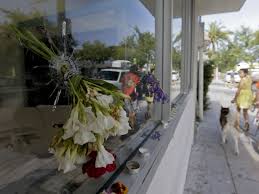
His writing revealed the preoccupation with physical attributes of both the women he sought and the men he blamed for taking them away rather than exposing the extreme pain and loneliness with which he struggled. In spite of living in a family with financial means and outward success, Rodger saw power and success as coming from a sexual relationship with an adoring blond. The anger he projected was indicative of delusional jealousy and humiliation during his frenetic final days. The process of compiling behavioral data that were “red flags” in the form of a psychological autopsy may one day reveal the complex layers of Elliot Rodger’s personality, primitive coping skill, unmet needs, and perhaps the true motive for the maelstrom in Santa Barbara. In the case of domestic violence, family members who are in the crosshair of these dangerous events often see but lack the knowledge to stop the emotional and behavioral kinetics once they start. Arguably, a continuum of interagency cooperation is needed to effectively measure risk and understand the red flags that are common underpinnings of abuse. The psychological autopsy offers a final analysis of the behavioral data and the compilation of pre-incident red flags that may be applied to the current understanding of explosive violence as in the tragic cases in Santa Barbara, CA, the Washington, DC Naval Base shooting, and the horrific school shooting in Newtown, CT.
The frequency and intensity of red flag aggression may forecast terminal violence. As these red flags come into focus it becomes incumbent upon each of us to take action on behalf of those most at risk. Each of us has a duty to warn potential victims. Given the final outcome of the Elliot Rodger timeline, one might push for this type of posthoc analysis of the tragic events and hope that in coming forth – some degree of healing may once again take place.
REFERENCES
Ronald Allanach et al., Psychological Autopsy of June 13, 2011, Dexter, Maine Domestic Violence Homicides and Suicide: Final Report 39 (Nov. 28, 2011), http://pinetreewatchdog.org/files/2011/12/Dexter-DVH-Psychological-Autopsy-Final-Report-112811-111.pdf.
Sefton, M. (2011) The Psychological Autopsy: Provides a host of pre-incident indicators. Blog: http://www.enddvh.blogspot.com/2011/11/psychological-autopsy.htm, taken May 26, 2014.
“The underpinnings…
“The underpinnings of violence are often present in some form or another and may be represented by marginalized demeanor and extremist views and often ignored by those in the cross hairs” according to Michael Sefton, Director of Psychological Services at Whittier Rehabilitation Hospital in Westborough, MA.
This quote represents a recurring belief about the evolving coping skill of an active shooter until the very end according to M Sefton. The terminal event is often preceeded by growing fury and red flag signs of anger. It suggests that greater awareness by outside observers of sudden changes in mental status should be recognized along with the utilization of stopping and containment protocols and coordination of care in or out of the state correctional system.
Active shooter evoke images of horror – fear

Right now in Washington DC, Metropolitan police officers are searching for the motive to today’s shooting onslaught that took place at a heavily guarded Naval facility in the southeast section of the nation’s capitol. Arguably, Washington DC has the highest per capita number of law enforcement officers in the country. Between federal law enforcement agencies like ATF, FBI, National Park police, Capitol police, and the full complement of highly trained Metropolitan officers, the city is well guarded. Or so we thought.
The active shooter call is one that no officer ever wants to get. It requires fast action, teamwork, and herculean bravery like no other call. The “active shooter” refers to just that – ongoing, systematic slaughter of innocent civilians with the specific purpose of violence and murder. These events start and end quickly averaging only 7-10 minutes before the shooter is dead. Usually killed by his own hand but not before the execution or injury to scores of men, women and children. Most police officers have taken the active shooter training programs that evolved after the Columbine HS shooting. Since then, officers are trained to “move to contact” – go find the bad guy – do not to wait for special weapons teams as the former response zeitgeist once required. Many behavioral scientists believe shooters give off clues before they act on their violent plans.
The active shooter has become an all too frequent happenstance that we cannot ignore. In a blog published in April, 2013 information became apparent about Jared Loughner’s change in mental status and growing detachment from others (Sefton, 4-24-13). People suspected that Loughner was becoming a danger to himself and others. Unfortunately, there was no in-depth assessment of his mental status before he went on the bloody rampage. Loughner plead guilty to the Tuscon shooting of Rep. Gabby Giffords and killing or wounding 18 others. He is serving 111 years in prison.
WHAT HAPPENS TO THE HUMAN EXPERIENCE
The repeated exposure to horrific events such as the DC Navy base shooting and too many others raise the risk of making toxic our collective conscience toward the images and horror and loss of life. People feel denuded and afraid when they hear about shooting events such as these but something more needs to be done. What drives these individuals? In the coming weeks or months more information about the apparent shooter will become known. Behavioral experts will make assumptions about his motive and the underpinnings of the violent onslaught. “The psychological autopsy is a detailed analysis of the pre-incident emotional comportment and behavior of the violent decedent although this is rarely done” according to Michael Sefton. More of these studies should be undertaken to establish high risk conditions that may create stopping and containment points for derailment of action and greater understanding of those with a proclivity toward terminal violence – such as what happened today.
What is certain is the need for each of us to be more aware of our surroundings and to those who might do us harm. When confronted with evil it is incumbant upon each of us to think and take aggressive action that may save your own life and the lives of others.
 MSefton's Human Behavior Blog