Aftermath Intervention: Police first to the threshold

Necessary first steps for bringing chaotic families in from the margins


NEW BRAINTREE, MA  Domestic violence happens in family systems that are secretive, chaotic, and dysfunctional.  This lifestyle pushes them into the margins of society – often detached from the communities in which they live.  More often than not, this is the way they choose to live.

The abusive spouse makes his efforts known within the system by his barbaric authoritarian demands.  He keeps his spouse isolated as a way of controlling and manipulating whatever truth exists among these disparate family members.  The consequence of this isolation leaves women without a sense of “self” – alone an emotional orphan vulnerable to his threat of abandonment and ultimately, annihilation.

In previous blogs, I have published some of the obvious psychosocial consequences of this coercion, including the lack of employment, a paucity of extended family support, no source of independent financial resources, and limited social contacts.  Any sign of independence, signals to the abuser that he has not done enough to demoralize his intimate partner.

Successful intervention for these families must slowly bring them back from the margins into the social milieu.  Sometimes this happens when teachers attempt to engage parents in a dialogue about the child’s particular needs or when children demonstrate an interest in team sports.  Arguably, the resistance to this is so intense that the violent spouse will pull up stakes and move his family at the first sign of public scrutiny.  Why?

The underlying threat to the status quo raises anger and resentment in a narcissistic abuser who, like Snow White, expects one hundred percent loyalty and compliance.  All signs of independence are squashed – usually punished out of fear and loathing that is always percolating.

Police officers are regarded as the front line first responders to family conflict and DV.  For better or worse, the police have an opportunity to effect change whenever they enter into the domestic foray.  This affords them a window into the chaos and the opportunity to bring calm to crisis.  In many cases, the correct response to intimate partner violence should include aftermath intervention when the dust has settled from the crisis that brought police to this threshold.  When this is done it establishes a baseline of trust, empathy, and resilience.

There are inherent problems with any notion that police officers will return to the scene of bad domestic calls where there may have been a violent arrest only days before.  This stems from the adversarial model that exists in most law enforcement agencies where follow-up to criminal activity is rarely conducted by front line officers.   Many departments delegate follow-up investigations to detectives or in rare case civilian personnel.  This schism lacks fundamental adherence to the community policing mantra of building relationships between the police and its citizenry.

Community policing has long espoused the partnership between police and citizens.  The positive benefits to this create bridges between the two that may benefit officers at times of need – including the de facto extra set of eyes when serious crimes are reported.  But the model goes two ways and requires that police return to their calls and establish protocols for defusing future events meanwhile processing and understanding the current actions of recent police encounters. When done effectively the most difficult families may be kept off the police radar screens for longer periods of time that can be a good thing when it comes to manpower deployment and officer safety.
Domestic Violence Homicide: What role does exposure to trauma play in terminal rage?

IMG_2126
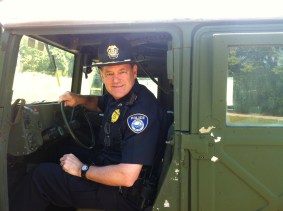
Sgt. Michael Sefton in NBPD Humvee used for patrol and search/rescue

First responders experience trauma as job-related way of life


WESTBOROUGH,  MA December 1, 2013 There is a new question in my mind about the exposure to trauma, e.g. war-related PTSD and the possibility that it plays a role in domestic violence and domestic violence homicide later on.  While this link may be plausible, there are no scientific truth to the notion that DVH is caused by one’s exposure to war or on-the-job exposure to horrific events.  Scott D. Jones of Arlington, MA was a decorated paramedic who responded to a mass homicide in 2000 in which 7 people were shot in an episode of workplace violence. He would go on to kill his second wife and family 14 years later after repeated episodes of severe depression and suicidal behavior and domestic violence toward his first wife.  These behaviors were the first red flags of an impending emotional breakdown and terminal rage.

Returning veterans and those in the police and EMS service witness suffering and anguish that are outside of the normal human experience rendering them vulnerable to recurring trauma and a host of physical and emotional ills. Some believe the prevalence of PTSD among EMS first responders (including EMT paramedics) is as high as 16 percent (DeAngelis, 1995, p.36).  Most services require critical incident debriefing after incidents that are particularly catastrophic – especially those resulting in death of a member of service or the death of a child.  These sessions have been shown to reduce the incidence of post-incident symptoms by offering support and context for individual responders as to their individual role in the event. It is not psychotherapy although emotions are often evoked as remembered details emerge and become palpable.

What is the link between unresolved trauma and DV? It is well-known that a high incidence of substance abuse exists among first responders.   “The emotional wellness of emergency service workers is at risk. Stress and grief are problems that are not easily detected or easily resolved. Severe depression, heart attacks, and the high rates of divorce, addiction, and suicide in the fire and EMS services proves this” according to Peggy Rainone who offers seminars in grief and surviving in EMS. To what extent this behavior evolves from on-the-job experience is subject to debate but chronically high levels of stress contribute markedly to marital discord, job conflict, and a host of physical anomalies like hypertension.

kids_imagesThe link between chronic stress and behavioral health is well-known.  Does this link extend to higher risk for domestic or intimate partner homicide?  The recent case of domestic violence homicide in Arlington, Massachusetts raises the specter of DVH in first responders. In this case, a decorated paramedic allegedly killed his children, his wife and then himself.  The abuser had a history of physical and emotional abuse as reported by a first wife.  There was a history of alcohol abuse.  The abuser was involved in a whistle-blower case against his employer that was slowly making its way through the courts.  But outwardly, he and his family seemed happy. What might trigger such an emotional and deadly maelstrom?  What triggered the terminal rage that released this decorated man – creating a monster?
In some cases, post incident analysis of the psychological forces acting on the abuser is necessary and will provide insight into the chain of events that pulled on the trigger. There is no single answer but a host of identifiable “red flags” likely contributed to the loss of control associated with DVH.  A thorough psychological autopsy may uncover factors leading to unresolved anger and the many unknown variables driving violent behavior. I have previously published blogs on the psychological autopsy and its utility.  The benefit of a thorough PA has value for all of mankind.


  1. DeAngelis, (1995, February). Firefighters’ PTSD at dangerous levels. Monitor, pp. 36-37.
  2. Rainone, P. (2013) Emergency workers at risk. Taken 12-1-2013 (website) http://www.emsvilliage.com/articles/article.cfm?ID=176.

Domestic Violence taking front stage in some places

There is increasing awareness of domestic violence – although one might question this statement given recent publications to the contrary. Small towns and large experience calls for help from victims of intimate partner aggression.  Actor Peter Hermann joined forces with his wife, actress Mariska Hargitay, in the PSA ads for “No More” along with more than 40 other celebrities. “No More” works with organizations like the National Domestic Violence Hotline and Break the Cycle to galvanize support and action to end domestic violence.  In December 2012, Kansas City Chiefs Lineman Jovan Belcher killed himself at the teams practice facility after murdering his girlfriend and mother of his daughter Zoey.  It is among the most hideous cases of DV that ultimately did not need to happen.  The ‘No More’ ad compaign (www.nomore.org) hopes to bring to light these cases and provide a clear message about never keeping quiet and saying no more to domestic abuse and sexual violence.

Fathers need to talk to their sons about sexual violence and abuse.  Prosocial modeling is what is needed within families for healthy growth that included zero tolerance for physical confrontations.  Meanwhile, at times of strain parents make mistakes – nobody is perfect.  They need to take personal responsibility for their action if it includes abuse and establish a trust that plans to stop violence are in place and healing can begin.  This takes time and is successful only 50 % of the time for a number of reasons.

“Eighty percent of respondents …

“Eighty percent of respondents said they believe domestic violence is a problem, but only 15 percent think it is a problem among their friends, according to the NO MORE Domestic Violence and Sexual Assault Survey commissioned by the Avon Foundation for Women.” from Long Island Newsday 9-30-13

What poeple often fail to see is the subtle condescension and veiled intimidation among intimate partners that occurs right under our noses.  What can the average person do?  The research on bullying – often considered a developmental precursor to domestic violence suggests that someone needs to “speak out against the bully” and take a stand.  Does this mean we all must be our neighbor’s keeper when it comes to marital harmony and family cohesion?  Some might say yes – as uncomfortable as this makes us feel.  It is a myth among those in law enforcement that “what happens behind closed doors is not our business”.  And it is a myth when neighbors believe “they will work it out”.

There seems to be a disconnect when it comes to people we know and those with whom we have regular contact.  In truth, it is those connections that may respond best to someone saying threats and intimidation have no place in a relationship.  The best marriages share control, decision making and negotiate the rules.

Bullying: The real truth about social media

bullying2_images
Schools take zero tolerance for bullying

New Braintree, MA I first looked at bullying in 2013 when I had transitioned from a high school where I practiced for 2 years. Bullying has been recognized as a significant factor in social development in terms of the negative impact that has been shown on victims of this repetitive intimidation and harassment.  The underlying dynamic results from an imbalance of power among peers that has been linked to risk of adolescent suicide.  Schools here in Massachusetts are taking a zero tolerance for bullying. Arguably, school districts across America have developed programs to combat bullies and reign them back into the social main stream but modern day bullying goes far beyond the playground. Some school districts offer mediation for bullies and victims with mixed results.  When I served as a school psychologist in 2010, members of faculty were surveyed regularly by the principal about students they feared were being bullied and those who were doing the bullying but little was done to intervene.

Bullying has been an issue for children throughout time. I was bullied in grade 4.  Now, with much dependence on social media and text messaging the problem of bullying has grown and is more powerful than ever.  Students were once free from intimidation and the impact of bullying once they returned home.  They could relax and allow the day’s torment to wash away.  But with intimidating text messages and social media posts being sent and received almost 24 hours a day the true impact of bullying and the stress of being bullied can be a round the clock threat and humiliation.

15-year old Phoebe Prince killed herself after weeks of intense, humiliating rumors and threats that psychologically wore her down.  “The investigation revealed relentless activity directed toward Phoebe designed to humiliate her and to make it impossible for her to remain at school,” District Attorney Elizabeth Scheibel said according to New York Daily News in 2010.  Phoebe and her family moved to South Hadley, MA from Ireland.  Almost as soon as she arrived in South Hadley she was preyed upon by the older boys and relentlessly humiliated by the girls in the form of text messages, physical taunts, and covert threats that arrived on her cell phone around the clock.  Several months into this relentless torment Phoebe hanged herself at home.  The social media humiliation became too much.  This 15-year old Irish teen could not tolerate the vicious rumors, threats, and hostility simply because she was different.  She was new.

By outward appearance the school did what they could but the system failed miserably – as it has with too many other children.  Phoebe could not get away from the lies and rumors being cast by other students her age.  Phoebe’s parents never knew the truth of the impact of social media on their child’s suicide.  Most of us don’t know what impact a subtle post and running thread can have on an uncertain mind.  Fear and intimidation may slowly rob the sense of self we each need to be productive and to thrive.   In the moments as she planned for and prepared her final delivery, Phoebe was entirely alone with her anguish.  No person should die this way.

Read more: http://www.nydailynews.com/news/national/phoebe-prince-south-hadley-high-school-new-girl-driven-suicide-teenage-cyber-bullies-article-1.165911#ixzz2frrmWV3j

“No player shou…

“No player should return to play on the same day he was injured, and no player should return to play without an individualized return-to-play care plan supervised by a brain injury specialist” Michael Sefton, Ph.D.

It is now well known that rest is the key to recovery following a sports-related concussion.  Post-injury testing is available at the Concussion Assessment and Management Program that may bring to light subtle neurocognitive signs of lingering concussion.  Athletes should be symptom free for 7-10 days prior to beginning a return-to-play plan.  Contact Dr. Sefton for assistance with managing return to play, return to school and return to work when recovering from concussion.

“Fear and intimidation…

“Fear and intimidation may slowly rob the sense of self we each need to be productive and to thrive.” Michael Sefton, Ph.D.

The impact of bullying can not be measured in a single blog.  People carry the scars of bullying with them long into adulthood.  There must be a place in society for all children and families.  The price of becoming marginalized – shunted out of a social milieu – becomes like an encapulated tumor for human development.  It robs the organism of its vitality until death occurs.

“In the end…

“In the end, there is a subset of human beings who behave as they alone choose to behave, without regard for the feelings of others and without regard for the harm they do and the chaos they leave behind.” Michael Sefton, Ph.D.

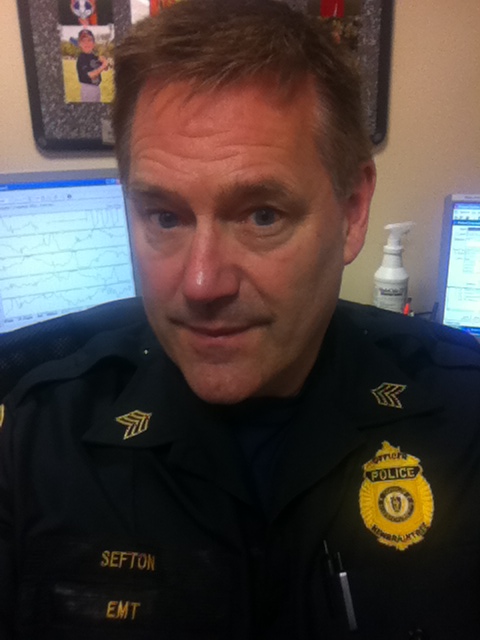
Writing on topics of human behavior like domestic violence and recent mass shootings.  MIchael Sefton makes an effort to present a view of human behavior some people avoid.

Active shooter evoke images of horror – fear

Image
DC shooting scene taken off news channel

Right now in Washington DC, Metropolitan police officers are searching for the motive to today’s shooting onslaught that took place at a heavily guarded Naval facility in the southeast section of the nation’s capitol.  Arguably, Washington DC has the highest per capita number of law enforcement officers in the country.  Between federal law enforcement agencies like ATF, FBI, National Park police, Capitol police, and the full complement of highly trained Metropolitan officers, the city is well guarded.  Or so we thought.

The active shooter call is one that no officer ever wants to get.  It requires fast action, teamwork, and herculean bravery like no other call.   The “active shooter” refers to just that – ongoing, systematic slaughter of innocent civilians with the specific purpose of violence and murder.  These events start and end quickly averaging only 7-10 minutes before the shooter is dead.  Usually killed by his own hand but not before the execution or injury to scores of men, women and children.   Most police officers have taken the active shooter training programs that evolved after the Columbine HS shooting.  Since then, officers are trained to “move to contact” – go find the bad guy – do not to wait for special weapons teams as the former response zeitgeist once required.  Many behavioral scientists believe shooters give off clues before they act on their violent plans.

The active shooter has become an all too frequent happenstance that we cannot ignore.  In a blog published in April, 2013 information became apparent about Jared Loughner’s change in mental status and growing detachment from others (Sefton, 4-24-13).  People suspected that Loughner was becoming a danger to himself and others.  Unfortunately, there was no in-depth assessment of his mental status before he went on the bloody rampage.  Loughner plead guilty to the Tuscon shooting of Rep. Gabby Giffords and killing or wounding 18 others.  He is serving 111 years in prison.

WHAT HAPPENS TO THE HUMAN EXPERIENCE

The repeated exposure to horrific events  such as the DC Navy base shooting and too many others raise the risk of making toxic our collective conscience toward the images and horror and loss of life.  People feel denuded and afraid when they hear about shooting events such as these but something more needs to be done.  What drives these individuals?  In the coming weeks or months more information about the apparent shooter will become known.  Behavioral experts will make assumptions about his motive and the underpinnings of the violent onslaught.  “The psychological autopsy is a detailed analysis of the pre-incident emotional comportment and behavior of the violent decedent although this is rarely done” according to Michael Sefton.   More of these studies should be undertaken to establish high risk conditions that may create stopping and containment points for derailment of action and greater understanding of those with a proclivity toward terminal violence – such as what happened today.

What is certain is the need for each of us to be more aware of our surroundings and to those who might do us harm.  When confronted with evil it is incumbant upon each of us to think and take aggressive action that may save your own life and the lives of others.