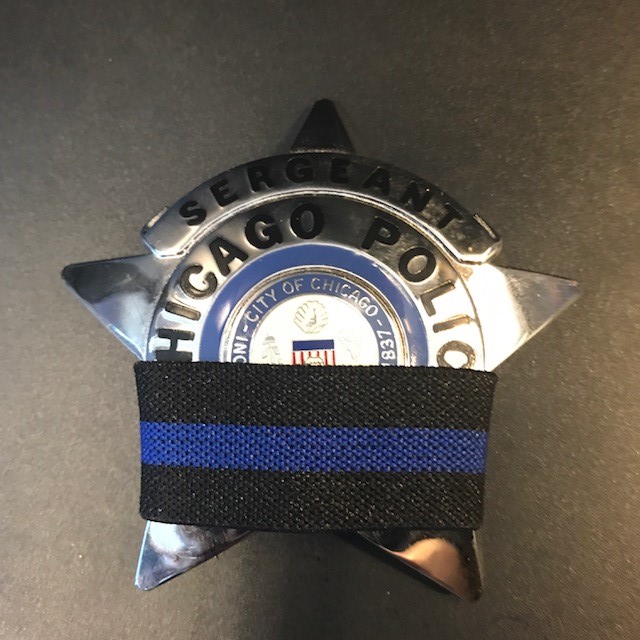
I recently read an article in the Washington Post first published in 2018 written by Michael Miller. I sent him a note suggesting he pick up the ball on this. I am interested in the topic of police behavioral health and understand the dynamic of law enforcement suicide and how the notion remains stuck in modern police service due to stigma with suicide and mental health wellness in police officers. I am a former police officer and know there is nothing more horrific than a police officer suicide or death to a member. In Chicago officers have taken their own lives while in the driveway of their duty station. In Los Angeles, four active duty or retired officers committed suicide in one weekend in November 2023. In Washington DC, an officer who was ordered back to work following the attack on the Capitol killed himself while driving to his work. People are starting to connect years of service with risk for suicide and many departments are taking police officer wellness as the key to both career hardiness and job performance. One officer granted LODD status remains in conflict. Erin Smith wants her husband’s name added to the D.C. police department’s list of fallen officers and engraved on the National Law Enforcement Officers Memorial, and the official burial honors traditionally afforded to officers killed in the line of duty according to a Washington Post opinion piece from .
I was part of a panel about police suicide in Chicago in 2019. The dark problem is especially taboo when cops are involved in a line of duty shooting and later kill themselves. The Chicago program was held following a rash of suicide deaths in the Chicago PD. Most officers do not return to the job following the investigation of their actions. Some do. Those who do return are off the job within five years. I am a police consulting psychologist in the Boston area. I am charged with pre-employment screening and fitness for duty exams after law enforcement exposure to trauma. More needs to be done to link on-the-job exposure to horrific and despicable human behavior to suicide and afford them line of duty death status including the honors and pension compensation just like other officers who die in the line of duty. In Washington DC officers who took their own lives following the Capitol insurrection were afforded line of duty status. Why not others?
“Police work took officers to “some of the darkest places in America,” he said, and few were darker than the scenes of officer-involved shootings, often called “critical incidents.” Line of duty death and police well-being are strongly impacted. Some police officers kill themselves after critical incidents they cannot unsee.”
“Chicago is kind of like ground zero with the number of suicides that are happening on a monthly basis now at this point,” said Daniel Hollar, who chairs the department of behavior and social science studies at Bethune-Cookman University in Florida. Dr Holler hosted Dr Doug Joiner to Chicago for a symposium in 2019. Dr Joiner taught us much of why officers kill themselves. He says they become embittered, they feel a deep sense of thwarted belongingness and grow increasingly detached with higher risk of suicide. “These are police officers answering calls of duty to protect lives. We (need to) do our job to make their jobs safer.” said Dr. Joiner. After an officer suicide, personnel try to reconstruct what was going on in the person’s mind by systematically asking a set of questions, in a consistent format, to the people with the greatest insights into the person’s life and mind—family, co-workers, and friends.” This is known as a psychological autopsy, and I have proposed it for any officer who dies by suicide. If this is done effectively, I can assure you there will be no escalation of suicide among police officers. Something police chiefs and city counselors unfairly fear.
I am working with one department where two officers have not returned to active duty nearly two years after being involved in a violent shooting while trying to help someone who had led them on a chase ending in a roll over motor vehicle crash. As officers approach the overturned vehicle the driver began shooting at them with a semiautomatic rifle. These brave men were traumatized by the fatal shooting of a subject who first fled from a legal police car stop and then opened fire on them. They have been out of work on administrative leave receiving behavioral health support but are unlikely to return to service.
I have conducted a psychological autopsy on a police constable who was involved in a line of duty shooting resulting in death in November 1971. He was a full-time police officer in Mifflin Township, OH that had no formal police department. No chief and no field training support. He shot and killed a man and was cleared of wrongdoing. Sadly, he killed himself in front of his wife one year later at Christmas. He grew restless and embittered after being villified by people inhis community. He believed nothing was being done to support and protect him. He is buried in a cemetery near the man he shot and killed. I want this death changed to line of duty (LODD). Why? When someone kills themselves most departments, including all smaller agencies, fail to discover the set of facts and red flags left behind leading to suicide. The investigation is often cursory, purportedly out of respect to the family. But there are factors in the careers of police officers that make them at higher risk for suicide then the public. This is not sustainable.
I have been writing about this for 9 years in the pages of my human behavior blog. In Chicago, if an officer comes forward looking for help, they are stripped of their firearm, police powers, and their star (badge). This is demoralizing according to officers I have spoken to. Why would anyone come forward if this is the protocol. This may be changing, whereas CPD has added therapists in each of their 23 police stations. Unfortunately, one cannot unsee some of the darkest scenes in human behavior like the death of a law enforcement officer or domestic violence resulting in death. The psychological autopsy must include a 3-month list of calls the decedent answered including those for which he or she was given debriefing, defusing, or time off for respite from the job. I would want to understand how the call volume may have triggered underlying acute stress of new calls that triggered new trauma? In any case, the story was interesting and careful analysis is important in all incidents resulting in police suicide.
 MSefton's Human Behavior Blog