Career Burnout: The overwhelming impact of stress and understanding the cost to Human Capital

WESTBOROUGH, MA October 17, 2024 When we talk about career burn-out, we are looking at the impact of chronic and sometimes overwhelming stress on work efficiency and job satisfaction. As a clinical psychologist, I espouse the risk of stress and its associated malignancy to everyone I meet. Stress adds costs to workforce management because as workers become overwhelmed they start to look for better jobs. Surprisingly, it is often not the compensation that makes workers want to switch jobs – but the work ecology, those subtle factors most of us seek in the relationship between us and the company. Replacing intelligent and career oriented nurses and doctors is very expensive and disruptive to everyone. It means that supervisors are always interviewing and floor nurses are always orienting someone to the idiosyncrasies of the role.

It has been suggested that employees who are under chronic stress are at greater risk for making medical errors and other mistakes. Shortages in staff trickle down to patient care too. Hardly a day goes by when I do not hear someone say “I had to wait 30 minutes for someone to come and help me get back into bed.” When it comes to healthcare, people are not concerned with staff shortages when a loved one is hospitalized. Customer satisfaction is key to good medicine and community policing alike. And like police officers, a nurse or doctor who is on the last hours of a 12-hour shift is more likely to be ill-tempered and out of sorts. And like police officers, healthcare workers experience stress from long hours, shift work, and the nerver ending number of patients. Just ask any nurse or physician working in the emregency department and they will tell you it goes on and on round the clock. It is a mystery how some can stay in one job for any length of time given the current model of corporate medicine and the megagroup practice devouring one sole practitioner after another.

“The prolonged elevated cortisol levels that come with chronic stress and post-traumatic stress disorder (PTSD) can interfere with and damage the brain’s hippocampus” Wendy Suzuki author of Good Anxiety: Harnessing the Power of the Most Misunderstood Emotion.
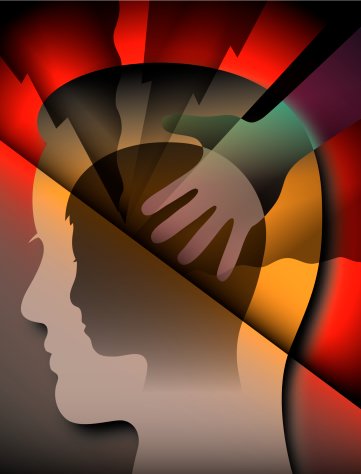
The brain and body experience stress like a jolt of toxic hormones that have the power to gradually reduce the ability to relax and quiet the body. I am tasked with assessing employees following high acuity/high lethality calls for service who find themselves in an unsustainable state of physical tension and mental fatigue. I teach mindfullness and biofeedback strategies for people suffering with the effects of chronic exposure to high stress situations and the physical impact of these. When working with a group of medical providers stress may become overwhelming after a particularly stressful shift, like many hospitals experienced during the coronavirus pandemic.

I presented a conference on Stress and Healthcare providers: Caring for the Caregivers shortly after our emergence from the nationwide pandemic response in 2022. On that night, I wanted to bring some examples of current stress the frontline healthcare workers experience – especially with the pandemic now in the rear view mirror. In doing so I realized that even preparing for this 90 minute presentation was as much as I could handle with so much on my plate. I needed to remind myself, I am not a superman, I am not a warrior. I must take time for myself and cleanse my psyche of the evil spirits floating around in my unconscious mind. I am aware of the impact of stress on my thinking and my intimate life.

In the short term, our bodies need the adrenaline and cortisol to quickly activate our brains and other organs to react when a threat exists such as when a patient unexpectedly goes south. Since we were being chased my sabertooth tigers we have relied upon the “threat response” to keep us alive. In any environment our bodies need this fight-flight system to modulate and guide our behavior including when to run, fight, or freeze. It comes down to using our sensory system to be on guard for us and when we are exposed to something threatening, like a crash in our patient’s blood pressure or looking through a darkened building trying to find a burglar.

“If you exercise regularly, get good-quality sleep and take steps to reduce and/or manage your stress, “you can reduce stress activity in the brain, systemic inflammation and your risk of developing cardiovascular disease,” reported Ahmed Tawakol, a Massachusetts General Hospital physician quoted in Washington Post article on Stress published in 2022.

Chronic stress is hard on the human body. Most people who seek out a blog like this one are well aware of the toxic impact of an abnormal stress response. “The prolonged elevated cortisol levels that come with chronic stress and post-traumatic stress disorder (PTSD) can interfere with and damage the brain’s hippocampus, which is critical for long-term memory function,” Wendy Suzuki said in a Washinton Post article (2022). The hippocampus and amygdala are a constant filter for danger and threats to safety. Abnormal activation or damage to these organs leave a person struggling with constant activation of the fight-flight response that we know is unsustainable. Or even worse, we are left somewhat helpless without this cueing mechanism. When it starts to rain upon us and we do nothing to initiate staying dry or move away from the lightning. Long-term increases in cortisol can also damage the brain’s prefrontal cortex and its interconnective pathways. These are essential for focused attention and concentration, as well as the functioning of the higher order executive system needed for problem solving and other cognitive tasks we often take for granted. That is until they are corrupted by stress hormones running amock.

What are the signs of burnout? First, there are many nurses who have become numb and disinterested. Some career nurses pull the plug on their roles leaving to become a home health nurse or perhaps off to the nursing home nearest to their homes. Many experience caregiver fatigue and waning empathy from hours of high stress patient care and management. During the relentless pandemic Many want to go back to the “old way” of taking care of patients by using the primary nurse model which divides high acuity patient among the senior nurses on a shift. The primary nurse is usually repsonsible for attending team meetings designed to update physicians and consultants as to how treatment goals are being met.

Secondly, burnout can leave people exhausted, unmotivated, and cynical – the consequences of which can be catastrophic in many professions. As well as impacting professional growth, research suggests that these extreme stress levels can impair social skills, overwhelm cognitive ability, and eventually lead to changes in brain function and damaging physical disease and inflammation in vital organs leading to premature aging.

The stress of this is often overlooked. “During the pandemic began, newly minted residents who normally wouldn’t take care of patients with severe respiratory illnesses, such as those training to be psychiatrists, podiatrists, or orthopedic surgeons, have been asked to volunteer to work in COVID-19 wards” across the country according to a report by Deanna Pan in the Boston Globe on May 9, 2020. Professionals including residents in training, who ride a high stress career need time to process the trauma they face each day. That is not always possible. As a result, the cumulative impact can abbreviate even the most stalwart among us. Supportive supervision can assist young professionals to mitigate the impact of trauma and stress. Time for resilience should not be put off because of staffing shortages.

Working on the front lines with patients who are dying is horrific. This is especially painful when there is seemingly nothing that can be done to help them. First responders and frontline hospital workers are trained to provide emergency care. When their training is not effective, than feelings of helplessness will grow (Sefton, 2020). These feelings can be overwhelming. The cost has been great with increased rates of suicide since the shutdown began in March including those on the frontlines where the decisions they made both right and wrong may have been impacted by the unending stress of patient care.

On April 27, 2020 Lorna Breen, a physician specialist in emergency medicine took her own life after being witness to dozens of patient deaths during the peak of the coronavirus and contracting the virus herself and surviving it. Dr. Breen was a professional and emergency service medical director of NewYork-Presbyterian Allen Hospital and had no history of depression or mental health diagnoses. 

More should be done for employees to assist them in remaining emotionally hardy and resilient for long-term career satisfaction. We know that days of stress from never ending patient flow can undermine career-oriented nurses and shorten their work life – something that no employer wants to see. The same as in law enforcement, finding replacements for nurses, doctors, and other caregivers is not easy. It is important to get ahead of career paths and lower the chances of losing the best and brightest because they are pushed too hard by a hallow system that does not care for its employees. Its human capital is the source of all business success. The loss of its human capital is the actual cost of stress and should be better addressed with thoughtful awareness, firm compassion, and kindness.

Resilence and management of high stress situations

 The likelihood of becoming involved in an on-the-job shooting in one’s career is generally quite low across law enforcement officers in the US and Canada. However, there is a high degree of likelihood of almost daily encounters with high stress calls involving intimate partner violence, substance abuse, children at risk, unbearable human suffering and death.  I recall being involved in a search for a middle age male who did not return home after a night of drinking.  His route typically brought him across an abandoned rail road bridge.  As you might guess he did not make it across the bridge on that cold night instead falling off and drowning. He was found partially submerged and caught on some tree branches visible only by his L.L. Bean jacket which he had bought for those cold walks back from the neighborhood watering hole.  He was known to most of the police officers – two of whom were charged with going out into the river and retrieving his remains.  The body had been in the water about 48 hours.  It was not something I had seen before. I stood by for the retrieval and was involved in the notification.  My first of many.
These kinds of calls stay with you.  Especially early in one’s career.  The response of the family to losing their 50-year old father was especially difficult as he had young children from his second wife.  But I know officers and EMS first responders who have had one
images 2
Boston Police Officers react to Marathon bombing  ABC TV – photo credit
experience after another just like this and worse. A colleague described rolling up a driveway to an open garage and bearing witness to the home owner hanging from a ceiling joist. Suicide. Imagine the psychic imprinting officers experienced responding to recent mass shootings in Las Vegas or to a small church in rural Texas where so many people are killed or maimed and to be unable to stop the bad guy before it all happened. It happens every day it seems.
Here in Boston, 3 people were killed over 300 people were badly injured after two homemade bombs were set off during the Boston Marathon setting the stage for a complete shutdown of the city while area police officers searched for the suspects.  MIT University Police Officer Sean Collier was killed by the bombers while seated in his patrol vehicle on duty 3 days after the bombing.  Within hours a firefight ensued in Watertown, MA as the bombers were found in a hijacked SUV.  The brave officers from Watertown, MA, Boston Police, MBTA Transit Police, and Harvard University PD fought it out for 8 minutes with Dzhokhar Tsarnaev and his brother Tamerlan who was killed in the gun battle and run over by his brother. MBTA officer Richard Donohue was shot during the gunfight nearly losing his life. After a year of rehabilitation he returned to duty and was promoted to sergeant but ultimately could not recover from his wounds and retired in the line of duty. It took extra days and over 1000 police officers to locate the second bomber cowering in the covered boat of a Watertown resident. His image was published in the Boston Herald depicted with the snipers red dot on his forehead.  Citizens applauded law enforcement as they left Watertown on that night.
To survive these incidents one needs to have resilience also known as the psychological resources to process the experience with all of its ugliness and to know that you did what was needed with the training and experience you bring to the job every day.
By using alcohol to cope instead of resilient thinking one often develops other problems and this can lead ultimately to suicide. Alcohol is often related to suicidal behavior.” according to Leo Polizoti, Ph.D at the Direct Decision Institute in Massachusetts.  
After a stressful event, your body and mind must return to its baseline calm and ready state so that the officer may again activate and serve in whatever capacity is required without the baggage of the calls gone by.  As this “baggage” builds unfettered the likelihood of a decline in officer job performance grows sometimes exponentially.  There should be opportunity and on-going training to process the images in order to put them away and restore emotional equilibrium.  In some department realistic training includes use of simuntions where officers actually shoot their weapons at active shooters during training exercises.  The weapons are full sized handguns fitted with special projectiles that do not cause lethal injuries.  All training is conducted with head and face protection.  Many departments are building resilience training into their recruit academies – no only building physical strength but emotional wellness too.  “Current training teaches officers about biological awareness (bio-awareness) since psychological and physical reactions in the body arise from biological responses to the environment. Mental and physical states don’t happen independently and both must be addressed in reality-based training” Anderson, et. al., 2017.
“When a person encounters a threatening situation, they experience a surge of natural chemicals, such as adrenaline and cortisol. These chemicals allow the body to respond quickly. When this biological threat response is moderate, it enhances performance through more accurate vision, hearing, motor control, and response time. However, when the threat response is severe, the response can negatively affect performance by creating distortions in thinking, vision and hearing, and by increasing motor control problems, which can result in slower reaction times.” Anderson, et. al., 2017
Police in Massachusetts and throughout America are faced with the worst of all human experience.  Arguably, everything from unattended death, domestic violence, child abuse, and a fatal motor vehicle crash may show up on the call board of any dispatcher on any day or night as I posted in May, 2015. In the case of traumatic events – officer safety demands CISD and in the long run physical health and well-being are the underpinnings of a resilient professional who will be there over and again –  when called upon for those once in a lifetime calls that most of us will never have to answer (Sefton, 2015). “Psychological benefits include reducing distress, enhancing confidence in abilities and recognizing psychological responses that need the attention of a mental health professional” Anderson, et. al., 2017.  When necessary police officers undergo critical incident debriefing and peer support. Some benefit has been demonstrated using biofeedback to reduce the trending autonomic arousal through a paced breathing protocol to ameliorate the sympathetic-parasympathetic mismatch that has well described negative impact on physical health, emotional embitterment, and job satisfaction (Sefton, 2017).
“The primary goal of all modalities of biofeedback including physiologic modalities and neurofeedback is to restore the body to its “normal” state of homeostasis.  The process promotes mindfulness and paced breathing to gradually lower respiratory drive, reduce heart rate and blood pressure, and enhance other abnormal physiological readings such as skin conductance, abnormal finger temperature, and elevated electromyography.  It takes practice and understanding of its value.” Sefton Blog post 2017
Ultimately law enforcement and all first responders must be afforded support along with training to adapt to situations most human beings would never choose to confront and do so in a manner that instills personal dignity,  integrity, and continued professionalism.

Polizoti, L. (2017) Psychological Resilience: From Surviving to Thriving in a Law
Enforcement Career. Direct Decision Institute presentation.
Judith Andersen, Ph.D., Harri Gustafsberg, M.A., Peter Collins, M.D., Senior Cst. Steve Poplawski, Bsc., Emma King, M.A., Performing under stress: Evidence-based training for police resilience. RCMP Gazette Magazine Vol. 79, No. 1.
Sefton, M. (2015) Critical Incident Debriefing: The cumulative effects of stress. Blog post: https://msefton.wordpress.com/topics/dv-and-trauma/police-service/critical-incident-debriefing-the-cumulative-effects-of-stress/ Taken 12-30-17.
Sefton, M (2017) Biofeedback: Teaching the body to return to a proper homeostasis. Blog post: concussionmanagement.wordpress.com https://wordpress.com/post/concussionassessment.wordpress.com/3682, taken 12-30-2017

Officer resilience and career success with less burnout

Mike Sefton photo
Michael Sefton, Ph.D. in Guangzhou, China

WESTBOROUGH, MA December 9, 2017 Resilience in police training is an added lesson designed to enhance the careers of officers-in-training. According to Leo Polizotti, Ph.D. resilience refers to professional hardiness that is protective against career burnout and raises both professionalism and job satisfaction.

It is essential to help individual officers through the tough times and enhances job satisfaction.  In the case of traumatic events – officer resilience is essential for a healthy response to a critical incident.  In the long run, physical health and well-being are the underpinnings of an emotionally resilient professional who will be there over and again – when called upon for those once in a lifetime calls that most of us will never have to answer.

Emotional resilience is defined as the the capacity to integrate the breadth of police training and experience with healthy, adaptive coping, optimism, mental flexibility and healthy resolution of the traumatic events. In general, resilient people are self-reliant and have positive role models from whom they have learned to handle the stressful events all police officers encounter. In its absence a police officer experiences irritability, brooding, anger and sometimes resentment toward his own agency and “the system” for all its failures.  The lack of emotional resilience leads to officer burn-out.

“Your biggest risk of burnout is the near constant exposure to the “flight or fight response” inherent to the job (running code, engaging and managing the agitated, angry, and irrational, or any other of your responsibilities that can cause you to become hypervigilant). Add the very real tension of the politics and stresses inside the office and a dangerous mix is formed. The pressures and demands of your job can take a toll on your emotional wellbeing and quality of life and burnout will often follow.” Olsen & Wasilewski, 2014

It is well documented that flooding the body with stress hormones like adrenaline and cortisol play a role in police officer health and well-being. “Stress and grief are problems that are not easily detected or easily resolved. Severe depression, heart attacks, and the high rates of divorce, addiction, and suicide in the fire and EMS services proves this” according to Peggy Rainone who provides seminars in grief and surviving in EMS. (Sefton, 2013). There are various treatments for stress-related burnout including peer support, biofeedback for reduced sympathetic dysfunction, and professional psychotherapy. “Being exposed to repetitive stress leads to changes in the brain chemistry and density that affect emotional and physical health.” (Olsen, 2014)  Improved training and early career support and resilience is essential for long term health of first responders including the brave men and women in blue.


Polizotti, L. (2017) Psychological Resilience: From Surviving to Thriving in a Law
Enforcement Career. Presentation. Direct Decision Institute

Olsen, A and Wasilewski, M. Police One.com (2014) Blog post: https://www.policeone.com/health-fitness/articles/7119431-6-ways-to-beat-burnout-in-a-police-officer/ Taken December 9, 2017

Rainone, P. (2013) Emergency workers at risk. (website) http://www.emsvilliage.com/articles/article.cfm?ID=176. Taken 12-1-2013

Sefton, M. Domestic Violence Homicide: What role does exposure to trauma play in terminal rage? Blog Post: https://wordpress.com/post/msefton.wordpress.com/505 Taken December 9, 2017.