I recently read an article in the Washington Post first published in 2018 written by Michael Miller. I sent him a note suggesting he pick up the ball on this. I am interested in the topic of police behavioral health and understand the dynamic of law enforcement suicide and how the notion remains stuck in modern police service due to stigma with suicide and mental health wellness in police officers. I am a former police officer and know there is nothing more horrific than a police officer suicide or death to a member. In Chicago officers have taken their own lives while in the driveway of their duty station. In Los Angeles, four active duty or retired officers committed suicide in one weekend in November 2023. In Washington DC, an officer who was ordered back to work following the attack on the Capitol killed himself while driving to his work. People are starting to connect years of service with risk for suicide and many departments are taking police officer wellness as the key to both career hardiness and job performance. One officer granted LODD status remains in conflict. Erin Smith wants her husband’s name added to the D.C. police department’s list of fallen officers and engraved on the National Law Enforcement Officers Memorial, and the official burial honors traditionally afforded to officers killed in the line of duty according to a Washington Post opinion piece from .
I was part of a panel about police suicide in Chicago in 2019. The dark problem is especially taboo when cops are involved in a line of duty shooting and later kill themselves. The Chicago program was held following a rash of suicide deaths in the Chicago PD. Most officers do not return to the job following the investigation of their actions. Some do. Those who do return are off the job within five years. I am a police consulting psychologist in the Boston area. I am charged with pre-employment screening and fitness for duty exams after law enforcement exposure to trauma. More needs to be done to link on-the-job exposure to horrific and despicable human behavior to suicide and afford them line of duty death status including the honors and pension compensation just like other officers who die in the line of duty. In Washington DC officers who took their own lives following the Capitol insurrection were afforded line of duty status. Why not others?
“Police work took officers to “some of the darkest places in America,” he said, and few were darker than the scenes of officer-involved shootings, often called “critical incidents.” Line of duty death and police well-being are strongly impacted. Some police officers kill themselves after critical incidents they cannot unsee.”
“Chicago is kind of like ground zero with the number of suicides that are happening on a monthly basis now at this point,” said Daniel Hollar, who chairs the department of behavior and social science studies at Bethune-Cookman University in Florida. Dr Holler hosted Dr Doug Joiner to Chicago for a symposium in 2019. Dr Joiner taught us much of why officers kill themselves. He says they become embittered, they feel a deep sense of thwarted belongingness and grow increasingly detached with higher risk of suicide. “These are police officers answering calls of duty to protect lives. We (need to) do our job to make their jobs safer.” said Dr. Joiner. After an officer suicide, personnel try to reconstruct what was going on in the person’s mind by systematically asking a set of questions, in a consistent format, to the people with the greatest insights into the person’s life and mind—family, co-workers, and friends.” This is known as a psychological autopsy, and I have proposed it for any officer who dies by suicide. If this is done effectively, I can assure you there will be no escalation of suicide among police officers. Something police chiefs and city counselors unfairly fear.
I am working with one department where two officers have not returned to active duty nearly two years after being involved in a violent shooting while trying to help someone who had led them on a chase ending in a roll over motor vehicle crash. As officers approach the overturned vehicle the driver began shooting at them with a semiautomatic rifle. These brave men were traumatized by the fatal shooting of a subject who first fled from a legal police car stop and then opened fire on them. They have been out of work on administrative leave receiving behavioral health support but are unlikely to return to service.
I have conducted a psychological autopsy on a police constable who was involved in a line of duty shooting resulting in death in November 1971. He was a full-time police officer in Mifflin Township, OH that had no formal police department. No chief and no field training support. He shot and killed a man and was cleared of wrongdoing. Sadly, he killed himself in front of his wife one year later at Christmas. He grew restless and embittered after being villified by people inhis community. He believed nothing was being done to support and protect him. He is buried in a cemetery near the man he shot and killed. I want this death changed to line of duty (LODD). Why? When someone kills themselves most departments, including all smaller agencies, fail to discover the set of facts and red flags left behind leading to suicide. The investigation is often cursory, purportedly out of respect to the family. But there are factors in the careers of police officers that make them at higher risk for suicide then the public. This is not sustainable.
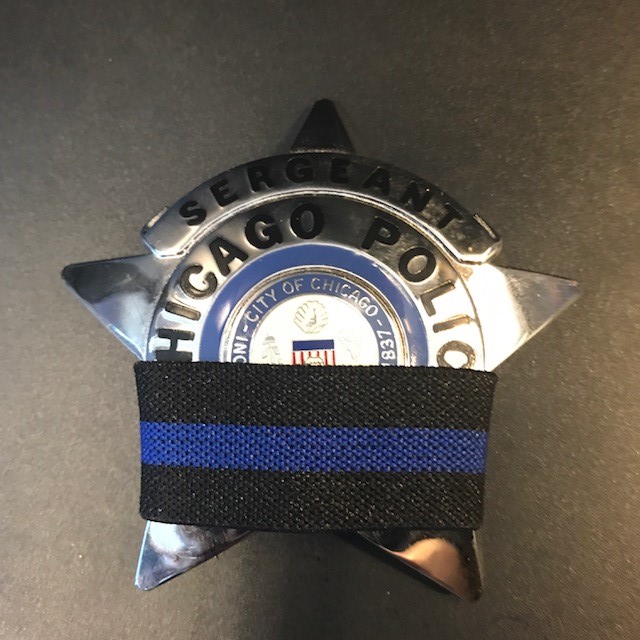
I have been writing about this for 9 years in the pages of my human behavior blog. In Chicago, if an officer comes forward looking for help, they are stripped of their firearm, police powers, and their star (badge). This is demoralizing according to officers I have spoken to. Why would anyone come forward if this is the protocol. This may be changing, whereas CPD has added therapists in each of their 23 police stations. Unfortunately, one cannot unsee some of the darkest scenes in human behavior like the death of a law enforcement officer or domestic violence resulting in death. The psychological autopsy must include a 3-month list of calls the decedent answered including those for which he or she was given debriefing, defusing, or time off for respite from the job. I would want to understand how the call volume may have triggered underlying acute stress of new calls that triggered new trauma? In any case, the story was interesting and careful analysis is important in all incidents resulting in police suicide.
The expectation that we can be immersed in suffering and loss daily and not be touched by it is as unrealistic as expecting to be able to walk through water without getting wet.
Rachel Naomi Remen, MD
“You are going to get wet in this business, it is what you do with it and how you process the “wetness” that impacts how your brain is going to react over time, according to Jamie Brower, Psy.D. a Colorado Police Psychologist. Brower explains this concept to the LEO’s and first responder’s treats following years of exposure to critical incidents. Many officers believe they are handling things well but gradually experience the loss of purpose in life often seen in cases of trauma. The key to treating repeated trauma is to intervene routinely following traumatic high lethality events, such as death of a member, multi-casualty critical incidents, and others with routine defusing immediately following the incident. I believe this should include all members who were on the call including supervisors. I once conducted a critical incident review following a fatal automobile crash with multiple fatalities and injuries. All members who responded to the incident were present except the on-duty sergeant and the fire chief. When necessary, peer support, debriefing, and direct psychological intervention are a must for career well-being and resilience.
“Your resiliency is like an immunization or protective factors against what life will throw at you” according to Mike Grill, M.S., a counselor in Colorado. Resiliency refers not to survival of the fittest but to the species that adapts quickest to changes in the environment. So the resilient person who is exposed to a horrific event like a school shooting or the death of a child is going to say: “Hey this bothered me and I need to do something about it” not “I should be able to handle this on my own” according to John Nicoletti, Ph.D. How do you get balance back in your life because, if all you see is death than you are going to have a pretty weird perspective going forward in life said Dr Nicoletti, in a short, Lifelines documentary in association with Stories Without Borders shot to inform on PTSD and law enforcement, fire service, and first responders.
Post traumatic stress is an injury that occurs during the course of an event like a mass shooting, or cumulatively over the years of exposure during the career in law enforcement or other first responder service like fire or EMS. It is not a mental disorder. Children in the family can be the first responder’s lifeline back. You will still have a scar but the injury will heal said Dr. Daniel Crampton, a retired Ute Pass Regional paramedic and trauma specialist in Colorado. Dr Crampton is available for peer support and has been very responsive and ethical at times I’ve reached out to him. In previous blog posts I have suggested that building resilience may be forged by having annual behavioral health “check-ups” and that in doing so, officers may earn extra payments for adhering to a behavioral health protocol each year that includes attending defusing and debriefing sessions following critical incidents. Just like the Quinn Bill in the 1970’s here in Massachusetts, where officers earned extra salary for attending college and earning their degrees, a similar incentive may be added for officers who attend annual behavioral health screenings and regular stress reduction trainings. The obvious benefit is a healthier mind and body among front line police officers with enhanced job satisfaction and career resilience.
Sometimes being present in the moment is enough to allow feelings of vulnerability to emerge and for healing to begin. Cops, and I dare say fire fighters, are not used to being vulnerable. Often less is more when is comes to shared space, personal pain and having a connection with one or more people who understand. A quiet moment of reflection after a difficult call may be enough to diffuse the experience of trauma and provide damage control going forward. Career hardiness and satisfaction requires that some moments be recognized with a circle of shared vulnerability and authentic empathy that can be just a few seconds to minutes.
Police Chaplaincy since 1800’s
During the coronavirus after a particularly deadly shift, members of ICU teams took a moment to share the names of those who had died in their care. These were somber events that acknowledged the losses and a measure of desolation shared among team members. People undergoing enormously stressful events can unburden themselves only if they acknowledge their inner feeling state. “We’ve seen chaplains accompany COVID patients in their last moments when loved ones could not be present. The year 2020 inflicted deep wounds on many in our communities and chaplains were there offering support,” said Wendy Cadge, the project’s principal investigator and Senior Associate Dean of Strategic Initiatives at Brandeis University.
“When we can feel and acknowledge our deepest fear – it can be liberating and reduce the perceived stigma of being vulnerable and in pain.”
Elissa Epel, Ph.D., UCSF, as quoted in NY Times
Police, fire, and first responder agencies across America have called upon the chaplaincy when their membership has experienced an out-of-the ordinary exposure to trauma like fatal car crash, death by suicide, death of a member, school or mass shooting, and more. Some of these are more routine like a notification of the sudden death of a family member. Meanwhile, other incidents leave a searing imprint of the entire event like the shooting of over 20 Sandy Hook elementary school students in Newtown, CT. It has been frequently mentioned that exposure to death and uncivilized brutality has an impact on wellness and personal resilience. Not a surprise. In the case of Sandy Hook how can any member of law enforcement or EMS ever forget that day? But what can be done?
Police chaplains is one part of the solution. The Chaplaincy Innovation Lab received two grants totaling $750,000 from the Henry Luce Foundation in the second half of 2020 to continue building and supporting resilience in chaplains and other spiritual care providers across the country. Chaplains often find themselves on the front line and frequently encounter operational chaos when they are called upon to minister to the troops. Yet that rarely stops them. They were there at Sandy Hook in 2012. The new program at Brandeis University in Boston aims to train chaplains to be better equipped for things like Sandy Hook or any community event that impacts large groups of people.
In Boston, the call went out that a firefighter was down. This during a 2-alarm fire in Watertown, MA. The department chaplain Father Matthew Conley was needed “now” at the Mount Auburn Hospital in Cambridge, MA for the Anointing of the Sick – known to many as “the last rites.” Fr. Matt had not been on scene during the incident as it appeared to be a routine call. But like so many calls it went south in a hurry.
Firefighter Joseph Toscano was near death from a medical emergency suffered while on duty fighting the fire. It was a hot summer day. He was 54-years old and had a large family of a wife and 5 children. The family were all members of the Catholic faith at a parish a short distance from Watertown. For many Catholics, the anointing of the sick is something to bring about reconciliation for someone who may wish to ease their suffering on the journey toward death.
Firefighter Toscano died that day while doing the job he was trained to do. The Last Rites involve prayers and the final Holy Communion known as the Viaticum. These were something Fr. Conley had done many times before. But when he arrived at the Mt. Auburn Hospital that morning he was met by a phalanx of Watertown police and fire fighters. As he walked into the emergency department of the large Cambridge, MA hospital he knew right away by the look in their eyes that this was no ordinary blessing. He was called to minister, first, to the dying public servant, his wife and children who had been brought to his bedside at the trauma center. But what’s more, he was tasked with consoling the entire brotherhood who looked to him for comfort and hope when no amount of prayer could bring back their fallen brother. But he listened, and he heard their pain, and validated their experience.
“You are here for all of them”, he would say, “and I am here for you.” Fr. Matt Conley sharing the words of former Parish Administrator Fr. Kevin Sepe at Watertown Collaborative.
The story is told that as Fr. Conley dealt with the enormity of the pain felt by all who felt the sudden loss of the career firefighter, when in-walked Fr. Kevin Sepe, the Watertown Collaborative priest administrator. The presence of Father Conley brought a strong empathic presence to the family who had lost their husband and father and to the first line firefighters who felt the loss deeply. Fr. Matt listened and he offered prayers.
From his years as a priest and police chaplain, Fr. Sepe understood what Fr. Conley was facing in the call to the hospital crisis as the department chaplain. His support was largely nonverbal that day. “You are here for them,” he would say, “and I am here for you,” bringing his presence, peer support, and understanding of the enormity the ministry at hand.
“Police chaplains aren’t there to push a religion on police officers; their role is primarily to listen and offer emotional and spiritual support” from an article in Police One, 2015. The chaplain program has been around for over 200 years and often works in the background subliminally. The military has utilized multi-denominational chaplains to minister the troops as well. These men and women are on the front lines and 3 members of the clergy have paid the ultimate price for their calling during recent wars.
Chicago Police Chaplain Father Dan Brandt
Not everyone is religious and you might believe that a goal of a department chaplain is to advocate one denomination over another. Not the case at all. The chaplain may be a Catholic priest as in the illustrated case or he or she may be an ordained Protestant minister, Muslim Imam, or a Jewish rabbi or some other ordained member of the clergy. As a police officer, I worked with a female protestant chaplain who was very helpful with members of our community. I would not have hesitated speaking with her in confidence if I were in need. The role of the chaplain is to provide support and to listen. She was good at it too. Being present with someone who is in crisis or dying can be among the most gut wrenching of all human experience. Fr. Conley once told me he never goes anywhere without the Sacramental oils for the blessing of the sick. This allows him to be ready to offer the Sacrament should he be called to do so. He felt deeply that this anointing was his duty and one of seven sacraments priests are prepared to offer.
I have given death notifications before and have witnessed the soul wrenching-anguish experienced by those receiving these notifications. It is a horrible experience and I remember most all of these events and am still bothered by several.
For line of duty deaths, chaplain’s ask if prayer might be helpful. The sacrament of the sick is one “of strengthening, peace, and courage to overcome the difficulties that go with the condition of serious illness or the frailty of old age provided by the Catholic Priest. This grace is a gift of the Holy Spirit, who renews trust and faith in God against the temptation of discouragement and anguish in the face of death” according to Michelle Arnold published in Catholic Answers in 2017.
The key to a successful departmental chaplaincy is contact — if you have enough chaplains strategically placed who are artful in “reaching out and touching someone,” two things will happen. Successful interactions will take place and the word will get around. Once calls for a chaplain begin to come directly to a chaplain from the on-scene sergeant or deputy, the chaplaincy has made its mark. Chaplains can best serve when their role is defined and the confidentiality of their relationship to law enforcement is understood. Police One, 2015
The chaplaincy has been around for centuries in public service. It is making entry into many law enforcement agencies in earnest. Many have had chaplains riding in cruisers for decades like Fr. Dan Brandt in Chicago and his fine crew of law enforcement trained chaplains of all denominations. At some times, this has raised the issue of mixing government with religion. But there are guidelines in place. “In Lemon v. Kurtzman, the justices established the three-pronged “Lemon Test,” which, as it translates to the chaplain’s position, says he must have a secular purpose, must not excessively entangle the government with religion, and neither proselytize nor inhibit religion” said reporter Jon O’Connell in a 2017 report. The police and fire department chaplain is there for support of first responders, not as an evangelist, but as moral reminder of the “sacred nature” of their work, according to Fr. Dan Brandt, the director of the Chicago Police Ministry. In Watertown and now Scituate, Massachusetts, Fr. Matthew Conley brings forth his presence with kindness, reverence, and often good humor making the human connection with those in his purview.
Brandeis Now. Chaplaincy Innovation Lab at Brandeis University receives $750,000 from Henry Luce Foundation. January 23, 2021
O’Connell, J. (2017) Police chaplains take a stronger role in community policing. Scranton Times-Tribune. News article.
McDermott, M and Cowan, J. Combating Pandemic Fatigue. Quoted in NY Times. October 2020.
Hospital video of BPD officer initial encounter with Juston Root on February 7, 2020
On February 6, 2020 Juston Root posted a few minutes of video in which he espoused a disjointed series of thoughts espousing the importance of being aware of the common man and using friends for support. Was Root speaking about himself, in need of someone? He died one day later in a frightening series of events that lasted seven chaotic minutes leaving this common man dead and shot over thirty times by law enforcement.
Juston Root had a long history of mental illness. On the day of his death, he was seen at a local hospital in Boston displaying what appeared to be a firearm. Interestingly, his parents reported he liked to carry replica handguns sometimes using a should holster. This bespeaks an attraction to firearms and yet he did not own a real weapon. It is not clear why he chose the hospital district on Longwood to make his initial foray. He was said to have made threatening statements to law enforcement officers who he first encountered. What was said? Did Mr. Root make threatening statements to the first BPD officer seen in the video. Did the officer get a look at the weapon shown and could he have been expected to recognize it as a replica? Our training and experience set the stage for this level of acumen when at close range blue steel looks nothing like black plastic.
Video of the scene showed Root parked in the middle of traffic wandering in and out of the frame. 4-way hazard lights activated. Was Root so rule bound that even on his last hurrah he had the provision of thought to set his hazard lights? This seems unlikely for someone in a terminal state of homicidal or suicidal rage. What was his state of mind once shot?
At some point shortly after this initial encounter a parking lot valet was shot in the head and critically injured. Mr Root did not shoot the parking attendant, but this was not clear amid the next moments of radio traffic. The fact that the attendant was injured by friendly fire simply was not reported and was not clear at this point in the investigation. This set the stage for manhunt that quickly came together looking for someone who had shot a parking lot attendant and pointed a weapon at the police officer. It is at this point that Root made a run for it setting into action an all hands-on deck police gauntlet that he had little chance of evading.
What happened next triggered a chaotic police response that led to his death just minutes after he displayed a replica handgun aiming it toward a Boston Police Officer. It may have ended right there had the first responding officer rightfully met force with force. The physical reaction of the first officer almost looked as though he was expecting Root’s replica to go “boom”. But he held fire. An officer 20-30 feet further away saw this and fired upon Mr. Root wounding him and hitting someone down range of the incident. Officers are responsible for where the rounds go once, they leave their weapon, so it is always best they hit an intended target on the range or in the street.
It is likely that area police agencies were put on tactical alert. When this happens, adjacent cities and towns clear their call screens and have available units staged at intersections watching for the suspect vehicle. In the end, the weapon he carried was determined to be a replica or toy.
In his preamble on February 6, he suggested that people should not call police because they often are not aware of what was happening, and 911 calls often result in police “storming in” to eliminate a threat to the public. Root seemed aware that “a lot of bad things can happen in the name of justice” when people call police in what he says are “fabricated phone calls”. This presentiment may be his experience living with mental illness for decades of his life. Juston Root was known to stop taking prescribed medication aimed at keeping hallucinations and delusions at bay and regulating his mood.
The body worn video is chaotic and has been edited. Multiple officers can be heard shouting instructions at Root, a 41-year-old with a long history of mental illness who had brandished a fake gun at an officer earlier in the day. When situations like this occur the adrenaline often drives officers into elevated state of arousal that requires keen environmental awareness to assure actions taken are lawful. The county D.A. in the case has determined that, given the totality of the circumstances, the degree of lethal force directed at Juston Root was lawful.
In the moments before he was killed by police gunfire an off-duty paramedic tried to care for root but was ordered to back away by police. The crash was caught on video tape from the traffic light camera on Route 9 in Brookline. It was sensational and Mr. Root was obviously traveling at a high rate of speed when he crashed. He was attempting to flee.
“Moments later, he walks onto the mulched area where Root was shot, approaching an officer standing over an object that appears to be a gun.” Video that is released reveals police officers warning each other about talking openly on tape. Some say there was bravado and even laughter after the threat was gone.
” Is it fake?” the first officer asks. Yes, was the answer and officers at the scene began to understand that Root may have died because of officer-assisted suicide. Something no officer ever wants to encounter. Someone so distraught that they put themselves into the line of fire by acting as if they are holding a firearm or other weapon forcing police to use deadly force. It is not clear that this was his intention given the remarks he recorded one day earlier.
Mr. Root had grown up with mental illness that was first diagnosed when he was 19-years old. This is quite typical of the major mental illnesses like schizophrenia or bipolar depression that present themselves in late adolescence. The National Alliance on Mental Illness described schizoaffective disorder as having clinical features of both schizophrenia and major depression. They can be unpredictable and often exhibit signs of hallucinations, delusions, poor impulse control, and suicidal behavior. Among these patients, officer-facilitated suicide would not be unheard of. But Root’s father said he had been stable over the preceding five years although he had a history of carrying fake guns. He was quick to point out that his son often stopped taking his prescribed medication. But in his taped preamble he was not angry and made no threats toward law enforcement. In fact, he indicated that he had friends on the police force although it is the friends of whom he speaks were officers he encountered over the years, but I am being conjectural.
If Mr. Root intended to die by police officer gunfire he may not have activated his hazard lights which can be seen blinking as he staggered away from the wreckage of his Chevrolet Volt. In his video statement he started by saying he had friends on the police force. There was no obvious animosity toward law enforcement. If he had had a genuine firearm and intended to go out in a blaze of glory, he may have made a final stand either at the wreckage of his vehicle or somewhere nearby like behind a tree. That was not the case. Root was trying to get away. No final stand. No “fuck you” to the world. He was down when he was shot and there was a person there to help him who was ordered away. An officer can be heard saying “he is still moving” after the barrage of rounds over thirty in all.
Juston Root was mentally cogent enough to activate his 4-way hazard lights after the high-speed crash and in video that could be seen when he first entered the Longwood hospital district. Why? A formal psychological autopsy that is transparently guided might find an answer to that question. Hospital police were on guard and had been victim of a homicide that took place inside the hospital itself in January 2015. Juston Root was here for 41 years living in what he perceived was a dangerous world. He came and grew to have an affinity for law enforcement he left without leaving any footprints or important last words.
“You can’t watch this appalling video posted by brave eyewitnesses on social media without seeing police officers’ callous disregard for a black man’s life,” ACLU of Minnesota Executive Director John Gordon said, calling the death “both needless and preventable.”
ACLU of Minnesota Executive Director John Gordon
The death scene in Minneapolis, MN was horrific. I am sickened by the bull shit police work that brings forth justifiably angry people who are themselves suffocating in a society who does not regard them as human. I get that and I share the anger they espouse toward law enforcement. That is not how I was brought up and it was not how I was trained. But not all cops are murderers. First off, there was no need to kill this suspect – George Floyd. No urgent call to control his life and ultimately end it. Mr Floyd had not committed a felony nor was he trying to escape or attack the police. The African American male was suffocated to death by the officer placing his body weight upon the carotid artery of the human being who was in custody. It is well known that once someone is under control and in handcuffs the need for such restraint is reduced appreciably.
“There will always times when police officers encounter those with mental health needs especially in times of crisis and social disorder. Training and education offer the best hope for safe and efficient handling of cases. A continuum of options for detox, dangerousness assessment and symptom management must be readily available – but here in Massachusetts they are not” Michael Sefton, 2017
I have had previous posts about the use of force continuum. Officer’s can get off the suspect once control has been established. A law enforcement officer can let up the fight and assuredly, most do so when the fight is over. Whether or not suspect X fought the police after being identified as a suspect in a check forgery scheme or not he did not deserve to die. Even if he were the ringleader in the check forgery scheme and cashed thousands of dollars worth of bad checks, he did not deserve to die. He did not deserve to die.
The police will say that the suspect fought until his death – trying to hurt or kill police. Perhaps they will say he was thrashing about and kicking – just off camera. Even if he was the use of deadly force would not be allowed. Bystander video tape will prove or disprove this theory. There is also the body worn camera footage that will surely be published into evidence. From the video released so far, it does not appear that Mr. Floyd was continuing to threaten law enforcement after he was handcuffed. It would appear that the police officer whose full weight rested upon the neck of George Floyd did not reduce his use of force to meet the resistance put forth by Mr. Floyd in kind. That is a serious abuse of power and the officer is now being held on the charge of murder in the second degree.
“It emphasizes accountability, making amends, and — if they are interested — facilitated meetings between victims, offenders, and other persons like the police.”Center for Justice and Reconciliation
Community policing requires not only programs bringing community members together with police officers in various ways including block meetings, police athletics leagues, and “coffee with a cop” but also developing a mutual trust between law enforcement and the people they are sworn to protect. How does this happen?
Police chiefs, deputy chiefs, superintendents, command staff, and patrol officers need to press some flesh out in the neighborhoods. Trust and visibility brings forth accountable and transparent policing. By doing so it opens the doors to community membership by inviting input and honest dialogue.
Restorative justice is a process that slowly repairs the harm caused by crime and malfeasance through ongoing dialogue, respect, and genuine contrition even as it pertains to police abuse of power. Community members, including police officers, and victims of abuse meet for talks aimed at transforming mistrust and anger.
Policing reforms are being introduced from coast to coast Most cities have (again) banned the choke hold that was taught but not permitted in 1982 when I first went through police training. On June 22, 2020, a NYPD officer was put on unpaid suspension for again choking out a suspect who was black. The suspect survived the arrest and was checked out at a local hospital. Meanwhile, the work of the police must continue especially now as Americans learn what to expect from the new normal and beyond. Call 911 if you have an emergency and need the police.
Purpose in life has been introduced as benefiting people, including law enforcement officers, to find a positive sense of purpose and personal satisfaction in their work product and in their lives. It was originally espoused by Viktor Frankl in 1946. Frankl, a physician, survived the German concentration camps and the deliberate extermination of 6 million Jews during WW-II. His wife and entire family were killed at Auschwitz and Dachau. How could he possible find purpose and meaning in life after this horrific experience.
In the book Man’s Search for Meaning, first published in 1946, Victor Frankl shares the experience of seeing hundreds of people herded off to their extermination. People and members of his immediate family were horrifically gassed and sent to mass graves.
Frankl’s theory holds that “there are three primary human capabilities, or, in his words, noological possibilities: self-detachment, self-transcendence, and the ability to “spiritually be in touch” with something or someone independent of spatio-temporal dimensions” according to McGann (2016) who reviewed Frankl’s book Man’s Search for Meaning.
Officer well-being is essential for career longevity. It becomes apparent that police officers grow and remain productive in an environment of support: both within the organization and within the community in which they serve. These attributes build a sense of personal meaning and career purpose.
Leo Polizoti, Ph.D.
In Man’s Search for Meaning, Frankl described the daily demoralizing prisoners underwent both physically and psychologically. Survivors of the horrific images at concentration camp Auschwitz began to find meaning in their forced labor – even humor along with camaraderie.
Many of us glean a significant sense of well-being from what we do personally and professionally. Most cops derive great personal meaning and purpose from the job of police officer at least for the first 3-5 years. Law enforcement officers’ derive much of their identity from the work they do on a daily basis and can experience wide ranging stress from call to call. As such, it has become well-known that police work requires special understanding of one’s community and a positive sense of personal responsibility, well-being and resilience for career success and hardiness (Polizoti, 2018).
Our tour guide at the West Bank in Israel in 2019 – Rami Nazzali found great purpose in teaching visitors about the plight of Palestinians on the West Bank and Gaza Strip – He strongly believes the plight of Palestinians in the Gaza Strip and West Bank are fighting for purpose and meaning in their lives. Rami
Nazzali writes for The NY Times.
Purpose in life refers to an underlying belief that what you do for work has importance and purpose on a larger scale. Moreover, to diminish oneself as a result of career embitterment runs a risk of the erosion of purpose and loss of group membership. That is when one becomes marginalized and loses his purpose and the “why” for living. Viktor Frankl believed that once gone the purpose of life and the will to live cannot be restored.
Mark Dibona previously was a patrol sergeant for the Seminole County Sheriff’s office in Florida, where he supervised nine officers, but the memory of the June morning where he was called upon to resuscitate and dying infant still haunts him. “Other stressful situations include, but are not limited to: long hours; handling people’s attitudes; waiting for the next call and not knowing what the situation will be; and even politics within the department. Then, on top of it all, officers are frequently criticized, scrutinized, and investigated for decisions they make” said Michelle Beshears on the faculty at American Military University.
Among police officers between seven percent and 19 percent of police officers experience symptoms of Post-Traumatic Stress Disorder, compared to 3.5 percent of the general population. A colleague and friend, Sergeant Mark DiBona retired from law enforcement in 2019 has had some difficult times on the job in Florida that effect him in a profound way. He is an strong advocate for law enforcement mental health and suicide prevention.
“Until this day,” said Dibona, who admits to having contemplated suicide several times before he began counseling, “I can feel the warmth of that baby on my arm.” A child Mark believed he could save.
“The important part of crisis intervention training comes in the interdisciplinary relationships that are forged by this methodology. Trust and respect between the police and its citizens builds slowly one person at a time. “
Michael Sefton, 2017
Police officers have historically been ill prepared to deal with people exhibiting signs of mental illness or severe emotional disturbance. Many were thought to be unpredictable and therefore resistant to the typical verbal judo officer’s are trained to use. The CIT programs provided training to police officers in an attempt to bridge the gap between myths about mental illness passed down from one generation of LEO’s to the next and actual training and experience in talking with citizens experiencing a crisis in their life, learning about techniques to manage a chaotic scene, strategies for enhanced listening, understanding the most commonly encountered disorders and role playing. For one thing some person’s afflicted with mental illness have difficulty following directions such as those suspected of hearing voices, paranoia or command hallucinations but this is not always the case. Many individuals CIT trained officers will encounter are normal human beings who are experiencing a high stress, crisis such as the death of a loved one, financial loss, failed marriage or relationship, or major medical illness. This adds a layer of complexity to the CIT model that officers soon experience.
Acuity increases with encounters of mentally ill who are both substance dependent and have some co-occurring psychiatric condition. The alcohol or drugs are often veiled in the underlying “mental illness” but in truth they are not mutually exclusive. The importance of treatment for substance dependence and mental illness cannot be understated as violent encounters between law enforcement and the mentally ill have been regularly sensationalized. The general public is looking for greater public safety while at the same time M.H. advocates insist that with the proper treatment violent police encounters may be reduced and jail diversion may be achieved.
5 Stages of Police Crisis Intervention
Scene safety – Assess for presence of firearms – obtain history of address from dispatch – have back-up ready
Make contact with complainant & subject – express a desire to help; listen to explanation of the problem – ascertain what is precipitating factor?
Establish direct communication with subject – attempt to establish trust; support for taking steps toward change; “why now?”; identify any immediate threats – sobriety, weapons
Pros and Cons for change – ascertain how willing is subject to begin change process, i.e. sobriety, counseling, detoxification
Positive expectations for change = direct movement toward change – hospital program; rewards that will come with positive change
“A crisis event can provide an opportunity, a challenge to life goals, a rapid deterioration of functioning, or a positive turning point in the quality of one’s life”
(Roberts & Dziegielewski, 1995)
There is a high degree of stress in any call involving a person in crisis. Repeated exposure to trauma is known to change the fight/flight balance we seek for emotional stability. Excessive autonomic arousal poses a threat to cardiac functioning and damaging hypertension. After high intensity/high lethality calls I suggest a defusing session take place immediately after the shift or as soon as possible. Excess adrenaline from an abnormal stress response can have significant health effects on LEO’s. Defusing or debriefing sessions can help reduce the impact of these types of calls. Full critical incident debriefing should wait until the normal effects of such calls wear off.
A new paper was just published in the Journal of Police and Criminal Psychology that has to do with high rates of depression in some police officers. It is written by Emily Jenkins (2019) who is a biostatistician and epidemiologist at the National Institute for Safety and Occupational Health in Morgantown, WV. Her co-authors include John Violante who himself is an epidemiologist and former New York State Trooper now researching police officer health and suicide. Basically, the authors say there are factors in personality and behavior that serve to reduce the new incidence of depression in LEO’s and to reduce the associated physical debility that may be co-occurring in cases where a history of depression was previously reported. One might see this protection as a ballistic vest for emotional health and career hardiness. High resilience leads to career success, satisfaction, and reduced likelihood of developing depression. Resilience refers to adaptability and flexibility in dealing with stressful situations. Resilience officers are able to tolerate highly stressful situations without becoming debilitated by stress and negativity.
I find the study interesting but it doesn’t connect with the troops in the field. For example, one feature listed as helpful against depression is “active coping” that includes things like agreeableness, conscientiousness, and having social support. Understanding protective factors leads to understanding who is most at risk of developing depression. The goal is to reduce depression among LEO’s and lessen the long-term impact of depression once it has been diagnosed. The paper cites links to depression and poor coping skills to personality features such a high neuroticism and low conscientiousness and low extraversion. These variables may lead to higher risk for substance abuse, reduced hardiness, and a host of physical signs and symptoms. These personality features are the biomarkers of chronic stress and its harsh consequences. They make sense to me but I rarely encounter a police officer, or anyone else for that matter that actively thinks about the core set of personality features that have defined them throughout life.
Officers across the country are being trained in peer support and crisis intervention training. At the Direct Decision Institute we are providing a variety of training programs designed for this same issue – increased officer hardiness and reduced risk of burnout, depression, and suicide. These are intuitive concepts and when talking with active duty LEO’s, I feel like the rank and file understand the words they hear but rarely will an officer offer up a personal example of times he or she may have had behavioral health issues. I have heard officers become very emotional when telling the stories of friends who have suffered with mental illness but rarely a personal story.
Two recent exceptions to this notion are Sergeant Mark DiBona, a recently retired sheriff’s department officer from Florida and Joe Smarro, an officer from Texas who is recently featured in an outstanding documentary entitled Ernie and Joe released in May, 2019 with great acclaim. It should not be this way and there is still great secrecy behind the veil of police service. It takes great courage to share personal struggles and one’s private experience. Police officers are most uncomfortable with this. Officers who are signing up for CIT and peer support courses are carefully chosen and may be more open to personal self-disclosure exhibiting greater positive coping skills, hardiness, extroversion and emotional resilience.
In order to reduce stigma associated with law enforcement behavioral health issues all members of the police service need greater self-awareness, openness to self-disclosure, and understanding of the effects of repeated exposure to violence and its broad ranging vicissitudes. This is nothing new and is being taught in academy training. Police psychologists who provide pre-employment screening should analyze the test data carefully and avoid selecting men and women who are most at risk of developing depression and who are outgoing, confident, and emotionally sturdy.
Most departments has active field training protocols that recruits must pass after leaving the academy. This means they ride along with the FTO until they are ready to function independently as LEO’s. The specific time line for this depends on FTO daily observation reports during the phases of field training. These begin with close supervision where the trainee does little of the daily work. In the latter phase of training the FTO may pull back and provide intervention only if needed by allowing the trainee to be the lead on all calls.
Officer resilience depends upon solid field training with adequate preparation for tactical encounters, legal and moral dilemmas, and mentoring for long-term physical and mental health. Michael Sefton, Ph.D. 2018
Law enforcement officers begin their careers with all the piss and vinegar of a first round draft pick. This needs to be shaped by supervised field training and inevitably will be effected by the calls for service each officer takes during his nightly tour of duty. Much like competitive athletes, law enforcement officers at all levels exhibit “raw” talents, including leadership abilities and the cognitive skills to go along with them. Moreover, like competitive athletes, these raw abilities have to be honed, refined and advanced through a combination of modeling, coaching and experience in order for the officer to develop the skills needed to improve performance, as well as prepare them for career advancement according to Mike Walker. This important task falls upon the field training officer (FTO) and is a critical phase in probationary police officer’s development. “The FTO is a powerful figure in the learning process of behavior among newly minted police officers and it is likely that this process has consequences not only for the trainee but for future generations of police officers” according to Caldero and Crank (2011). In 1931 the Wickersham Commission found over 80 percent of law enforcement agencies had no formal field training protocols for new officers entering the field of police work described by McCampbell (1987). In 1972, formalized field training protocols were introduced by the San Jose, CA police department that became a national model for post academy probationary field training.
Just before I was promoted to sergeant while working for a law enforcement agency, USCG Vice Admiral John Currier, a friend of mine said to me: “Michael, move up or move out”. I wasn’t sure what he meant by that but given my 9 years as a patrolman, I started to lobby for a promotion to sergeant. The agency at which I worked had little turnover in the middle ranks so I was never sure I would get a chance for promotion.
All law enforcement officers should have a career path when they graduate the academy that lays out a career path based on officer interest, career improvement goals, on-going training interests, and agency needs. Training opportunities offer new officers the chance to gain experience in anything from specialized investigations i.e. sexual assault and child abuse, firearms instructor, domestic violence risk assessment to bike patrol and search and rescue. Our chief believed strongly in incident command, active shooter response, and emergency medical technician training. I went on to take the paramedic technician course at a local college in 2011-2012. In many ways my former agency was well ahead of the curve in training opportunities and tactics including use of body worn video cameras, taser training, stop sticks, and individually deployed patrol rifles. I was encouraged by my chief to participate in a research opportunity I was offered in domestic violence homicide from a case in northern Maine, a community much like the one I served. From this research we introduced a risk assessment instrument developed by Jacquelyn Campbell.
The chrysalis for me came in August, 2012 when I was appointed by the Select Board to sergeant at the recommendation of my chief. Before this could occur, I had put in a significant amount of time developing a field training program, domestic violence awareness and lethality assessment protocols, and police-mental health encounter training. I learned the hard way that most police officers do not like working with citizens with mental illness and hate attending training classes on mental health awareness and crisis intervention training. I realized that I needed to become a leader and in order to do so I needed to become better in communicating with the troops and with those up the chain of command. In order to develop leadership I was sent to sergeants school but what I learned was the importance of being a role model for those in training and to teach by doing, teach by example. I also learned that field training is demanding, exhausting work if done with the precision needed to fully socialize the trainee and provide needed modeling while gradually offering greater independence for the trainee.
Field training involves months of practicing ‘what if‘ scenarios, learning the ropes of the police service, use of force, and writing reports. Early in the phase of training the tough discretionary decisions faced by a probationary officer are made by the senior training officer based on prior judgement, experience and what is most prudent for the specific incident and conditions on the ground. “Agencies should thus maintain a greater degree of FTO supervision, not just trainee supervision. Such an effort would go a long way toward improving FTO programming and better informing the needed research base” Getty et al. (2014, pg. 16). Field training is often time limited with special consideration for officers who need additional training in specific skills or personal areas of concern. Some officers are put on career improvement plans and extended field training, when needed, and some probationers are discharged from the agency because of skills or behavior that are not compatible with police work. Law enforcement agencies want active police officers who represent the core beliefs of the agency and individual community needs.
Field training has perhaps the most potential to influence officer behavior because of its proximity to the “real” job according to Getty, Worrall, and Morris (2014).
Probationary officers can be taught the how and when of effecting an arrest but the intangible discretionary education comes from FTO guidance and socialization that takes place during the FTO training period. Research has revealed that officers’ occupational outlooks and working styles are affected more by their FTOs than formal “book” training, Fielding, 1988. The selection of who becomes an FTO is not well defined. In a study at Dallas PD probationary trainees were exposed to multiple FTOs over 4 phases (Getty et al. 2014). The study revealed a correlation between new officer behavior – in the 24 months after supervision, as measured by citizen complaints and the FTO group to whom they were assigned. It is conceivable that the results in the study may be due to the relative brevity of training at each phase may have stopped short of instilling good habits or extinguishing bad habits in many new police officers. I have worked in agencies where only the sergeants were the FTO’s by virtue of rank and supervisory acumen long before systematic field training programs were introduced. In Dallas, results showing officer misconduct via high citizen complaints may too have been associated with unprepared FTO’s who were drafted to supervise the trainee and who were not prepared for that role.
“Bad apple” and/or poorly trained FTOs may thus have a harmful influence on their trainees. Getty et al. (2014)
Choosing successful FTO’s is of critical importance for new officer development and for future generations of law enforcement officers. The values espoused by the FTO have enormous impact on the behavior, habits, and professionalism of new police officers. It has been shown that the quality of this training belies post-supervision job behavior and success. Haberfeld (2013) has offered a supportive assessment of the assessment center approach to FTO selection suggesting there are qualities that may be quantified in the selection process. This may be helpful in the selection of FTO’s who are professionally resilient and emotionally hardy as they lead the new probationary officer into his career. If officers are randomly assigned to provide field training without forewarning or preparation this may staunch career growth in the probationary LEO. If this becomes the norm then FTO’s may have provide more of what probationary officers need such as correct values, discretionary wisdom, and perhaps less negative socialization that can lead to embitterment, misconduct, and citizen complaints.
At times of high officer stress when high lethality/high acuity calls are taken the probationary LEO is apt to require greater support and guidance from the FTO. It is during these critical incidents that post hoc peer support and defusing may take place. Training LEO’s should be permitted to openly discuss and express the impressions they experience to calls that may be more violent, and outside of the daily norm for what he or she has been doing. In doing so, the impact of these high stress exposures may be mitigated and emotional resilience may germinate. The responsibility of FTO’s to reassure and invigorate trainee coping skill and mindful processing of critical incidents cannot be under emphasized. FTO’s understand that healthy police officers must be permitted to express horror when something is horrible and feel sadness when something leaves a mark. They will become better equipped in the long run if allowed to fully appreciate the emotional impact that calls for service will elicit in them. The stigma of high reactive emotions from high stress incidents, i.e. homicide or suicide, is reduced when officer share the call narrative and its allow for its normal human response.
Michael Sefton, Ph.D.
2019
REFERENCES
Caldero, M. A., & Crank, J. P. (2011). Police ethics: The corruption of noble cause (3rd ed.). Burlington, MA: Anderson.
Fielding, N. G. (1988). Competence and culture in the police. Sociology, 22, 45-64.
Getty, R, Worrall, J, Morris, R. (2014) How Far From the Tree Does the Apple Fall? Field Training Officers, Their Trainees, and Allegations of Misconduct. Crime and Delinquency, DOI: 10.1177/0011128714545829, 1-19.
Haberfeld, M. R. (2013). Critical issues in police training (3rd ed.). Upper Saddle River, NJ: Pearson.
McCambell, M. Field Training for Police Officers: The State of the Art (1987). DOJ: NIJ, April.


 Field training involves months of practicing ‘what if‘ scenarios, learning the ropes of the police service, use of force, and writing reports. Early in the phase of training the tough discretionary decisions faced by a probationary officer are made by the senior training officer based on prior judgement, experience and what is most prudent for the specific incident and conditions on the ground. “Agencies should thus maintain a greater degree of FTO supervision, not just trainee supervision. Such an effort would go a long way toward improving FTO programming and better informing the needed research base” Getty et al. (2014, pg. 16). Field training is often time limited with special consideration for officers who need additional training in specific skills or personal areas of concern. Some officers are put on career improvement plans and extended field training, when needed, and some probationers are discharged from the agency because of skills or behavior that are not compatible with police work. Law enforcement agencies want active police officers who represent the core beliefs of the agency and individual community needs.
 MSefton's Human Behavior Blog