During the pandemic, mental hygiene has become just as important as hand washing. It’s time to disinfect your thoughts and kill the ANTs. As we move into year number two of the pandemic it has become clear that some American’s may be falling victim to automatic negative thoughts or ANTs.
During the pandemic, mental hygiene is just as important as hand washing. It’s time to disinfect your thoughts and kill the ANTs to overcome anxiety, depression, trauma, and grief. ANT is an acronym for —Automatic Negative Thoughts.
Daniel G Amen, MD 2020
Over one year into the pandemic while only 50 % of the US population is currently vaccinated with at least the first shot, we are seeing the importance of mental health in managing the pandemic. It is now abundantly clear, that it is because of mental health underpinnings, that the next wave of the pandemic is building. People cannot remain in isolation forever. The indefinite duration of confinement grew insurmountable to enforce and the collective civility toward social distancing and mask wearing became politically untenable for many governors. People need to socialize, be free to worship, attend weddigs and funerals, even dance in the streets, as we have seen Americans do ever since it “reopened” when state governor’s decried the pandemic under control. And we have paid the price for this.
Mental health tends to be the ugly step-child of physical illness in a society that is strongly biased against the emotionally infirm in favor of the medical model of well-being. For one thing, alcohol sales increased 200 percent among Americans coping with loneliness and frustration while in quarantine. There is no doubt that people felt the stress of being cooped up during the first weeks of the pandemic. The quarantine put a strain on sensible behavior and emotional credulity over social distancing, all the while putting ANTs in our heads. In places like India and across Europe where the vaccine roll out has been less successful the infection rate has risen, and given the propagation of variants that have been reported, those who are not yet vaccinated have much to fear.
Michael Sefton
Methods that reduce autonomic innervation or outflow have been shown to reduce the incidence of spontaneous or induced atrial arrhythmias.2–6 The latter studies suggest that neuromodulation may be helpful in controlling atrial fibrillation.
Chen et al. (2014) published a review of the relationship between the autonomic nervous system and the pathophysiology of AF and the potential benefit and limitations of neuromodulation in the management of this arrhythmia that is beyond the scope of this paper.
I am optimistic that the neuroregulation derived from EEG neurofeedback may be a mitigating treatment for both autonomic dysfunction and greater self-regulation and abstinence from substance use. The role of the autonomic nervous system in atrial fibrillation is multifactorial and alcohol induces atriogenic changes are powerful – including the potential for cardiac remodeling. “Autonomic nervous system activation can induce significant and heterogeneous changes of atrial electrophysiology and induce atrial tachyarrhythmias, including atrial tachycardia and atrial fibrillation (AF).” The importance of the autonomic nervous system in atrial arrhythmogenesis is also supported by circadian variation in the incidence of symptomatic AF in humans in Chen et al., 2014. I am working on a protocol using biofeedback and mindfulness to mitigate the autonomic underpinnings of arrhythmias in hope of making a positive impact on recovery from AF-related stroke. There is a peer reviewed literature for using neurofeedback for reducing the craving for alcohol that may be matched with paced breathing and heart rate variability which can activate parasympathetic pathways and modify baroreceptor response and its multifactorial impact on health described in this paper.
References
Center for Behavioral Health Statistics and Quality. Behavioral Health Trends in the United States: Results From the 2014 National Survey on Drug Use and Health (HHS Publication No. SMA 15-4927, NSDUH Series H-50). Available at: http://www.samhsa.gov/data. Accessed January 25, 2021
Steinbigler, P Haberl, R. König, B. et al. (2003) P-wave signal averaging identifies patients prone to alcohol-induced paroxysmal atrial fibrillationAm J Cardiol, 91, pp. 491-494
Voskoboinik, A et al. (2016). Alcohol and Atrial Fibrillation: A Sobering Review. J of Amer College of Cardiology, Volume 68, Issue 23, 13 December 2016, Pages 2567-2576.
O’Keefe, J, DiNicolantonio, D.J. Alcohol and Atrial Fibrillation Journal of the American College of Cardiology, Volume 69, Issue 20, 23 May 2017, Pages 2578
Chen, P, Chen, L, Fishbein, M, Lin, S-F, and Nattel, S (2014). Role of the Autonomic Nervous System in Atrial Fibrillation: pathophysiology and therapy. Circulation Research, Volume 114, Issue 9, 25, Pages 1500-1515
Viskin S, Golovner M, Malov N, Fish R, Alroy I, Vila Y, Laniado S, Kaplinsky E, Roth A. (1999). Circadian variation of symptomatic paroxysmal atrial fibrillation. Data from almost 10,000 episodes. Eur Heart Journal; 20:1429–1434.
Officers often walk alone when exposure to trauma whittles away their resilience
Two Capitol police officers have taken their own lives since the insurrection at the U.S. Capitol on January 6, 2021. This information came after the two officers spent 5 hours fighting the insurrectionists sometimes in hand-to-hand combat often being humiliated and threatened. Jeffrey Smith, a Metropolitan D.C. Police officer, and Capitol Police Officer Howard Liebengood both “took their own lives in the aftermath of that battle” of January 6, according to an article in Politico on January 27, 2021. A third officer, Brian Sicknick, age 42 collapsed while on duty the day of the attack. He died in the aftermath of the insurrection a day or two later.
The manner of his death has been determined to be natural causes. Officer Sicknick died from multiple strokes according to the medical autopsy. Some reported seeing Officer Sicknick being struck in the head with a fire extinguisher during the riot. The official cause of death was stroke – or cerebral vascular attack and it is well-known that high stress situations can lead to stroke such as an insurrection or even shoveling one’s drive following a snow. Sicknick was only 42 years old and in good health prior to the Capitol attack. Officer Sicknick was afforded the honor of laying in honor in the Capitol Rotunda after death. Antoon Leenaars, past president of the American Association of Suicidology, described the patterns of thinking among depressed or suicidal persons, and explained how the use of “psychological autopsies” can uncover the key elements that are present in many suicides. This is an important first step in the battle to change officer suicide to become more attributed to line of duty death. This determination is owed to many of these brave men and women who died because of the recurring emotional trauma to which they were exposed.
“Jeffrey Smith was still fighting to defend the building when a metal pole thrown by rioters struck his helmet and face shield. After working into the night, he visited the police medical clinic, was put on sick leave and, according to his wife, was sent home with pain medication. Smith returned to the police clinic for a follow-up appointment Jan. 14 and was ordered back to work, a decision his wife now questions. After a sleepless night, he set off the next afternoon for an overnight shift, taking the ham-and-turkey sandwiches, trail mix and cookies Erin had packed. On his way to the District, Smith shot himself in the head.
Smith’s wife Erin reported after her husband took his own life
“On April 2, 2019, PERF and the New York City Police Department took an important step to elevate the national conversation on police suicide and to identify concrete actions that agencies can take to address this public health and public safety crisis. Our two organizations hosted a one-day conference at NYPD headquarters that brought together more than 300 law enforcement professionals, police labor leaders, researchers, mental health care and other service providers, policymakers, and others—including three brave officers who themselves have dealt with depression, PTSD, and suicidal thoughts in the past and who were willing to tell us their stories” according to published executory summary 2019. “The NYPD is making use of psychological autopsies, a research-based approach that attempts to better understand why someone took his or her life. Following an officer suicide, personnel try to reconstruct what was going on in the person’s mind by systematically asking a set of questions, in a consistent format, to the people with the greatest insights into the person’s life and mind—family, co-workers, and friends.” The psychological autopsies contribute to the existing database of information about law enforcement suicide in general, and they help guide individual prevention programs and establish in the line of duty rewards for those whose death’s may be directly associated with their recent tours of duty as in the example of the Capitol officers who died immediately following the trauma of the insurrection where each of them was prepared to die.
The multiple deaths by suicide have renewed attention on another troubling and often hidden issue: Police officers die by their own hands at rates greater than people in other occupations, according to a report compiled by the Police Executive Research Forum (PERF) in 2019, after at least nine New York City police officers died by suicide that year. I was involved in the April 2019 presentation at 1 Police Plaza on the impact of LEO suicide as it related to the high incidence of police officer death by suicide. Police Commissioner James O’Neill gave an impassioned presentation imploring officers to get help and promising to “listen and eliminate stigma” of having trauma-related illness.
Regrettably, first responder suicide is not considered a line of duty death and as such, fails to yield the honor given to officers who die in car crashes, shoot outs, or other direct line of duty incidents. “Now, the surviving families of the courageous defenders of democracy, Jeffrey Smith, and Howard Liebengood — who were buried in private ceremonies, want the deaths of their loved ones recognized as “line of duty” deaths”. These deaths lack the honor and pageantry that accompanied Sicknick’s memorial service in the Capitol Rotunda — Why is the distinction made between the many ways LEO’s die?
The denial of this recognition diminishes the honor of one man’s service and by doing so, fails every man or woman who puts on a uniform by saying “your experience is yours alone”. And even worse, it amplifies the stigma attached to law enforcement deaths at a time when all else has failed them.
Michael Sefton, Ph.D. 2022
The careful analysis of antemortem exposure and actionable behavior that follows and event like January 6 or September 11 draw the clear, indisputable facts that link officer suicide to line of duty traumatic exposure. The denial of this recognition diminishes the honor of one man’s service and by doing so, fails every man or woman who puts on a uniform by saying “your experience is yours alone”. And even worse, it amplifies the stigma attached to law enforcement deaths at a time when all else has failed them. I cannot stand by this exception to what may be obvious line of duty exposure and police officer death especially after 9-11 and after the Capitol insurrection. But it should in no way minimize the loss of life attributed to suicide when years of exposure have gone unnoticed and even unreported by a law enforcement officer.
After the September 11, 2001, attack on the World Trade Towers there was an increase in LEO suicide. Men and women who witnessed the enormity of the attack coupled with the deaths of hundreds of police officers and fire fighters lost the will to grudge onward by no fault of failure character of their own. They swam in the muck and got wet and could not recover from darkness that engulfed them. The psychological autopsy would quantify these wounds just as the pathologist counts entry and exit wounds from an ambush.
The juxtaposition of these facts cannot be ignored. Every one of the hundreds of police officers put their lives on the line because of the former president’s truculent narcissism. It would be a dishonor to the men who gave their lives by denying the causal underpinning of their deaths. Suicide by law enforcement officers exceeds the number of officers who die in in gun fights, car accidents, on-duty heart attacks, attacks by citizens, calls for domestic violence, and other police calls for service. “This fact thrust these most private of acts into the national spotlight and made clear that the pain of the insurrection of January 6 continued long after the day’s events had concluded, its impact reverberating through the lives removed from the Capitol grounds” as written in a recent Washington Post report. “It is time the district recognized that some of the greatest risks police officers face led to silent injuries,” Weber said. “Why do we say that one person is honored, and another person is forgotten? They all faced the exact same circumstances.” according to a report in the Washington Post by Peter Hermann in February 2021.
There are things that must be done when law enforcement officers die as a direct result of the the calls they take and the trauma they experience that directly results in their death. Neither of these officers would have died if they had not jumped into the crisis taking place at the U.S. Capitol. Both men were solid members of the Capitol and Metropolitan Police Departments and had no history of behavioral health claims. Neither officer was in trouble with finances, gambling or substance abuse, internal affair investigation, or marital trouble. In the days that followed, Erin said, her husband, Capitol officer Jeffery Smith seemed in constant pain, unable to turn his head. He did not leave the house, even to walk their dog. He refused to talk to other people or watch television. She sometimes woke during the night to find him sitting up in bed or pacing. Her husband was found in his crashed Ford Mustang with a self-inflicted gunshot wound that occurred on his way to the job.
Peter Hermann Washington Post 2-12-2021
Rioters swarmed, battering the officers with metal pipes peeled from scaffolding and a pole with an American flag attached, police said. Officers were struck with stun guns. Many officers were heard screaming into their radios “code-33” the signal for “officer needs help”. This usually is a signal bringing an “all hands” response to the scene of the emergency – in Metro DC, which would mean hundreds of officers would roll. Situations like this send chills down the spine of officers responding to calls for help – some are injured in car crashes racing to back-up officers in danger. It is always hoped that when the call for help goes out as it did that day that enough manpower will respond with enough force to push back on the crowd, however large. In this case, the crowd far exceeded the number of LEO’s available for duty and many officers expected to be killed by the mob.
The psychological autopsy is a solitary case study of a death event that serves to uncover the psychological causes of death. This study would answer these questions and establish an understanding of worst-case scenario of frontline exposure to trauma and offer insight into underlying history that may have been anticipated and stopped. Without its use men and women die alone and often flooded with shame and loss of dignity. When law enforcement officers take their own lives this careful analysis of the hours and days preceding their time of death is essential to understand. “From this information an assessment is made of the suicide victim’s mental and physical health, personality, experience of social adversity and social integration. The aim is to produce as full and accurate a picture of the deceased as possible with a view to understanding why they killed themselves. This would answer the question as to whether the deaths may be line of duty, as they must. Psychological autopsy is the most direct technique currently available for determining the relationship between particular risk factors and suicide” Hawton et al. 1998
The evidence on Crisis Intervention Team (CIT) programs is thin, in part because these programs vary widely, with some representing basic officer awareness training and others composed of full-fledged and well-funded co-responder programs. However, the evidence on the impact of de-escalation training, which includes instructing police in how to identify and respond to people in crisis, is strong.
I have proposed a Behavioral Health initiative in conjunction with changes in police policy and transparency that has been the central posit of social clamor since the death of George Floyd this summer. The International Association of Chief’s of Police (IACP) has a broad-based Mental Wellness program it is reporting on its website that highlights the importance of this kind of support. “The IACP, in partnership with the University of Pennsylvania (Penn) and the Bureau of Justice Assistance (BJA)’s VALOR Initiative, is customizing a program specifically designed to help officers and agencies by enhancing resilience skills. The cost of such a program will reap rewards in the form of career longevity, officer well-being, officer morale, quality of community policing, and greater faith and trust in law enforcement in general. Without psychological autopsy systemic failures in training and support often go unnoticed leaving men and women without a life saver to hold on to.
This investigation is an individually designed case study that elicits a broad range of factual data regarding the antemortem behavior of a decedent in the immediate day or days leading up to the suicide. In this case, what are the events that transpired in the days before the two Capitol police officers took their own lives? The fact is that both men were exposed to incidents and participated in protecting the Capitol on January 6, 2021. Both men were engaged in hand-to-hand combat. It is known that the insurrection resulted in the death of a fellow officer and the deaths of four other people engaged in violent mayhem in which these men and hundreds of others may have been killed. Both men believed the insurgency was potentially deadly to them or their fellow officers. The psychological autopsy is especially important when first responders and essential workers are involved and die soon after. When LEO’s and first responders are put in fear of death or see other officers being placed in the direct line of fire, are vastly outmanned, and have no way in which to stop an attack, they are at high risk for the “hook” that comes from an acute stress reaction and over time and soon becomes a monkey on the backs of so many fine men and women.
Some agencies, such as the Fairfax County, VA Police Department, are beginning to implement periodic mental health check-ups for their officers and other employees. The goal is twofold: 1) to “normalize” the act of visiting a mental health professional, thus reducing the stigma against seeking mental health care, and 2) to identify and address potential issues early on. (PERF 2019)
“This heroic sequence of behaviors is besmirched by the bias against mental health responses to events that would bring any one of us to our knees. Men and women of law enforcement walk in the darkness, always in death’s shadow. It is time to recognize these officers and help them and their families to know they do not walk alone.”
Michael Sefton, Ph.D. 2018 Direct Decision Institute, Inc.
Departments should consider flexible job assignments or adding exercise to work schedules to release stress. Mental health should be regularly addressed at roll calls, and departments must reduce the stigma — in part by acknowledging the deaths. According to Dr. Leo Polizoti at the Direct Decision Institute, Inc. in Worcester, MA, an annual stress inventory should be conducted as part of the official officer evaluation program. This may be easily done by tracking high lethality calls that may be followed by mandatory defusing/debriefing as close to high stress incidents as feasible. Officers in Worcester, MA are given paid time for these aftermath behavioral health sessions.
Hawton, K., Appleby, L., Platt, S., Foster, T., Cooper, J., Malmberg, A. & Simkin, S. (1998). The psychological autopsy approach to studying suicide: a review of methodological issues. Journal of Affective Disorders 50, 269–276.
The expectation that we can be immersed in suffering and loss daily and not be touched by it is as unrealistic as expecting to be able to walk through water without getting wet.
Rachel Naomi Remen, MD
“You are going to get wet in this business, it is what you do with it and how you process the “wetness” that impacts how your brain is going to react over time, according to Jamie Brower, Psy.D. a Colorado Police Psychologist. Brower explains this concept to the LEO’s and first responder’s treats following years of exposure to critical incidents. Many officers believe they are handling things well but gradually experience the loss of purpose in life often seen in cases of trauma. The key to treating repeated trauma is to intervene routinely following traumatic high lethality events, such as death of a member, multi-casualty critical incidents, and others with routine defusing immediately following the incident. I believe this should include all members who were on the call including supervisors. I once conducted a critical incident review following a fatal automobile crash with multiple fatalities and injuries. All members who responded to the incident were present except the on-duty sergeant and the fire chief. When necessary, peer support, debriefing, and direct psychological intervention are a must for career well-being and resilience.
“Your resiliency is like an immunization or protective factors against what life will throw at you” according to Mike Grill, M.S., a counselor in Colorado. Resiliency refers not to survival of the fittest but to the species that adapts quickest to changes in the environment. So the resilient person who is exposed to a horrific event like a school shooting or the death of a child is going to say: “Hey this bothered me and I need to do something about it” not “I should be able to handle this on my own” according to John Nicoletti, Ph.D. How do you get balance back in your life because, if all you see is death than you are going to have a pretty weird perspective going forward in life said Dr Nicoletti, in a short, Lifelines documentary in association with Stories Without Borders shot to inform on PTSD and law enforcement, fire service, and first responders.
Post traumatic stress is an injury that occurs during the course of an event like a mass shooting, or cumulatively over the years of exposure during the career in law enforcement or other first responder service like fire or EMS. It is not a mental disorder. Children in the family can be the first responder’s lifeline back. You will still have a scar but the injury will heal said Dr. Daniel Crampton, a retired Ute Pass Regional paramedic and trauma specialist in Colorado. Dr Crampton is available for peer support and has been very responsive and ethical at times I’ve reached out to him. In previous blog posts I have suggested that building resilience may be forged by having annual behavioral health “check-ups” and that in doing so, officers may earn extra payments for adhering to a behavioral health protocol each year that includes attending defusing and debriefing sessions following critical incidents. Just like the Quinn Bill in the 1970’s here in Massachusetts, where officers earned extra salary for attending college and earning their degrees, a similar incentive may be added for officers who attend annual behavioral health screenings and regular stress reduction trainings. The obvious benefit is a healthier mind and body among front line police officers with enhanced job satisfaction and career resilience.
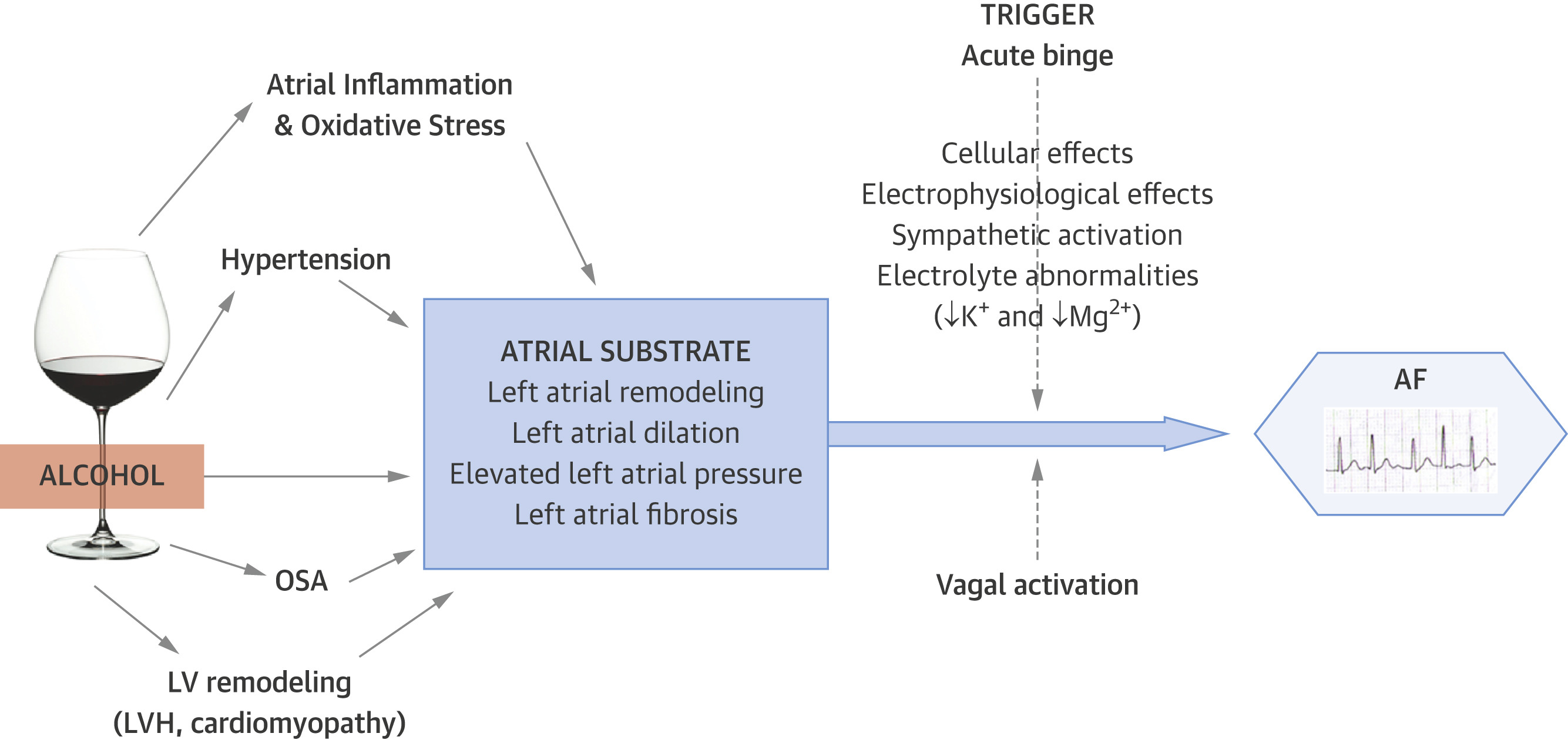
There is a growing and worrisome understanding that moderate alcohol use may be more cardiotoxic than many of use were fully aware. There are studies that link alcohol to cardiac arrhythmias including atrial fibrillation – an irregular heart beat that is known to increase the risk of stroke and other cardioembolic events. What is the cause of cardiac arrhythmias from the use of liquor? Atrial fibrillation is caused by ectopy that create a second node (or cluster of cells) of abnormal electrical activity that compete with the sinoatrial node – the pacemaker in the right atrium in the heart. The atria actually undergoes a physical change called atrial remodeling when secondary nodes compete for primary pacer node in the atria. There can be only one primary node. The result of this triggers a rapid, irregular rhythm and puts one at risk for cardioembolic stroke and other potential cardiovascular risks like remodeling.
This is a surprising, but not new reality, in the setting of my regular physical exams and cardiology consultations where I have openly and honestly over-estimated my consumption of alcohol by indicating that: “I should probably quit”. My physicians were nonplussed and seemed unconcerned. For all I knew, a glass of red wine daily kept heart disease at bay.and built red blood cells. At the rehabilitation hospital where I consult and provide assessment and biofeedback, we see dozens of cases of patients suffering from the health-related impact of A-fib. Of course, most of these are for reasons other than alcohol abuse but a fair number of our admissions are there as a result of the effects of alcohol such as liver cirrhosis, delirium, obstructive sleep apnea, diabetes, obesity, and acute renal disease. We treat the liver transplants sent from the UMASS Transplantation Service although these are not entirely the result of alcohol-related disorders.
“From a pathophysiological perspective, alcohol may exhibit direct effects on arrhythmogenesis as observed in the “holiday heart syndrome”. The holiday heart syndrome related to the binge drinking during times of celebration like from Thanksgiving through New Years. Many people call for a “dry January” as a way of drying out and feeling better after weeks of holiday cheer. Acute alcohol consumption also induces autonomic imbalance reflected by sinus tachycardia, predisposing to arrhythmia.” Electrolyte disturbance and alterations of the acid-base balance are further pro-arrhythmic triggers. In truth, there are many co-occuring medical complexities like obstructive sleep apnea, hypertention, obesity, and diabetes mellitus that contribute to the cardiogenic changes or remodeling from alcohol. Chronic alcohol consumption is known to be correlated with changes in cardiac structure and function including cardiomyopathy. Alcohol binge drinking or the “holiday heart syndrome” is well characterized in the literature. However, more modest levels of alcohol intake on a regular basis may also increase the risk of AFib from the increase of cardiotoxic effects of oxidative stress and inflammation triggered by hypoxia associated with sleep apnea and hypertension during apneic episodes as well as vascular events from ischemia due to thrombus or blood clot in a vessel in the heart.
The sympathetic system activates the bodies internal survival mechanism by raising the threat level needed to fight or to flee. It is almost instantaneous. The fight/flight mechanism exists in all animals having an evolutionary value needed for survival and defense against potential prey. Michael Sefton
When you pull the curtain back from the totality of the impact of alcohol on the nervous system that we must think about the sympathetic storm and the fight-flight responses that belie changes in heart functioning. One can see that studies show, following small to moderate amounts of ethanol, P-wave duration was prolonged in the control group with no history of AF, suggesting that alcohol directly slows interatrial conduction in all according to Steinbigler et al, 2003. This means the the depolarization and repolarization of the electrical activity in the heart which is key to the squeeze needed to move blood through the body and its vital organs can be altered. The evidence of elevated risk from thromboembolic events in the setting of atrial fibrillation, cerebral vascular events, and mortality is well understood and often ignored. Anticoagulation clinics have seemingly sprouted up on every street corner next to liquor stores and smoke shops.
Voskoboinik, A et al. (2016)
Methods that reduce autonomic innervation or outflow have been shown to reduce the incidence of spontaneous or induced atrial arrhythmias.2–6 The latter studies suggest that neuromodulation may be helpful in controlling AF. See Chen et al. (2014) for a review of the relationship between the autonomic nervous system and the pathophysiology of AF and the potential benefit and limitations of neuromodulation in the management of this arrhythmia. I am hopeful that the neuroregulation derived from EEG biofeedback may be a mitigating treatment for both autonomic dysfunction and greater self-regulation and abstinence. The role of the autonomic nervous system in atrial fibrillation is multifactorial with alcohol induces atriogenic changes among them, including script and the potential for cardiac remodeling. “Autonomic nervous system activation can induce significant and heterogeneous changes of atrial electrophysiology and induce atrial tachyarrhythmias, including atrial tachycardia and atrial fibrillation (AF).” The importance of the autonomic nervous system in atrial arrhythmogenesis is also supported by circadian variation in the incidence of symptomatic AF in humans in Chen et al., 2014. I am working on a protocol using biofeedback and mindfulness to mitigate the autonomic underpinnings of arrhythmias. There is a literature for using neurofeedback for reducing the craving for alcohol that may be matched with paced breathing and heart rate variability which can activate parasympathetic pathways and modify baroreceptor response and its multifactorial impact on health.
References
Center for Behavioral Health Statistics and Quality. Behavioral Health Trends in the United States: Results From the 2014 National Survey on Drug Use and Health (HHS Publication No. SMA 15-4927, NSDUH Series H-50). Available at: http://www.samhsa.gov/data. Accessed January 25, 2021
Steinbigler, P Haberl, R. König, B. et al. (2003) P-wave signal averaging identifies patients prone to alcohol-induced paroxysmal atrial fibrillationAm J Cardiol, 91, pp. 491-494
Voskoboinik, A et al. (2016). Alcohol and Atrial Fibrillation: A Sobering Review. J of Amer College of Cardiology, Volume 68, Issue 23, 13 December 2016, Pages 2567-2576.
O’Keefe, J, DiNicolantonio, D.J. Alcohol and Atrial Fibrillation Journal of the American College of Cardiology, Volume 69, Issue 20, 23 May 2017, Pages 2578
Chen, P, Chen, L, Fishbein, M, Lin, S-F, and Nattel, S (2014). Role of the Autonomic Nervous System in Atrial Fibrillation: pathophysiology and therapy. Circulation Research, Volume 114, Issue 9, 25, Pages 1500-1515
Viskin S, Golovner M, Malov N, Fish R, Alroy I, Vila Y, Laniado S, Kaplinsky E, Roth A. (1999). Circadian variation of symptomatic paroxysmal atrial fibrillation. Data from almost 10,000 episodes. Eur Heart Journal; 20:1429–1434.
8-year old Saffie-Rose Roussos killed in Manchester, UK suicide attack
There are few things that I do not believe I could emotionally survive, like the loss of my spouse, employment, and physical and mental vitality. Certainly, the death of a child is among the worst of all human experience for any parent at any age. This story is a heart wrenching, story of depravity and loss. To this day, the loss of one of my children would leave me shattered, angry, and helpless. I hope these individual stories will all resonate with our humility as human beings.
The chaos and emotion evoked in mass casualty events such as the Manchester, UK bombing, Boston Marathon bombing and the Sandy Hook, CT Elementary School mass shooting leave searing memories that take months to years to process. We are reminded of the overwhelming sadness we feel when looking at photographs of people we know are no longer with us. The loss of a child is among the more gut wrenching experiences families can ever endure. Meanwhile, members of law enforcement face multiple victims including young children like Saffie-Rose Roussos during large scale mass casualty events that forever leave their marks. I am working with a former paramedic which was dispatched to a motor vehicle crash in 1990 where a family walking across the street was struck by a vehicle being pursued by law enforcement. The first victim he came upon was a 4 year old girl who had obvious signs of death that he cannot shake 30 years on. These next stories are similarly evocative.
I recently came upon the story of the death of this little girl in Manchester, England. Her name was Saffie-Rose Roussos. From the sound of the description of Saffie, she was a special little girl with an enchanting wit and precocious love of life. All children are special and we recognize the curious joy through which they live each moment and we cherish every nuance.
On the night of the bombing, Saffie was attending a music concert with her mother and sister when a suicide bomber detonated his bomb in Manchester, UK. To see Saffie-Rose, one is compelled to ask whether or not there is a higher power? and if so, how could he allow this little girl to be in harms way? Saffie Roussos died on May 17, 2017 asking for her mum and wondering aloud if “she was going to die?” What child should ever ask this question? It evoked in me a tortuous and unthinkable picture of helplessness. But it was far worse for those emergency responders who were called upon to care for Saffie as her life came to an end that night along with the 21 other victims of the terrorist attack. No person who has ever been dispatched to a mass casualty event, like the Manchester bombing, ever comes away without a substantive chink in the veneer of their emotional core. Many in EMS and cops alike quit after mass casualty events.
The story of Saffie-Rose Roussos brings together good and evil and the ruination of one tiny life, one family, one city, one country, and illustrated the abject courage shown by the youngest of 22 victims that night in May, 2017. For this reason, I am sorry for not just the victims of the blast, like Saffie-Rose, and her family. They are devastated to this day, as I would be. But the heroic efforts of first responders who were called upon to provide life saving measures for this child and the hundreds of others wounded in the bombing. Without a doubt, all experience the deep sense of loss and failure at not being able to provide advanced trauma care for Saffie, so that she might live. “Losing a child feels like the ultimate violation of the rules of life” according to HealGrief.org an organization that guides parents through coping with the death of a child. In this case, Saffie is said to have been conscious after becoming injured but could not be saved given the resources available in the chaotic aftermath of the explosion. The protocols call for rapid triage of the scores of people needing help and this is done in the minutes to hours after the event. It is very likely, Saffie did not have the advanced life support needed to manage the hemorrhagic shock she sustained from massive loss of blood. The human body will compensate for loss of blood only until, in shock, it can no longer maintain blood pressure. Survival is measured when fluid can be replaced and loss of blood can be stanched. In children, this compensatory window is much more tenuous and short lived.
When I worked as a LEO we were taught techniques for trauma intervention that we were told might save our own life or someone else’s life one day in the event of a shooting or massive trauma resulting in life-threatening loss of blood volume. By using a properly place tourniquet, rescuers can stanch blood loss at times of massive trauma such as from a bomb blast that took the life of 8-year old Saffie-Rose Roussos of Leyland, Lancashire in UK. Saffie was killed while attending a concert in Manchester, England in May, 2017. She was the youngest of 22 people killed on the night of May 17, 2017 when a suicide bomber Salman Abedi blew himself up in the lobby of a Manchester concert venue. Terrorism.
“Medically trained people were with her. And she was asking for help. She knew what was happening. And she bled to death.” BBC 2021. “How do we carry on living with this information? How can we carry on breathing with this information?” asked Saffie Roussos’s father Andrew Roussos. BBC Judith Mortiz report January 17, 2021
BBC Judith Mortiz report January 17, 2021
Saffie’s father Andrew described his described his daughter as a “perfect, precious, beautiful daughter” who “melted people’s hearts” with those big brown eyes,” adding: “It’s like the best artists got together and drew her from top to toe.” according to a story in the BBC that was published during the public inquiry into the bombing last year. It is likely that the Roussos family is feeling the injustice of Saffie’s death. Anger is part of loss and healing and often is unresolved years after the traumatic loss of a child. Especially given the despicable nature of what caused Saffie to become gravely injured.
All bereaved parents lose a part of themselves and often require months or years to understand the extent of their grief and anger.
“I did die that day, inside I’m dead. My heart is so heavy, it weighs me down” said Lisa Roussos, Saffie’s mum, now 3 years on. The Roussos family feels the loss of Saffie-Rose every day.
Lisa Roussos
The immensity of traumatic loss was never more palpable than in 2012 when the Sandy Hook Elementary School in Newtown, CT came under attack by 20-year old Adam Lanza. Lanza first killed his mother with whom he lived and next drove to the largely unprotected elementary school and opened fire, killing 20 first-grade children and 6 adults trying to protect them.
Adam Lanza, 20, committed one of the most hideous acts of murder in history and is forever described as pure evil. Yet he was evaluated at the Yale University Child Study Center in New Haven. He was seen by a clinical psychiatrist, the report states. Ostensibly, the evaluation “purportedly to determine if Lanza had Obsessive Compulsive Disorder in the context of a putative diagnosis of Asperger Syndrome” in a piece written by Aaron Katersky and Susanna Kim in 2014 about the Newtown Massacre. Adam Lanza’s own father said “you cannot get any more evil” when talking about his son in the months after the shooting. Lanza openly wished that his son had never been born, raising an ironic specter between the loss of a child and being unable to love a child who commits unthinkable violence and died in the process. What possible conciliation may be find in his public statements months after the massacre? There is no denying that the Newtown shooting is among the most horrific and despicable violent crimes of the 21st century. No one will ever forget that December morning and the disbelief and horror it instilled. Other acts of violence toward children are documented. This is by no means a complete chronology.
Perhaps the greatest sporting event in the United States takes place every April, ending on Boylston Street in Boston, Massachusetts. Martin Richard, 8, a child watching the Boston Marathon in 2013 was killed by a pressure cooker bomb filled with ball bearings, marbles and other shrapnel that was a homemade bomb made to kill and maim unsuspecting families watching the annual running event. Hundreds lost arms and legs in the two bomb explosions.
Martin Richard, age 8
Martin Richard was a special child. He is not shown in these bombing photographs. His parents have gone on to honor him with annual community events geared toward raising funds for parks and other community projects. In all, over 300 people were injured in addition to the initial 3 people who died in the bombing – including Martin. “The minute the defendant fades from our newspapers and TV screens is the minute we begin the process of rebuilding our lives and our family.” according to a Richard family statement in the Boston Globe as the Marathon bomber Dzhokhar Tsarnaev was being tried for the murder of Martin and 2 others on Patriot’s Day in 2013. For their part, the Martin family spoke out against the death penalty which was handed down to the surviving marathon bomber who was captured in Watertown, MA after a 4 day manhunt just a few miles from where they murdered MIT Police Officer Sean Collier in their effort to escape.
We are all enormously impacted by events such as these and are left feeling sickened by the shear numbers of injuries and deaths. Saffie-Rose Roussos, Martin Richard, and 20 kids at Sandy Hook Elementary School, 17 teens at Stoneman Douglas HS, and 32 students and faculty at Virginia Tech were all victims of violence and we should never forget these events and so many more, in human history. The families remember the names and the horrors of the day. The sadness of these losses makes our heart’s bleed and ache for all those who have lost a loved one to violence. Even when you are the angry parent of a child you wish had never been born, a further violation of the rules of life. No person who has ever been dispatched to a mass casualty event, like the Manchester bombing, ever comes away without a substantive chink in the veneer of their emotional core.
___________________________________________
AARON KATERSKY and SUSANNA KIM (2014) 5 Disturbing Things We Learned Today About Sandy Hook Shooter Adam Lanza. November 21, 2014
Family Of Martin Richard Opposed Death Penalty For Dzhokhar Tsarnaev, 2015. CBS TV Boston TV July 31, 2020.




 MSefton's Human Behavior Blog